The Economic Drain in British India – The exploitation of Indian resources and workforce

-Tanushree Wadodkar
When the British established their rule in India, they did not merely bring political control. They also reshaped the Indian economy in ways that would have long-lasting consequences. While administrative systems were expanded and certain modern institutions were introduced, the overall condition of the Indian economy under British rule was marked by stagnation, exploitation, and widespread poverty.
Before colonial rule, India had a vibrant economy based on agriculture, handicrafts, and trade. Indian textiles, spices, and artisanal goods were in high demand across global markets. However, this balance began to shift as British policies increasingly prioritised the needs of their own economy. India was gradually reduced to a supplier of raw materials and a market for British-manufactured goods, fundamentally altering its economic foundation.
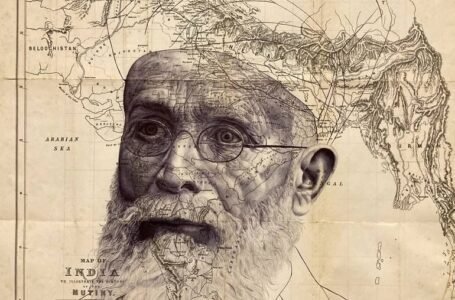
Under the facade of administrative order and infrastructural development lay a deeper reality: a steady and systematic transfer of wealth from India to Britain. This phenomenon came to be known as the “Drain of Wealth,” a concept most powerfully articulated by Dadabhai Naoroji.
Naoroji, often referred to as the “Grand Old Man of India,” was among the first to critically examine colonial economic policies and expose their exploitative nature. Through his work, Poverty and Un-British Rule in India, he stated how the colonial forces were not only politically dominating India, but also economically draining it.
The Economic Drain
The idea of economic drain referred to the unilateral transfer of wealth from India to Britain without any adequate economic return.
Dadabhai Naoroji argued that this drain was one of the primary reasons for India’s growing poverty during the colonial period. He pointed out that while India generated significant wealth, much of it was not reinvested locally. Instead, it was sent to Britain in various forms, depriving the country of capital that could have been used for development.
Channels of economic drain
The economic drain, or drain of wealth, took place through several interconnected channels that ensured a steady outflow of Indian materials to Britain for its industrial development.
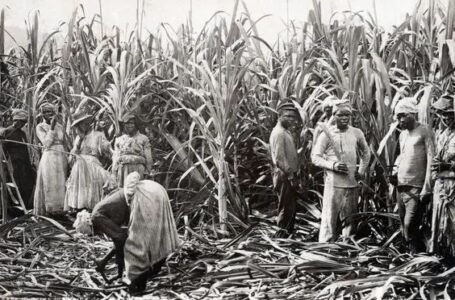
A major component was the remittance of salaries, pensions, and savings by British civil and military officials, who earned in India but spent largely in Britain. The profits earned by British-owned businesses (plantations, trade) were also transferred to Britain rather than invested locally. This meant that Indian resources and workers were being exploited without getting anything in return. Another significant route of this drain was the “Home Charges,” a range of expenses charged to Indian revenues but incurred in Britain, including administrative costs, interest on public debt, and payments to the India Office.
Moreover, the cost of maintaining the British Indian Army and financing imperial wars was borne by Indian revenues, even when these conflicts did not serve Indian interests.
All these factors contributed to the declining economy of India under colonial rule.
Agrarian Economy and Rural Distress
Agriculture formed the backbone of the Indian economy, yet it suffered immensely under British rule. Land revenue policies, such as the permanent settlement, zamindari system, ryotwari system, etc, imposed heavy taxes on farmers. High revenue demands, without any consideration for natural calamities or crop failure, forced peasants into cycles of debt and poverty.
The emphasis on cash crops such as indigo, cotton, and opium further worsened the situation. Farmers were forced to grow these crops instead of food grains, leading to reduced food availability and increasing vulnerability to famines.
Decline of handicrafts industries
One of the most significant changes during British rule was the decline of India’s traditional industries, especially handicrafts and textiles. Indian artisans, who had once enjoyed global recognition, found themselves unable to compete with cheap, machine-made goods imported from Britain. Compared with machine-made goods, handmade goods by Indian craftsmen seemed expensive and thus lost market share.
Policies favoured British industries, while Indian products faced restrictions and a lack of support. As a result, many artisans lost their livelihoods and were forced to shift to agriculture, adding further pressure on an already strained rural economy. The Indian economy was systematically deindustrialised by the British to serve colonial interests.
Infrastructural developments
The British introduced railways, telegraphs, and modern communication systems in India, along with maritime trade routes. While these developments are often seen as positive contributions, they were largely designed to serve colonial interests.
Railways, for instance, facilitated the movement of raw materials from the interior to ports for export, and the distribution of British goods within India. They did not take into consideration the needs and demands of the industries in India. They were also developed to ensure rapid movements of troops for security.
Land Revenue Policies
Land revenue systems, like Permanent Settlement, Ryotwari System, Mahalwari System, and Taluqdari System, aimed at maximising land revenue, causing distress to farmers and widespread rural poverty. The Zamindars did not care about the condition of farmers or crop failures. Due to the Sunset Law, they were focused on getting their revenue. This trapped the farmers in cycles of debt and poverty.
Poverty and Famines
One of the most visible consequences of colonial economic policies was widespread poverty. Despite India’s natural resources and labour force, a large section of the population lived in extremely poor conditions, with no or little access to basic amenities.
Famines became more frequent and severe during British rule. The lack of effective relief measures, combined with policies that prioritised revenue collection over welfare, worsened the situation. Economic exploitation, along with administrative indifference, contributed to large-scale human suffering.
Economic Stagnation
The overall result of these policies was economic stagnation. While some sectors showed limited growth, the economy, as a whole, did not experience any significant development. Industrialisation was slow, agriculture remained underdeveloped, and income levels remained low.
The absence of investment in education, technology, and industry further restricted any progress. India’s economy was structured in a way that benefited the colonial power rather than its own people.
The state of the Indian economy during British rule reveals a deeply disturbing and complex picture. While there were instances of development, they were mostly overshadowed by widespread exploitation and inequality in the society. The transformation of India into a colonial economy disrupted its traditional systems and limited its potential for independent growth.