Gatore ki Chhatriyan: Preserving Jaipur’s Royal Legacy

-Devashree Kulkarni
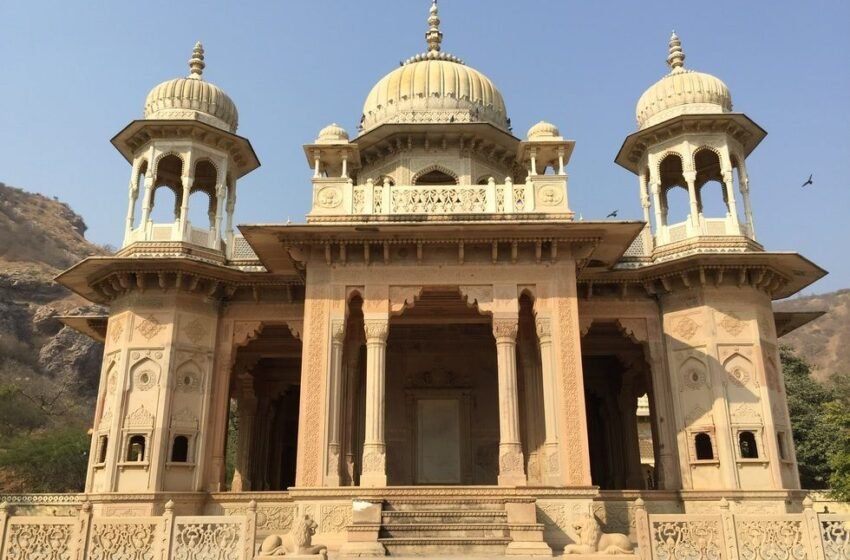
Just a short distance away from the vibrant chaos of Jaipur lies a place where time seems to slow down. A historic landscape where art, memory and legacy comes together. This peaceful place, Gatore ki Chhatriyan is located near the slopes of Nahargarh Fort in Jaipur.
Even though it looks like a pack of dome structures at one place but then when you step inside the realization hits that how this place can hold power in soft silence.
A Royal Goodbye Etched in Stone:
The word ‘Gatore’ is believed to mean ‘the resting place of the departed’ and that meaning echoes through every corner of this serene complex. It serves as the royal cremation ground of the Kachwaha Rajput rulers of Jaipur.
After the passing of Maharaja Sawai Jai Singh II, the founder of Jaipur, this site became the designated place for royal cremations. Each ruler who followed was honored with a chhatri (cenotaph), built in their memory. These cenotaphs are not tombs in the traditional sense they do not hold remains but they preserve something far more enduring: legacy.
Walking around Gatore feels like turning pages of history books where each structure tells a different story of legacy and bravery.
Storytelling Architecture:
Gatore truly stand out due to its elegant architecture. The cenotaphs are crafted using a mix of marble and sandstone reflects a perfect design blend of Rajput and Mughal.
One of the noticeable structure is Cenotaph of Maharaja Sawai Jai Singh II which is entirely made up of white marbles. Its intricate carvings featuring delicate floral patterns, geometric designs and symbolic motifs are so finely detailed that they seem almost alive.
Another striking structure is Cenotaph of Maharaja Sawai Madho Singh II which has symmetrical beautifully intricated pillars, this cenotaph is made as per new evolved design pattern and known for it. Each and every dome, pillar and panels tells about the life it commemorates bravery, power, devotion and sometimes even humility.
Historical Importance of the Kachwaha Dynasty:
The cenotaphs at Gatore are closely tied to legacy of Kachwaha Rajputs, one of Rajasthan’s most influential royal dynasty.
The Kachwahas ruled Amber before shifting their capital to Jaipur under Sawai Jai Singh II. They had an alliances with Mughals while preserved their region and culture independently.
Several rulers of this dynasty served as military commanders under Mughal emporers. They played a crucial role in political development in northern India. Their kingdom became famous for architecture, art, culture and military strength. Gatore represents the legacy of these great rulers and Jaipur’s royal history.
Peace in Silence:
In vibrant chaotic city life of Jaipur this place is completely opposite which is quiet and peaceful. No loud crowd, no rushing, no running behind the time there is only silence, time slow downs in Gatore, you can hear your heartbeat and connect to the brave souls honoured there. You might find yourself slowing down without even realizing it. Sitting under one of the domes, feeling the cool stone beneath you, and listening to the soft rustle of wind it becomes less about sightseeing and more about experiencing.
Cultural Significance:
In Rajput tradition, honouring the departed one is not just a normal ritual but also to show respect and remembering them not by loud way. Instead, they carry a quiet dignity, symbolizing how rulers were remembered not just for their power but for their contribution and presence. Gatore ki Chhatriyan is a prime example of how architect and place can bind the legacy and emotions together.
Visit to Gatore:
Gatore is dream place for artist, photographers and travellers or those who enjoy the subtle beauty of historic places. The way sunlight filters through the carved pillars during early morning or late afternoon creates a magical play of light and shadow. The raw elegance of the place and every angle offers a frame worth capturing, the symmetry of domes, the texture of stone or the contrast between light and shade. Even if you’re not a photographer, you’ll find yourself pausing to admire the details.
The best time to visit is during early morning or just before sunset, when the weather is pleasant and the lighting enhances the beauty of the carvings. This place is away from the rush and loud life of city and unlike other tourist spots this place carries soft silence and peace which is maintained by the visitors as well.
Gatore in today’s world:
Today, Gatore Ki Chhatriyan remains one of Jaipur’s most underrated heritage sites despite its immense historical and architectural value. Historians, photographers, architects and travelers often consider it a hidden gem because it offers a more intimate experience compared to Rajasthan’s heavily crowded forts and palaces.
For many visitors, Gatore represents a quieter side of Jaipur one focused not on tourism or spectacle but on heritage, artistry and reflection. In many ways, Gatore tells the story of how societies choose to remember their rulers. These cenotaphs were not built to just flex the royal pride but to preserve memory, honor legacy and celebrate artistic excellence. Through their architecture and silence, they reveal the values of the Rajput world dignity, loyalty, spirituality and respect for ancestry.
Even after centuries this place carries historical and emotional importance among the locals and visitors. This place connects a past and present together and gives a life time experience to observe the cenotaphs of kings who one’s shaped the history of Jaipur and remember them through the art. Gatore ki Chhatriyan will always be the place where you can revisit the royal history of Rajasthan and roam around in peace.