Maharaja Sawai Jai Singh II: The King who built Jaipur

-Devashree Kulkarni
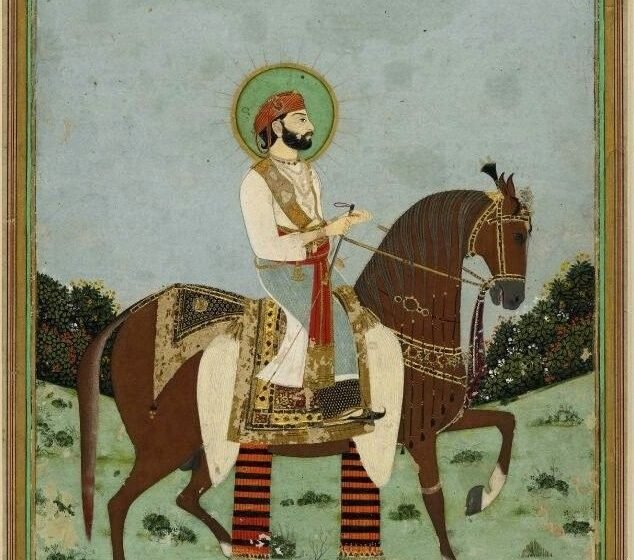
History remembers kings for their victory in wars and political power but some rulers leave behind a greater legacy. One of such extraordinary ruler was Maharaja Sawai Jai Singh II, the visionary Rajput king who founded the city of Jaipur and transformed it into one of India’s greatest cultural and architectural wonders.
Even today, more than 300 years later, his strategic planning in Jaipur can be observed through planned streets, magnificent observatories and royal heritage. He was not just a king he was an astronomer, urban planner, diplomat, scholar and thinker far ahead of his time.
His Early Life:
Sawai Jai Singh II was born on 3 November 1688 into the Kachwaha Rajput dynasty of Amber near Jaipur (present day) in Rajasthan. His father was Raja Bishan Singh who was the ruler of Amber and served under mughal empire. After his father’s death at the age of eleven Jai Singh inherited the throne in 1699.
At such young age, Jai Singh showed extraordinary intelligence and leadership qualities. Aurangzeb who was mughal emperor got impressed by his intelligence and bravery at such young age and gave him the title ‘Sawai’ meaning ‘one and a quarter’ which indirectly means that he is better or superior than ordinary man. This title added permanently to his identity.
Since early age he got education of politics, warfare, mathematics, astronomy, Sanskrit literature and Persian. He developed a great interest in scientific studies which was uncommon among the rulers of that time.
Political Situation During His Rule:
Jai Singh became ruler during a period of major political instability in India. The Mughal Empire was declining at that time and the powerful rulers of specific regions like Marathas, Rajputs, Sikhs and Jats were becoming stronger. In such difficult times, he protected his kingdom and expanded it with military strength and strategic alliances.
He maintained relations with the Mughal court and served under several Mughal emperors including Bahadur Shah I, Farrukhsiyar, and Muhammad Shah. He had great administrative abilities and knowledge of politics thus, he was appointed as governor of Malwa and Agra which were the main mughal provinces.
Jai Singh carefully balanced loyalty to the Mughals with the protection of Rajput interests. This diplomatic approach allowed him to gain influence while many other kingdoms struggled with political conflicts.
Military Campaigns and Battles:
Sawai Jai Singh II is mainly remembered for his intellectual achievements but he was also a capable military commander and part of many campaigns under mughal empire and also protected his own territory during enemies attacks.
One of the significant conflicts associated with his reign was the Battle of Gangwana in 1741. This battle took place between Jaipur and the Rathores of Marwar. This battle weakened the dominance of Amber in Rajasthan. Despite of military challenges later in his reign, Jai Singh remained an influential political ruler with modern military organization.
Foundation of Jaipur:
The greatest achievement of Sawai Jai Singh II was the foundation of Jaipur in 1727. Before Jaipur, the capital of the kingdom was Amber. But over the time Amber became overcrowded and faced shortage of water and other resources. As a result, Jai Singh decided to build a new planned city that would serve as a modern capital.
He planned to build the modern city Jaipur with the consultation of artists, scholars and architectures. The chief architect of Jaipur was Vidyadhar Bhattacharya who was a Bengali scholar skilled in architecture, mathematics and ancient Hindu planning texts.
Jaipur was designed according to principles of Vastu Shastra and ancient Indian architectural traditions. The city was divided into organized blocks with wide roads, marketplaces, residential areas, temples and administrative buildings also strong walls and gates were built for protection.
He planned a well organized city in that era where many cities were growing unplanned. Jaipur soon became the attraction for visitors and merchants and became the center of trade, art and culture. Today Jaipur is also known as ‘Pink City’ of India and famous for it’s historic importance and preserved culture with art.
Interest in Astronomy and Science:
Sawai Jai Singh II was highly passionate for astronomy and mathematics. He believed that accurate astronomical calculations were important not only for science but also for calendars, agriculture, navigation and religious practices.
Due to his high interest in Astronomy he studied it and identified the errors and inaccuracies according to Hindu and Islam astronomical tables so he also studies other religion astronomical tables like Hindu, persian, Islamic and some european work as well.
He started conducting his own research and his dedication to science led to the construction of five astronomical observatories known as Jantar Mantar. These observatories were built in Delhi, Jaipur, Ujjain, Varanasi, and Mathura between 1724 and 1735.
The Jantar Mantar at Jaipur became the largest and most advanced observatory among them which is now recognized as a UNESCO World Heritage Site. It contains massive stone instruments used to observe celestial bodies, calculate time, predict eclipse and track planetary movements. One of the famous Samrat Yantra are considered engineering marvels.
Administration and Cultural Contributions:
He was an excellent administrator with scientific and political knowledge. He promoted trade and developed infrastructure of the market under his leadership. Due to high economic development of Jaipur many merchants from different parts of the world visited and settled there.
He also encouraged art, literature, Sanskrit learning and temple construction for welfare of people living in the city. His court became a center of intellectual and cultural activity also Scholars, poets, architects, astronomers and artists received royal patronage.
Jai Singh believed in Ancient Hindu traditional practices and performed important Vedic rituals such as the Ashwamedha and Vajapeya sacrifices. He also maintained relations with all kind of religious people and showed respect to their belief.
His ruling era was perfect blend of Indian traditional wisdom and Scientific ideology. Jai Singh successfully managed to combine governance, warfare, urban planning and science in India.
Personal Life and Character:
Sawai Jai Singh II was an intelligent, disciplined, ambitious and deeply curious about knowledge from childhood. He considered education and scientific discoveries are equally important as politics and warfare. He believed that rulers should support learning and public welfare. The construction of Jaipur and the observatories required enormous financial resources and vision, but he considered them essential for the future of his kingdom. He kept the patience to achieve his goal by building a city like Jaipur.
Jai Singh also understood the changing political situation in India. Through diplomacy and strategic alliances he maintained the necessary political relations in the crucial times, while the other kingdoms were declining.
Death and his Legacy:
Maharaja Sawai Jai Singh II died at the age of fifty four on 21 September 1743. His death marked as end of the ruler who was a intellectual, brave and great administrator in the history of the Kachwaha dynasty.
After his death the political instability became visible which in result weakened the dominance of Jaipur and also increased the inner conflicts. Still facing many challenges Jaipur is one of the important city in India known for its culture, Art, Forts and historical monuments and a massive tourist destination.
The legacy of Sawai Jai Singh II continues to live through his planned design which still attracts architects and urban planners from around the world. His contribution to astronomy, mathematics, architecture and governance were way ahead of his time. He showed the world how a ruler can be a scientist and visionary thinker. Sawai Jai Singh II transformed Jaipur into a symbol of knowledge, culture and innovation. His life represents the rare combination of bravery, intellect and creativity. He is among those few kings who worked for the development of the country. Even today, he is remembered not only as a Rajput king but also as one of India’s greatest builders, astronomers and planners. Through his achievements, Sawai Jai Singh II secured a permanent place in the history of India.