The Muromachi Period: Power, Culture, and Transformation in Medieval Japan (1336–1573)

-Prachurya Ghosh
The Muromachi period in history which was from 1336 to 1573 is really hard to put into simple words. It was not a time of peace and it was not just a time of war and chaos either. The Muromachi period was a time of change when the people in charge in the center of the country were losing power and the rest of the country was changing in big ways. To really understand Japan during the Middle Ages you have to see the Muromachi period as a time when things were not stable and when people were being very creative and sometimes these two things were connected.
The Muromachi period was named after the Muromachi district of Kyoto, where the Ashikaga shoguns had their headquarters. This time in history is between two different times in Japan. Before the Muromachi period there was the Kamakura shogunate, which was a structured military government. After the Muromachi period there was an unified state created by people like Oda Nobunaga, Toyotomi Hideyoshi and Tokugawa Ieyasu. The Muromachi period was like a bridge between these two times. During this time the old ways of doing things fell apart. Local leaders became more important. Japanese culture also developed many of the things that we now think of as Japanese culture.
What is really interesting about the Muromachi period is that even though the government was weak the culture did not decline. In fact some of the refined artistic traditions in Japan developed during this time when the central government was struggling to maintain control. The Muromachi period shows us that societies do not do well when they have strong governments. Sometimes when the rules are not so strict people can be more creative.
The Fall of the Kamakura Order
The story of the Muromachi period starts with the end of the Kamakura shogunate, which had ruled Japan since the 1100s. The Kamakura government was originally a government that was designed to manage a society of warriors while still respecting the emperor in Kyoto. For over a hundred years this system worked well balancing military power with traditional ways of doing things.
By the early 1300s things started to fall apart. One of the problems was that the government had been successful and this created some new problems. When Japan fought off the Mongol invasions in 1274 and 1281 the warriors fought bravely to defend their country. Normally when warriors won a battle they expected to be rewarded with land and other things. But the Mongol invasions did not give Japan any land so the government had to find other ways to reward the warriors. This created a lot of resentment among the warriors who lived in the provinces and who were the backbone of the government.
At the time there were a lot of arguments within the government, which made it harder for the government to work well. The economy was also having some problems and people were arguing about land and other things. The emperor, Go-Daigo saw an opportunity to restore the power of the emperor, which had been lost for years.
In 1333 there was a rebellion that overthrew the Kamakura government. For a time it seemed like Japan might go back to being ruled directly by the emperor in a time known as the Kenmu Restoration.. This did not last long because the world had already changed too much. The warriors who had helped defeat the Kamakura government expected to be rewarded and have some power but the emperors reforms only helped the aristocrats.
One of the warriors who was not happy with the emperors reforms was Ashikaga Takauji. At first Takauji was loyal to the emperor. Eventually he rebelled and established a new military government in Kyoto in 1336. This was the start of the Muromachi or Ashikaga shogunate.
A Country with Two Emperors
The early years of the Muromachi period were marked by an unusual situation: Japan had two emperors. Emperor Go-Daigo had run away to a place called Yoshino. He still claimed to be the rightful emperor. Meanwhile the Ashikaga shoguns supported an emperor in Kyoto. This created a time known as the Northern and Southern Courts period.
For sixty years the two courts competed with each other for power. Even though there was not war the conflict made it hard for the government to work well. The Ashikaga shoguns had to rely on military leaders to maintain order and this gave more power to the local leaders.
The local leaders, who were called daimyos started to take on powers that the government had previously controlled. They collected taxes made decisions about justice and managed land directly. Over time many of these leaders became like rulers and their power came from the land they controlled rather than from the central government.
When the two courts were finally united in 1392 through the help of the Ashikaga shoguns the government was still not very stable. The power had already shifted away from Kyoto and towards the provinces.
The Nature of Ashikaga Power
The Ashikaga shoguns did not rule in the way that the Kamakura shoguns had. Of having a strong centralized government the Ashikaga shoguns ruled through negotiations and alliances with powerful families. Their power came from their relationships with leaders and their ability to balance different interests.
Kyoto was still a city because it was the capital and the center of aristocratic culture.. The real power was now in the hands of the local leaders, who controlled their own regions.
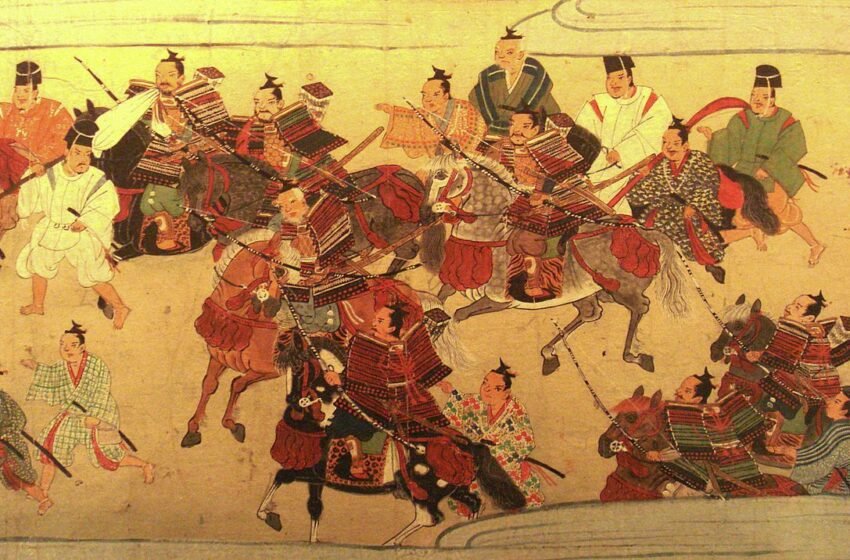
The warriors or samurai were also changing during this time. They were no longer fighters, but also administrators, managers of estates and local officials. To govern effectively they needed to be able to read and write manage money and negotiate with leaders.
This system was both good and bad. On the one hand it allowed for diversity and innovation. On the hand it was not very stable and it relied on strong leaders to work well.
Economic Life Beyond the Battlefield
Even though there was a lot of conflict during the Muromachi period the economy was still growing. New farming techniques and better irrigation systems allowed for more food to be produced. Villages became more self-sufficient. People worked together to manage their resources and resolve disputes.
Trade also increased, with markets and merchants. Guilds were formed to regulate trade and protect the interests of traders. The coastal shipping networks connected parts of Japan allowing goods like rice, ceramics and textiles to be traded more widely.
Japans trade with China was also very important. Official missions brought back silk, books and artistic influences which helped to stimulate the economy. The use of money became more common which helped to promote trade and commerce.
As the economy grew social classes started to change. Merchants and artisans became more important even though they were still considered to be below the warriors and aristocrats in terms of status.
Culture in an Age of Uncertainty
One of the remarkable things about the Muromachi period is its cultural achievements. Even though the government was not very stable, art and culture flourished under the influence of Zen Buddhism.
Zen emphasized simplicity, discipline and direct experience. These ideas influenced art, literature and philosophy. Ink painting became more popular with a focus on suggestion and simplicity than detailed decoration.
The tea ceremony also developed during this time as a way to cultivate humility, harmony and attention to detail. Garden design became more minimalist with an emphasis on materials and careful arrangement.
Noh theater also reached its peak with performances that combined music, poetry and dance to explore themes of memory, loss and spiritual transformation.
The Height of Ashikaga Prestige
The Muromachi shogunate reached its peak under Ashikaga Yoshimitsu in the 1300s. Yoshimitsu was able to end the division between the two courts strengthen relations with China and restore Kyotos prestige.
His cultural patronage was a symbol of the spirit of the age. The famous Golden Pavilion, which was originally built as his retirement villa embodied the fusion of power, wealth and artistic refinement.
Yoshimitsus achievements also showed a weakness in the system. The stability of the government relied much on his personal leadership rather than on strong institutions. After he died the old conflicts and power struggles returned.
The Onin War and Political Collapse
By the 1400s the conflicts between families and factions had intensified. The war that resulted, known as the Onin War was devastating. Kyoto was. The government was shattered.
The Ashikaga shogunate never really recovered from this war. The local leaders or daimyos returned to their provinces. Ruled independently marking the beginning of the Sengoku or “Warring States,” period. Japan was now divided into competing domains each with its own ruler.
The Sengoku Transformation
Paradoxically this time of war and conflict also accelerated change. The daimyos built castles that served as both strongholds and administrative centers. Around these castles towns grew up filled with merchants, craftsmen and migrants looking for opportunities.
Armies became more organized and professional with talent and ability becoming more important than birth or social status. Economic networks expanded, in the midst of conflict as rulers needed to supply their armies and collect taxes.
Peasants and religious communities sometimes resisted the power of the daimyos showing that power was no longer monopolized by the elites. Society was becoming more dynamic and mobile with opportunities and challenges emerging.
Religion and Intellectual Exchange
Religion played a role during the Muromachi period. Zen monasteries were not spiritual centers but also hubs of education, diplomacy and artistic production. Monks traveled between Japan and China bringing back ideas and influences.
At the time Buddhist movements that appealed to ordinary people were growing rapidly. These movements emphasized devotion and faith than complex learning and attracted large followings among farmers and townspeople.
Confucian thought also became more influential contributing to discussions about ethics, governance and social order that would shape Japans modern period.
Everyday Life
For people the Muromachi period was not all bad or all good. There were times of war and disruption. Also times of growth and opportunity. Villages developed their institutions and ways of managing resources. Craft industries. Markets connected communities more closely.
The Muromachi period was an fascinating time in Japanese history, marked by both conflict and creativity. It was a time of transition when old ways of doing things were falling apart and new ones were emerging. The Muromachi period laid the groundwork for the emergence of a Japan, in the centuries that followed.
Festivals and religious gatherings and urban markets created shared experiences for people from different classes. Even when there was conflict everyday life kept moving towards economic integration.
The End of the Era
The Muromachi period officially ended in 1573, when Oda Nobunaga forced the Ashikaga shogun out of Kyoto.. By that time the way people were governed had already changed. Powerful leaders from regions were working towards uniting the country.
Nobunaga, then Hideyoshi and finally Tokugawa Ieyasu, created systems of governance based on the developments that happened during the Muromachi period. Like local administration, growth of businesses and the changing role of the samurai.
Why the Muromachi Period Matters
The Muromachi period is important because it was full of contradictions. Even though the government was not strong the culture was very rich. The fact that the central government was not in control allowed people to try things at the local level. The economy kept growing during wars.
Many things that people think of as Japanese like Zen aesthetics and tea culture and Noh drama and garden design became what they are today during the Muromachi period. At the time the way society and the economy were changing prepared the way for Japan to become a modern country.
Of thinking of the Muromachi period as a time of decline between stronger governments historians now think of it as one of the most important times in Japans history. Old ways of doing things disappeared, new systems. Society changed quietly.
The Muromachi period teaches us a lesson about history. Change often happens not when everything is stable. During times of uncertainty when old institutions are not in control of what is happening in society. In Japan the time between the collapse of one system and the creation of a new one was one of the most creative times, in the countrys history. The Muromachi period was a time of change and the Muromachi period is still important today because of that.