THE SILENCE OF PANCHAVATI – The forest that changed the Ramayana forever

~Tanushree Wadodkar
I have always been deeply interested in any place that has traces of the Ramayana. When my dad moved to Nashik, I knew this was my chance to visit Panchavati. And it was like stepping into the story I had grown up hearing. Panchavati marks the turning point in the story. It is the place where the Ramayana truly changed its course.
Walking through Panchavati today feels strangely surreal yet calming. The narrow paths, the temples, the ghats along the Godavari, and places like Sita Gufa make mythology feel unexpectedly close. Whether one views the Ramayana as history, literature, or faith, there is something undeniably powerful about standing in a place so deeply tied to a story that has shaped so many generations, including mine.
Panchavati
Located on the banks of the Godavari River in Nashik, Panchavati is a profoundly sacred place, remembered as the site where Ram, Sita, and Lakshmana stayed during their 14-year exile. The name comes from five ancient banyan trees (Panca Vata) that are believed to have existed since the time of the Ramayana. Thus, the name Panchavati means “Garden of five Banyan trees” (Panch- five; vati- banyan tree).
The region is referred to as “Banaras of western India” because of the numerous temples and spiritual environment.
Connected to the Ramayana
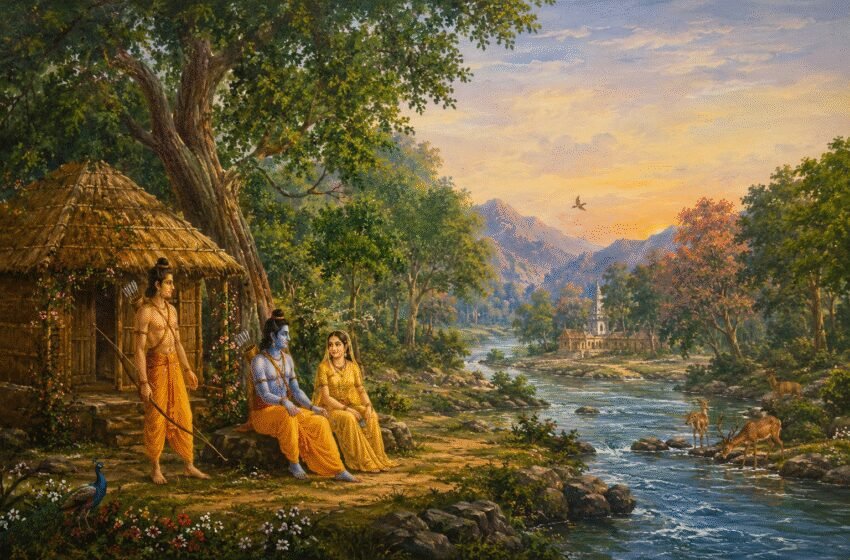
Panchavati was part of the Dandakaranya Forest, where Ram, Lakshmana, and Sita stayed during their Vanvas. It is believed to be the location where Lord Rama built his hut, and is connected to many events in the Ramayana.
This is the place where Lakshman cut off Shurpanakha’s nose, thus giving the city its name: Nashik. This is also where Sita spotted the golden deer and was abducted by Ravana.
Sita Gufa (Sita’s Cave), near the Banyan trees, is where Sita stayed and prayed to Lord Shiva. Inside the cave, there is an ancient Shiva Lingam where Sita offered prayers. Ramkund is a holy water tank where Lord Rama is believed to have bathed during their stay. Devotees come from all over the state to take dips in this water. Located roughly one kilometre away from Sita Gufa is the Lakshaman Rekha spot. The protective line that Lakshman drew to keep Sita safe when he went to search for Ram (who had gone to find the golden deer). Another site is the Tapovan, a rocky riverine located ahead of Panchavati. This is where the critical encounter with Surpanakha happens. Tapovan also has a temple dedicated to Lakshman, along with a visual depiction of the scene.
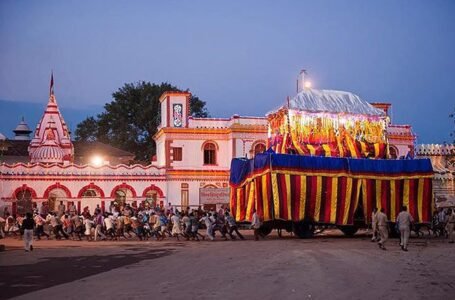
The Kalaram Temple (one of the most famous sites), built in 1782 using black stones from the Ramshej Hills, is believed to rest on the very spot where Lakshman built their hut.
The Story
Ram, Sita, and Lakshman had found Panchavati to be a calm, beautiful place to live in for the remaining duration of the exile. They had created a home surrounded by the forest and the Godavari. For a while, there was peace.
One day, Surpanakha (Ravana’s sister) spotted Ram and was enchanted by his beauty. She transformed into a beautiful maiden and approached him with a marriage proposal. Ram, however, gently refused, saying he was already married to Sita, and playfully directed her to his brother Lakshman. Lakshman also rejected her proposal as his duty was to serve his brother Rama.
Enraged and humiliated, Surpanakha turned her anger towards Sita, whom she saw as the reason for her rejection. She attacked her, and Lakshman intervened by cutting off her nose and ear. She fled from there, screaming and disfigured. She first went to her brothers, Khara and Dushana, and they attacked Ram and Lakshman to avenge their sister’s humiliation. But Ram and Lakshman destroyed their army and killed them both. Surpanakha then went to Ravana and narrated the whole incident. She described Sita’s divine beauty to manipulate him to kidnap her. Ravana approached his maternal uncle, Marich, to help him abduct. Marich refused and told Ravana that Ram was an unstoppable force of dharma, and he could not defeat him. (Marich had already witnessed the powers of Ram when he killed his mother, Tadaka). Ravana threatened Marich with death if he did not help him. Marich agreed, thinking he would die by the divine arrows of Lord Rama.
Marich transformed into a beautiful golden deer. Sita, captivated by the deer, requested Ram to bring her the deer. Although Lakhman was suspicious, Ram agreed to please his wife. He went after the deer, but could not catch it. He fired an arrow, and when it hit the deer, Marich revealed himself. Before dying, he mimicked Ram’s voice and yelled for Sita and Lakshman. Sita, scared after hearing his screams, forced a hesitant Lakshman to go find Ram. Lakshman drew a protective line around the hut (Lakshman Rekha) and asked Sita not to cross it.
With Ram and Lakshman both gone, Ravana disguised himself as a sage and came asking for alms (bhiksha). Sita came to give him the alms but did not cross the line. Ravana also could not enter beyond the rekha. He got angry that she would not come to him to give him the bhiksha, and he refused to accept it. Sita, fearing the Rishi’s wrath, crossed the Lakshman Rekha to offer him the alms. That’s when Ravana revealed himself and kidnapped Sita. When Ram and Lakshman rushed back, realising the trap, they found that Sita had already been abducted.
This episode marked a crucial turning point in the Ramayana.
A piece of history
Visiting Panchavati today feels like stepping into something sacred. It feels like waking through the story I have grown up listening to. And many others like me visit Panchavati to connect with Lord Rama.
Devotees and tourists visit sites such as Sita Gufa, Kalaram Temple, Tapovan, Ramkund, Godhavari Ghat, and Kapaleshwas Mandir. The air in Panchavati feels strangely calming and peaceful. It’s almost like the blessings of Lord Rama are still present there.
Panchavati is just as beautiful as it is crucial to the Ramayana. It was the place where Rama, Sita, and Lakshmana briefly found a sense of quiet during exile. Yet it was also the place where the story changed its course. The forests that once lay, surrounded by calm and simplicity, soon became associated with separation, revenge, and the beginning of war.