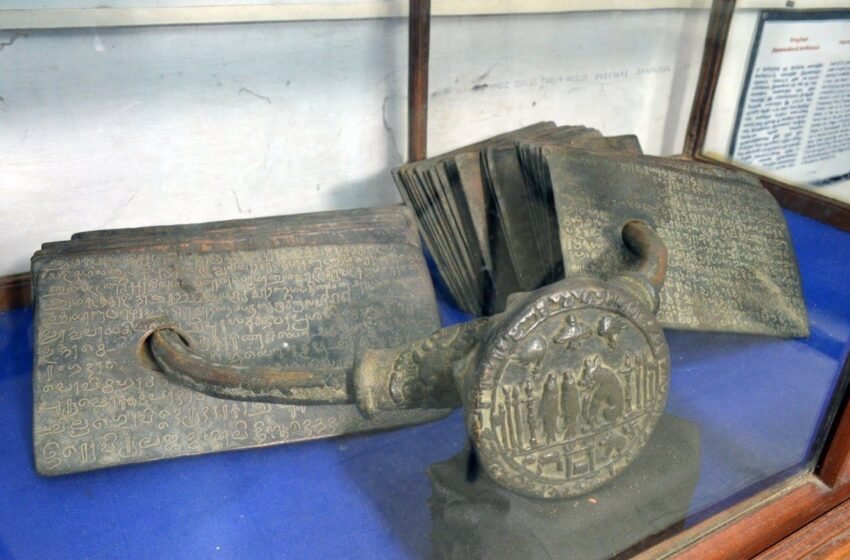
-Oishee Bose For centuries, Timbuktu has lived in the global imagination as a contradiction. On modern maps and in popular speech, it is invoked as a synonym for remoteness, a place at the edge of the world, distant from centres of power and thought. Yet the manuscript record left behind by its scholars tells a […]Read More
Tags : TRADITIONAL MEDIA
-Oishee Bose The popular Bengali lullaby, “Khoka ghumālo, pāṛā jūṛālo, Bargi elo deshe” sounds like an ordinary domestic verse. However, the lines carry a weight: a mother’s low voice folded over the image of a ruined harvest, vanished savings and a threat that arrives with the night. This lullaby is not merely a song to […]Read More
~ Debashri Mandal The name of Shiva isn’t unknown to the world. People from the various corners of the earth have known him for ages and generations, irrespective of their religious values and communal beliefs. Lord Shiva, known as Devo ke Dev: Mahadeva, means the God of the Gods in Hindu scriptures such as the […]Read More
-Oishee Bose For many observers in the mid-twentieth century, Japan presented a convincing image of social discipline: regimented schools, deferential workplaces, and a tightly policed public morality that valued conformity, hierarchy, and a narrowly circumscribed feminine ideal. That very culture of visible order and predictability makes the sukeban phenomenon all the more contradicting. From the […]Read More
-Aritra Biswas The post of INS V Kaundinya holds a unique position in the Indian Navy not only as it fulfills the role of its work but also as the name itself has a strong historical connotation. The vessel is a symbol of a rare intersection between the Indian traditional nautical culture and its modern […]Read More
-Oishee Bose Sources, memory and the problem of visibility In many conventional accounts of Indian history, Lachit Borphukan’s narrative lies on the margins not because of his lack of merit and accomplishment but due to how Indian historiography developed. Lying apart from the Indo-Gangetic political centre that dominated Mughal records and subsequent colonial historical writing, […]Read More
~ Debashri Mandal The Kadamba dynasty is considered to be the first indigenous ruling house of Karnataka, rising in the 4th century CE, to have established a powerful kingdom in the northwestern region of Karnataka. Mayurasharma (also called Mayuravarma), a Brahman from Talagunda in the modern Shivamogga district, was the founder of the Kadamba Dynasty. […]Read More
-Prachurya Ghosh For most of human history, language did not wait for ink. It rushed ahead, impatient, volatile, alive. People spoke faster than hands could move, faster than pens could scratch across stone, parchment, or paper. Speech had urgency. Writing had weight. Between them lay a gap—sometimes small, sometimes catastrophic—and shorthand was born inside that […]Read More
-Prachurya Ghosh There is something deeply inconvenient about Nilamādhaba. He does not arrive where power expects him.He does not stay where authority wants him.He does not behave like a god who can be scheduled, processed, or fully understood. And perhaps that is why the Jagannath tradition never erased him. It absorbed him, carefully, almost nervously—like […]Read More
-Prachurya Ghosh Bengali folklore does not imagine ghosts as visitors from another world. They are not strangers. They are not cosmic mistakes. They are outcomes. They rise from the same ground people worked, from the same rivers they crossed, from the same houses they cooked in and locked up. In Bengal, belief is not abstract […]Read More