The Silk Road’s First Influencers: How Fashion, Faith and Ideas Traveled Across Ancient Asia

-Devashree Kulkarni
Long before social media influencers and trendsetters there were merchants, monks and travelers were the first influencers and influenced people by spreading ideas, beliefs, fashions and culture while traveling around different regions. There were no smartphones and social media they used caravans, ships and trade routes to connect with people.
One of the most important network of cultural exhange was Silk Road. Silk and spices were traded along these routes, religions, languages, technologies, artistic styles and new ideas also traveled across Asia, the Middle East and Europe and continue to influence the world
A Road That Was Never Really One Road:
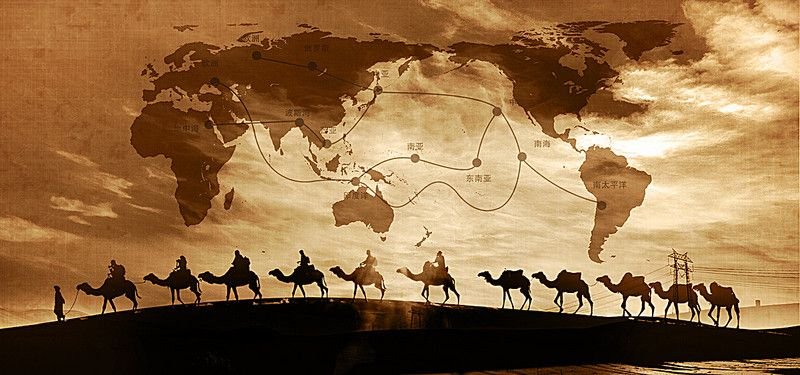
The ‘silk road’ term was imagine as a single road across Asia but it was a vast network of trade routes connecting East Asia, Central Asia, South Asia, the Middle East and parts of Europe.
Still many traders never traveled the entire route. Goods passed from one group of merchants to another and that’s how the goods used to travel around the way. People from different regions were involved with those goods and it gave rise to various stories, beliefs, fashions and innovations.
Merchants: The Original Trendsetters:
Merchants introduced locals with new lifestyle and fashion, Chinese silk was popular among them due to its softness, vibrant colors and luxurious appearance. As locals from few other regions had never seen such fashionable clothes were highly fascinated by their clothes and eventually the demand spread. This process repeated itself countless times across Asia.
Chinese silk became a symbol of wealth and prestige in distant kingdoms. Persian textiles influenced clothing styles in Central Asia. Indian cotton fabrics found admirers far from their place of origin. Fashion trends crossed borders centuries before the modern concept of global fashion existed. Luxury goods often carried cultural significance as well.
The Spread of Buddhism Across Asia:
Buddhist monks played a major role in spreading religious ideas and beliefs. Buddhism was originated in India through the teachings of Siddhartha Gautama, gradually spread to Central Asia, China, Korea and Japan as monks traveled alongside traders and shared their religious teachings, value and also many people related and respected them also joined the religious practices.
The Monasteries became important centers of learning and spiritual guidance for locals and interested visitors. The translation of religious script helped Buddhist ideas reach new communities. In China, Buddhism became one of the country’s major religion and spread beyond. It shows how culture and religious value travelled long distance on silk road.
Cities That Became Cultural Crossroads:
The Silk Road’s greatest influence emerged in its cities. Merchants became familiar to different places and learned the local languages for trading in marketplaces. Artists exchanged techniques, art and inspiration.
Walking through different cities, some traders negotiate with chinese traders, Indian monks spreading knowledge and discussing religion with other scholars. Along with that, foods, languages, clothing styles and artistic traditions were exchanged and coexisted.
How Art Traveled Across Continents:
Art was another powerful traveler along the Silk Road.As religions spread, artistic traditions traveled with them. Buddhist sculptures provide one of the clearest examples. Early Buddhist art in India generally avoided depicting the Buddha in human form. But after the influenced regions by Greek artistic traditions left behind and new artists started creating realistic human representation of Buddha. Such fusion of Greek and Indian artistic styles known as Gandharan art. Also the Buddhist caves in China were influenced by the Indian and local chinese traditions.
The Silk Road did not merely transmit ideas, it transformed them. Every culture that adopted foreign influences adapted them to local tastes and traditions.
The Journey of Technologies and Knowledge:
The technological innovations also spread around the silk road and one of its finest example is ‘Paper’. It was invented in China and spread rapidly westward through trade and cultural contact. Earlier everyone relied on expensive parchment or papyrus for writing. But after paper came into existence and helped traders and others to keep records and documents easily.
The arrival of paper revolutionized communication and education. The teachings and knowledge could be easily copied and used worldwide. Some other innovations such as Agricultural techniques, methods of irrigation, medical knowledge, astronomical observations and manufacturing skills moved between civilizations. Scholars learned from one another and established an intellectual exchange pathway. This helped the societies to develop and progress further.
Faiths on the Move:
Buddhism, Christianity, Zoroastrianism, Manichaeism walking successfully on silk road and later Islam also spread through trade networks. Merchants started establishing communities in distant cities and town and carried their faith with them.
Merchants from different religions exchanged ideas, values and influenced each other’s practices. The Silk Road became one of history’s greatest arenas of religious interaction. They adopted the activity to interact while travelling and try to understand each other’s perspective which interconnected the economic and cultural exchange.
Why the Silk Road’s Influencers Mattered:
The Silk Road was more than an ancient trade route for goods like silk and spices. It was a network of cultural exchange that connected people and lifestyles across Asia and beyond. Merchants, monks, travelers and artisans became the world’s first influencers by spreading religions, fashion, technologies, artistic styles and new ideas wherever they traveled. They started few trends of there origin in other regions. Today’s influencers are connected to people digitally but these silk road influencers connected people through direct human interaction, creating cultural changes that lasted for centuries. The Silk Road demonstrated that ideas and beliefs could have a greater impact than material goods and its legacy can still be seen today in the religions, art, traditions and cultural practices shaped by centuries of exchange.