The History of Water Management in India: From Stepwells to Smart Cities

-Devashree Kulkarni
Water management history of India is a story of innovation and adaptation of water storage systems over 4000 years. It developed over the ages as a drainage systems of the Indus Valley Civilization to the magnificent stepwells of Gujarat. Today, Indian communities have developed creative ways to collect, store and distribute water. The managing of an essential life resources shaped by monsoons, rivers, droughts and deserts, these solutions reflect a continuous tradition of engineering, environmental wisdom and resilience.
The First Water Engineers: The Indus Valley Civilization
Story begins around 2600 BCE in the cities of the Indus Valley Civilization where cities such as Harappa, Mohenjo-daro, Dholavira and Lothal reveal had great understanding in water management. The discoveries of drainage systems, public baths, wells, reservoirs and channels.
In ancient times people used to depend on large rivers only but the people of the Indus Valley developed diverse strategies to conserve and manage water resources. Indian urban development starts from the sustainable water management.
Rivers, Agriculture and Ancient Kingdoms:
When Indus Valley Civilization declined, agriculture became the backbone of society which make water management critical. Ancient kingdoms invested in irrigation systems, canals, ponds and tanks for farming communities.
At one point water became a foundation of economic prosperity and political stability rather than a natural resource. Ancient rulers understood that successful agriculture depended on reliable access to water. Crop failures caused by drought could threaten entire kingdoms and it eventually leads to take water management seriously for survival.
The Mauryan Vision of Water Administration:
During Maurya Empire water management became part of administrative system. They focused on irrigation work and water resources to support agriculture and trade. Sudarshana Lake in Gujarat was constructed during the Mauryan period, the reservoir served irrigation and water-storage needs for centuries. The Mauryans recognized that water projects required maintenance, supervision and investment.
The Rise of Tanks and Reservoirs
Rulers from southern India like the Cholas, Pandyas and Kakatiyas built water reservoirs and large tanks to store rainwater during monsoon season. These tanks were connected by channels which allowing water to flow efficiently. It was helpful for people use it for an entire year also the locals helped to maintain and manage these systems and making it their responsibility.
The Marvel of Stepwells:
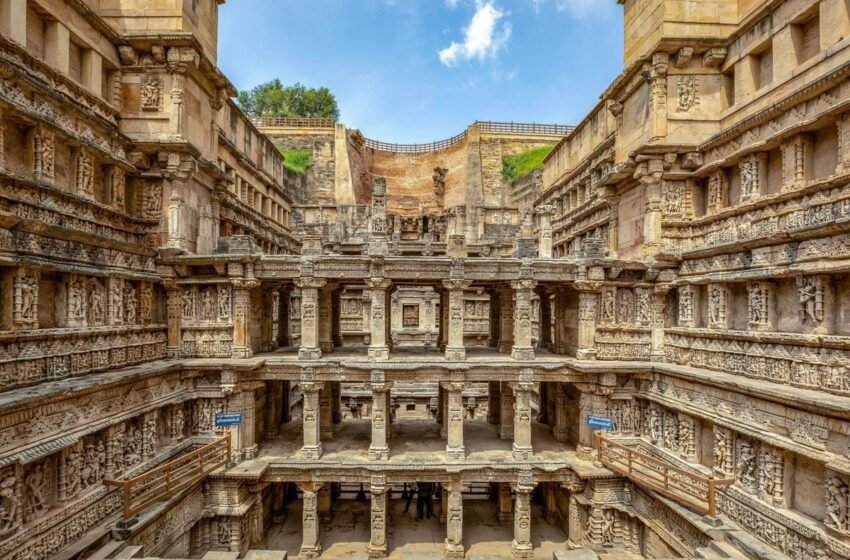
India during the medieval period has developed stepwells also known as baolis, vavs or bawdis. Mostly found in Gujarat and Rajasthan due to water scarcity in these regions. These wells had staircases that allowed people to reach water at different levels throughout the year.
The Rani ki Vav became an attraction due to its beautiful architecture and carvings. Stepwells provided water, helped travelers, served as community gathering places.
Water and the Delhi Sultanate:
Delhi sultanate came up with new approach to urban water management. Due to expansion of the territory rulers invested in canals, reservoirs and other water storage systems. One if the example is Hauz Khas which was constructed to supply water to the growing cities and it became the crucial part of Delhi’s infrastructure.
Other rulers continued to improve water systems through dams and canals and eventually the water management leads to urban planning where growing populations required reliable supplies, forcing administrators to think beyond local wells and ponds for future.
Colonial Transformations:
The arrival of British colonial rule brought significant changes to India’s water systems. They focused on large scale irrigation projects for agricultural output and revenue collection. The canals networks were constructed in Punjab and northern India regions. This project leads to transformed agricultural landscape and expanded cultivated land. They started neglecting the traditional water harvesting systems.
While large projects increased agricultural production, the decline of traditional systems created challenges that would become more visible in later decades.
Independent India and the Age of Big Dams:
After independence in 1947, India started growing rapidly in terms of population and faced many challenges one of them were to plan large-scale water infrastructure.
At that time, Prime Minister Jawaharlal Nehru famously described dams as the ‘temples of modern India.’ The national development with the use of technology is surely evident through projects like the Bhakra-Nangal Dam, Hirakud Dam and Nagarjuna Sagar Dam.
These projects generated electricity, controlled floods and supported irrigation across vast areas and helped the farmers. Due to improved irrigation technique the agricultural productivity increased and turns into greater food security.
The Water Crisis of Modern Cities:
Cities expanded rapidly in late 20th century, all pressure were on rivers, lakes, reservoirs and groundwater reserves. Traditional water bodies disappeared beneath roads, buildings and industrial zones.
Groundwater extraction intensified. Pollution affected rivers and lakes. Seasonal water shortages became common in many urban centers.
Ironically, modern technology had not eliminated water insecurity.
In some cases, communities began rediscovering traditional wisdom. Rainwater harvesting, watershed management and tank restoration programs gained renewed attention.
Ancient solutions were finding relevance in modern contexts.
The Emergence of Smart Cities:
India today is using modern technology to manage water more efficiently. Technology is used in smart cities to detect leaks through sensors, monitor water quality and to keep record for control water supply. Promoting rainwater harvesting and wastewater recycling.
Even though the technology is new it follows few ancient techniques to save water, avoid wasting it and use resources wisely as per the local needs. The lessons learned from India’s long history of water conservation are still followed in modern world.
Learning from the Past:
India’s water management history highlights how the solution for water management was adapted over the ages. From ancient reservoirs, stepwells, bawdis, tanks to modern smart technologies, successful water systems combined engineering, planning, community participation and conservation. India’s changing climate and growing water demand, it is a need for modern world to focus on sustainable management will depend on blending modern innovation with traditional wisdom and responsible water use.