Jaigarh Fort: The Silent Guardian of Jaipur’s Royal Legacy

-Devashree Kulkarni
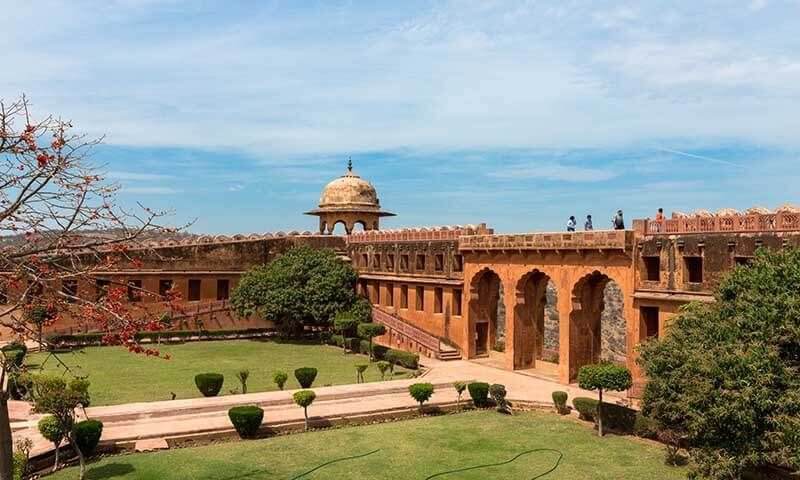
Fort stands as a timeless reminder of bravery, battles, power and royalty. Jaigarh Fort is the one built for protection, strategy and survival.It is situated high on the Aravalli hills of Jaipur and over the years it became a famous tourist place due to its massive walls, underground passages, giant cannons which reflects on rajput rulers military intellectual and great strength at that time.
Unlike the colorful beauty of Jaipur’s palaces, Jaigarh Fort feels serious and powerful. The moment visitor’s enter through the gate they can sense the the strength in silence of this fort which helped and served as a protection at the war time. Perched on the Cheel Ka Teela hill nearly 500 feet above Amber Fort making it the perfect military stronghold during times of war and political uncertainty.
Purpose behind building Jaigarh:
Jaigarh Fort was constructed in 1726 by Maharaja Sawai Jai Singh II one of the most intelligent and visionary rulers of Rajasthan. He knew how military security needed while the Rajput kingdoms constantly faced threats from invasions, political rivalries and battles for territory.
Amber fort below was a royal residence as it required a strong military security. To guard Amber, store weapons, protect royal treasure and to keep watch on enemies attack. Also soldiers used to observe surrounding valleys and other routes from miles. Unlike many forts in Rajasthan which only focused on its beauty and royal aura, Jaigarh Fort was designed with practicality in mind. Its thick red sandstone walls stretch across the hills for nearly 3 km creating a strong defensive barrier.
Inside the fort complex are watchtowers, underground water tanks, armories, cannon foundries, soldiers’ quarters, granaries and secret passages. Every structure had a military purpose. Water was stored in large reservoirs which was specifically built during the time of sieges so the soldiers, rulers and fort can survive for longer period of time without outside resources.
The most talked about and interesting feature of Jaigarh is a tunnel attached to Amber fort. Two powerful forts attached to each other was the most intellectual move. It was built for royal family members to escape safely during the time of war or sudden enemy attacks. Even today, walking through the narrow corridors and massive courtyards of Jaigarh feels like stepping into a living military camp from the 18th century.
The story of Jaivana Cannon:
The most famous attraction inside Jaigarh Fort is undoubtedly the enormous Jaivana Cannon, regarded as one of the largest cannons on wheels ever built.
Jaivana cannon was manufactured in fort’s cannon foundry during the reign of Sawai Jai Singh II, the Jaivana Cannon symbolized the military strength and engineering skills of the Rajput kingdom. The cannon’s gigantic wheels, long barrel, and overall size continue to amaze the tourists even today.
According to popular legends, the cannon was test-fired only once. The sound reportedly echoed across several villages and the cannonball traveled an extraordinary distance before landing. However, historians believe it was never actually used in battle.The existence of such a massive weapon demonstrates how advanced Jaigarh’s military production system was during that period.
Jaigarh served many rulers:
Jaigarh Fort remained closely connected with the Kachwaha Rajput dynasty, which ruled Amber and later Jaipur for centuries. Apart from Maharaja Sawai Jai Singh II, several Rajput rulers used the fort as a military center and treasury.
In Mughal period the Rajput rulers had an alliances with the mughal emperors and also protecting their region independently and due to Jaipur’s political stance, securing royal treasure and military weapons became extremely crucial. Thus jaigarh not only served for war but also to preserve royal treasure. As it was believed, royal treasures collected during military campaigns and political alliances were stored inside the fort’s hidden chambers and underground vaults. This belief later gave rise to one of Jaigarh’s most famous mysteries.
The hidden Treasure mystery of Jaigarh:
Since many decades the story flared of hidden treasure buried somewhere within the walls of the fort. This mystery story became nationally famous in 1970s when the government under Indira Gandhi ordered a search operation inside the fort. Rumors suggested that enormous treasures possibly linked to the Mughal Empire or Rajput rulers, were secretly hidden underground.
According to legends, the treasure may have been brought back after military campaigns in Afghanistan or accumulated over generations by the royal family. Soldiers and officials searched parts of the fort but no confirmed treasure was officially recovered.
Even today, locals and guides continue sharing stories about hidden chambers filled with gold, jewels and ancient wealth concealed beneath Jaigarh’s stone floors. Whether the stories anre true or not they became the the part of Jaigarh’s identity.
Jaigarh and Amber Connection:
Jaigarh fort and Amber fort are connected physically and strategically. While Amber Fort represented royal life, governance and culture, Jaigarh represented military power and protection. The tunnel between the two forts helped many rulers to escape safely during crucial times. Also soldiers could monitor the surrounding and providing security to Amber residences. It served as a first line of defense. Together these two forts reflected two equally important sides of Rajput rule royal grandeur and military strength.
Jaigarh is still alive:
The fort is unforgettable due to its history and atmosphere. The red sandstone walls, the strong moving wind in the corridors and view of Aravalli hills feels like time has barely changed here.
The fort carries a quiet energy unlike other noisy tourist places. Standing on its ramparts, looking down at Amber Fort and the city beyond visitors can almost imagine Rajput soldiers once guarding the kingdom from the same spot centuries ago.
The fort was never built for luxury and thus, it tells the story of courage, preparation, intelligence and survival. Every cannon, tunnel and watchtower reminds visitors that Jaigarh Fort was built during an era when kingdoms survived not only through beauty and diplomacy but through strength and strategy as well.