The Dangerous History of Sugar: How a Sweet Luxury Shaped Empires, Fueled Slavery and Changed Human Health

-Devashree Kulkarni
Sugar is everywhere from our morning coffee or tea to countless processed foods. For many of us it is an ordinary part of daily life. Still many of us are not aware, the sweet taste of sugar carries a history which is really bitter. A story of empire, exploitation, human suffering and profound changes to global health.
In today’s world, sugar is associated with calories, diabetes, dietary concerns and often called as white poison. Even before doctor’s warned about excessive sugar is harmful for us the sugar had already transformed economies, driven colonial expansion, fueled one of history’s largest systems of forced labor and reshaped societies across continents. The story of sugar is different that any other food item and it changed the course of human civilization.
The Sweet Grass That Traveled the World:
Sugar originates from sugarcane, a tropical grass believed to have first been domesticated thousands of years ago in New Guinea. People in old times, chew the sugarcane and realized the taste is sweet and highly edible.
From there sugarcane slowly spread through Southeast Asia and into the Indian subcontinent. Ancient Indian civilizations were among the first to develop techniques for extracting and crystallizing sugar from sugarcane juice. Also, the English word ‘sugar’ traces its roots to the Sanskrit word ‘sharkara’ which means crystalline substance.
Refined sugar required specialized knowledge and labor-intensive processing. Due to this, it was considered a luxury product reserved primarily for wealthy elites. Indian traders carried knowledge of sugar production across Asia and eventually the techniques reached Persia where agricultural innovations helped expand sugarcane cultivation across the Middle East, North Africa and parts of the Mediterranean.
Europe’s First Taste of Sugar:
It was never viewed as a normal food when sugar first reached Europe also it was treated as a medicine. European physicians influenced by Greek and Arab medical traditions prescribed sugar for various ailments. Wealthy households displayed sugar sculptures at banquets as symbols of status and prestige.
sugar was expensive and only the richest members of society could afford it regularly. A small amount of sugar could cost a significant sum, making it a luxury comparable to precious spices such as cinnamon or pepper.
The Age of Exploration and the Sugar Plantations:
In fifteenth and sixteenth centuries, European powers began exploring and colonizing distant territories. Among them were Portugal and Spain they established the colonies in those regions which are good for sugarcane cultivation.
The portuguese were successful in cultivating sugarcane on Atlantic islands such as Madeira before expanding production to Brazil. Gradually the vast portion of land was occupied to bring sugar in the market in that region but there was a huge problem of labors.
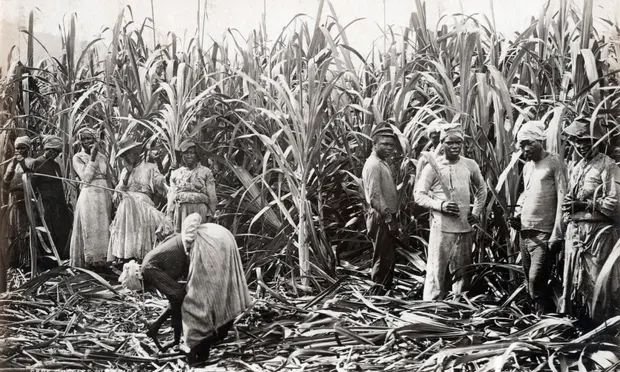
Sugar cultivation was extraordinarily demanding. Planting, harvesting and processing this entire process needed a lot of man power. The work was actually physically exhausting and sometimes done under intense tropical heat. Initially, colonists attempted to use Indigenous populations as laborers. As a result these communities started to decline due to working in harsh conditions and chronic diseases. So the European power turned to Africa.
Transatlantic Slave Trade for Sugar:
The reason behind transatlantic slave trade was the rapid increase in sugar plantation and millions of African were forcefully captured, transported across Atlantic Ocean and sold into slavery. They were sent to sugar producing colonies in Brazil and the Caribbean. The labor work was the harshest in these colonies. Enslaved individuals were packed into overcrowded ships under horrific conditions. Many died before ever reaching the Americas. Those who survived faced labor on plantation. The cultivation of sugarcane was exhausting work from sunrise to sunset also injuries were caused to many and in sugar mills where workers risked losing limbs to crushing machinery. The consequence of all these things turned into disease, malnutrition and harsh punishment contributed to extremely high mortality rates.
The immense profit is generated from millions of enslaved Africans suffering and loss on an unimaginable scale by the owners. Thus sugar production is one of the major cause of expansion of slavery in the Atlantic world.
How Sugar Built Fortunes and Empires:
Sugar had become one of the most profitable commodities on Earth during 17th and 18th century. European nations competed for control of sugar-producing territories. Caribbean colonies became economic powerhouse due to its vast production of sugar for export.
Ports in cities such as London, Liverpool, Nantes and Lisbon grew wealthy through trade connected to sugar and slavery. The sugar production contributed to broader economic developments and industrial growth in Europe.
Sweet in everyday life:
Common people could afford a product that had once been reserved for royalty. Sugar transformed diets tea, coffee and chocolate became increasingly popular beverages. Bakers developed new desserts and pastries. Jams, candies and sweetened foods became common household items.
By the nineteenth century sugar consumption had risen dramatically. It started as luxury food ingredient became so common later.
The Hidden Health Costs of Sugar:
As sugar became abundant, people began consuming far greater quantities regularly.
But as medical researchers began identifying links between excessive sugar consumption and various health problems. High sugar intake contributes to tooth decay. Also, over consumption of sugar can cause many dental issues, it can also leads to obesity, type 2 diabetes, cardiovascular disease and metabolic disorders. Sugary beverages and highly processed foods contains large amount of calories.
While sugar itself is not inherently toxic when consumed in moderation, the extraordinary quantities present in many modern diets have become a major public health concern.
Sugar in the Modern World:
Sugar is one of the world’s most widely traded commodities but its history is far deeper than its actual role as a common food ingredient. Once a luxury product that helped build empires and drive the transatlantic slave trade, sugar shaped global economies, trade networks and societies and causing human suffering through plantation labor and slavery. In this modern era, its excessive use has became a concerning factor for public health and can cause obesity and diabetes, leading governments and health organizations to promote awareness and reduce excessive consumption.The sugar production impacted on history, wealth, power, humans and health across centuries.