SKELETONS IN THE HIMALAYAS – The mystery of Roopkund Lake

-Tanushree Wadodkar
My first introduction to the Roopkund Lake was through an Instagram reel. At first glance, it looked beautiful, nested in the mighty Himalayas. But the more I read about it, the more intrigued I became.
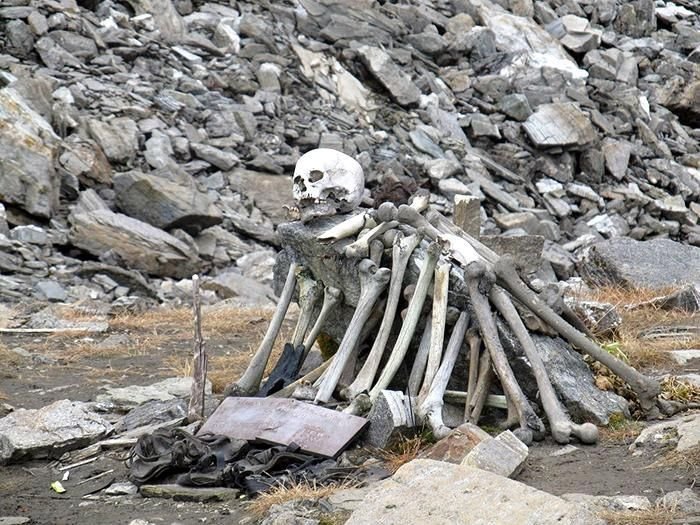
Located high in the mountains of Uttarakhand, Roopkund Lake does not seem unusual. It is remote, cold, and reachable only after a long and difficult trek. Snow covers it for most of the year. And yet, it is known for a deeply unsettling reason. Hundreds of human skeletons have been found in the lake. Bones scattered in such an isolated place raise a lot of questions. Most of which remain unanswered. Who were these people? And how could they have possibly ended up like this!?
When I first heard about this, I was shocked. I genuinely believed that this was some old myth or folklore. But no. This is real. When the snow melted, the skeletons could be seen in the usually frozen lake.
Location and Geography
Roopkund Lake is situated in the Chamoli district of Uttarakhand, India, at an altitude of approximately 5,020 meters in the Garhwal Himalayas. It lies between the prominent Himalayan peaks Trishul and Nanda Ghunti. The lake itself is relatively small, with a diameter of about 4o meters and a depth of 3 meters. It remains frozen most of the year due to the extreme weather conditions. In the summer, when the lake melts for a brief period of time, the bones and skull can be seen in the water and along the edge of the river. This is why the river is called “Skeleton Lake”.
Myths and Legends
For a long time, Roopkund was part of local folklore. Shepherds and villagers spoke of bones appearing when the snow melted. These stories were passed down quietly, often treated as warnings about the dangers of the high mountains. Local folklore attributes the deaths to a divine punishment. One legend tells the story of King Jasdhaval of Kanauj and his entourage, including his pregnant wife and dancers, who were struck by a hailstorm while on a pilgrimage to the Nanda Devi shrine. Scientific studies support this theory for the older South Asian remains, as many skulls show blunt-force trauma consistent with large hailstones. In villages in the area, there’s even a popular folk song that describes how the Goddess Nanda Devi created a hail storm “as hard as iron” which killed people winding their way past the lake. They say that they were on a pilgrimage, but the goddess was angered by their behaviour and punished them.
The presence of Mediterranean skeletons remains unexplained, with theories ranging from lost travellers to unknown expeditions.
The people who hadn’t actually seen the skeletons believed it was part of folklore, an old legend. Before the discovery, people dismissed it as exaggerations or mountain myth. The idea that so many human skeletons could be seen in such a remote and cold place did not seem believable until they were actually discovered.
Discovery
The skeletons were first discovered in the year 1942 by British forest ranger Hari Kishan Madhwal. He was patrolling the area near Nanda Devi National Park when he made the discovery. What’s more chilling is that hair and skin were still apparent on the skeletons despite their age, due to the cold.
Initially, the British officials thought that the skeletons were of Japanese soldiers from the Second World War. Some also thought they may have been victims of an epidemic. Another theory suggests that some of the remains are of Indian soldiers who tried to invade Tibet in 1841 and were beaten back.
However, radiocarbon dating and DNA analysis revealed that the remains were far older. Researchers also found objects such as leather slippers, iron spearheads, and rings that were preserved by the ice and cold temperatures. The cause of death for most of them appeared to be linked to extreme weather conditions. Evidence pointed toward sudden environmental stress, particularly hailstorms. The injuries on some skulls supported this possibility, suggesting impact from above.
Scientific studies reveal that the skeletons date back over a millennium and do not belong to a single group. Studies indicate at least three ancestries:
- South Asians (about 800 CE)
- Southeast Asians (about 1800 CE)
- Individuals of Mediterranean origin (1800 CE)
This categorisation suggests multiple events over time rather than a single catastrophe.
The cause of death appeared to be linked to extreme weather conditions. Evidence pointed toward sudden environmental stress, particularly hailstorms. The injuries on some skulls supported this possibility, suggesting impact from above.
Cultural and Religious Significance
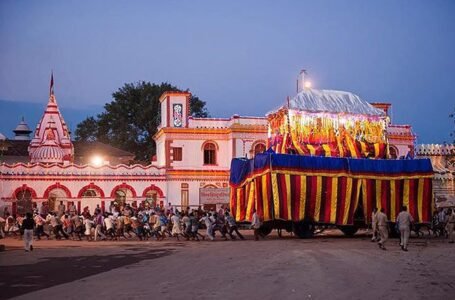
Despite the mystery surrounding it, Roopkund Lake has deep religious significance in local traditions. The sacred Nanda Devi Raj Jat pilgrimage passes through the region, where devotees honour Goddess Nanda during a journey across high Himalayan routes.
Across Uttarakhand, high-altitude regions are often approached with ritual respect. Before long journeys, it is common for travellers to seek blessings at local shrines. The mountains are not seen just as empty spaces, but as inhabited by a spiritual presence. The lake’s mysterious history, combined with its natural beauty, has inspired documentaries, books, and scientific studies, making it a unique blend of adventure, history, and archaeology.
The Present
Today, Roopkund remains a restricted but exciting trekking destination for daredevils. The route attracts those interested in both adventure and history. The journey is physically demanding, passing through forests, ridges, and high-altitude meadows before reaching the lake, and should be attempted by skilled, experienced trekkers only.
Due to environmental concerns and preservation efforts, access to the lake has been limited in recent years. The fragile ecosystem and historical remains require protection from increasing human activity.
Roopkund Lake remains one of the most unusual and eerie places in India. Nestled in the lap of the Himalayas, the atmosphere only enhances the mystery. The skeletons found here can be thought of as the unforgiving force of nature.
Scientific studies over time have been able to provide only partial clarity about the lake. They have described different groups of people from different periods of time, and have attempted to explain their presence in the area. However, even with these findings, Roopkund remains shrouded in mystery.