RETELLING THE EPICS – How epics like Ramayana and Mahabharata have been portrayed in the media throughout the decades

~Tanushree Wadodkar
We have all grown up hearing about the Ramayana, the Mahabharata, Radha-Krishna, and even Lord Shiva. These stories have been passed down through generations and retold in several different ways. Over time, the way these stories were told began to change. What once belonged to oral traditions and community spaces gradually moved into the world of mass media.
With the arrival of modern media, these stories found new spaces. What was once heard in homes, temples, and gatherings began to appear on television screens and in cinemas. This shift changed not only how mythology was accessed, but also how it was understood. The media did not simply retell these stories. It reshaped them, adapting them to fit changing audiences and formats. Although mythology is now widely accessible to a larger audience, questions arise about dramatisation and authenticity.
This article explores how mythology has been a key topic in various media formats, like literature, television, and cinema.
Early Traditions
Mythological stories have survived mainly through oral traditions. These epics were narrated at temples, public gatherings, and at home, and thus were passed down through generations.
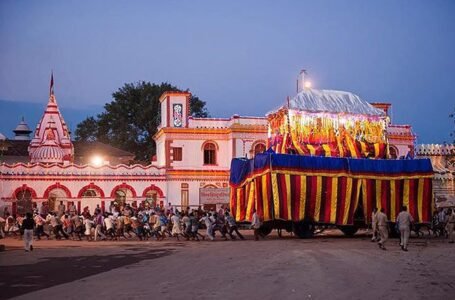
Plays were enacted, showing popular events from Hindu mythology. Ramleelas were extremely popular. It was performed during the festival of Navratri and included the re-enactment of the Ramayana. Ramleelas majorly take place in Ramnagar, Ayodhya, Vrindavan, and Delhi. In fact, the Ramnagar Ramleela lasts for one whole month and utilises the town as its stage. Whereas most Ramleelas last for about 12 to 15 days.
Traditionally, this tradition is believed to have been started by Saint Tulsidas. It still continues to be a living tradition, especially in North India. Ramlila allowed people to see, hear, and feel the story. It created a direct connection between the narrative and the audience.
Literature
Mythology started as pieces of literature- Ramayana, written by Valmiki, and the Mahabharat, written by Ved Vyas. Over time, these texts were retold and reinterpreted in different languages and regions. Versions like the Ramcharitmanas made these stories more accessible to wider audiences.
Recent pieces of literature are reinterpreting and reimagining these stories. Sita’s Sister of Kavita Kane, The Palace of Illusions by Chitra Banerjee, and Karna’s Wife by Kavita Kane retell the popular epics from the perspective of Urmila, Draupadi, and Urvi (respectively). Asura: Tale of the Vanquished by Anand Neelakantan is the story of Ramayana from Ravana’s perspective. Another example is the book Arrows of Ayodhya by Raman Sharma. Ravanputr Meghnad by Kevin Missal tells the story of Ravana’s eldest son and the great warrior Meghnad.
What’s special about mythology through literature is that we get to experience the points of view of many characters who did not really have a voice in the original story.
Early TV Serials
Early Television serials mainly retold mythological epics. They maintained the authenticity of the story and focused on simplicity. There were no grand sets or elaborate costumes or overly dramatic dialogues.
Ramanand Sagar’s Ramayan, B.R. Chopra’s Mahabharat, and Ramanand Sagar’s Shri Krishna are some of the serials that are still talked about today. These shows became more than entertainment. They shaped how a generation visualised mythological characters. The characters, dialogues, and imagery created a lasting impression, often becoming the standard through which these stories were remembered. Even today, when people think of Lord Rama, they picture Arun Govil.
Modern Television
As media technology evolved, so did storytelling techniques. Later serials began to reinterpret these narratives, focusing on different perspectives and emotional depth. Shows like Mahabharat, RadhaKrishn, Siya Ke Ram, and Shrimad Ramayan reflect this shift. Serials like Karn Sangini highlight the much-neglected story of Urvi-Karna.
However, the modern TV serials focus more on gaining TRP than maintaining the authenticity of the story. RadhaKrishn was criticised for dragging the story and for inaccurate representation. Shourabh Raaj Jain’s portrayal of Krishna is widely loved by the audience. Siya Ke Ram also sheds light on the background characters like Urmila, Meghnad, Sulochana, etc.
While these changes make mythology more engaging for contemporary audiences, they also introduce reinterpretation of the stories.
Animated works
Animated shows and movies are the best way to introduce mythology to children. Shows like Little Krishna and movies such as Ramayana- the epic, The Legend of Prince Ram, and Bal Ganesh.
Animated films and series simplify complex narratives while retaining key elements of the story. They focus on clarity and storytelling, making mythology approachable for those encountering it for the first time.
Experiments with artificial intelligence have begun to reimagine epics like the Mahabharata (AI-powered Mahabharata) in ways that were not possible before. AI-generated visuals, voice recreations, and digital storytelling formats are being used to present familiar narratives through a modern lens.
Bollywood
Bollywood, especially in recent years, has started making mythological films. This allows it to reach wider audiences and explore different aspects of the story. Adipurush by Om Raut brought the story of Lord Rama to the silver screen. Bollywood also has an upcoming film based on the Ramayana. While they make mythology accessible to a large audience, they are criticised for their poor interpretation of sacred texts.
Across all these forms, one element remains constant: Mythology is being continuously interpreted. Each medium brings its own perspective to the story, which is shaped by audience expectations and storytelling styles. This flexibility allows mythology to remain relevant. At the same time, it changes how these stories are understood. A character portrayed differently on screen may influence public perception more than the original narrative. The challenge lies in maintaining balance. Creative freedom can enrich storytelling, but it also carries the responsibility of preserving the meaning and faith associated with the story.
From literature and community performances like Ramlila to television, cinema, and animation, these stories have adapted to every new medium they encounter. Media plays a key role in keeping these epics alive, but it also reshapes them. It influences how the audience perceives the story and how they view a particular character.