MORE THAN A MARTYR – The story of Bhagat Singh

-Devashree Kulkarni
The story of India’s independence is written by countless individuals who chose sacrifice over silence, who stood against an empire, and who put the nation above their own lives. Lost in history books are the stories of countless such people who gave up their lives for a dream they never got to live. Some are remembered and celebrated, while others become only a fragment of the memories. Yet each life given, each voice raised, became a part of a larger struggle that shaped our country.
We have all grown up reading about and studying the Indian freedom movement. From all those history lectures in school, where I was only half-listening, one name particularly stood out to me: Bhagat Singh. I remember reading about him, and I remember thinking, “He was so young, and yet he gave up his life for his country”.
To remember Bhagat Singh is to remember all those who fought beside him and those whose names were never mentioned.
Early life
Bhagat Singh was born on 27th September 1907 in Banga, western Punjab, to Kishan Singh and Vidyavati. He studied at the local primary school in Lyallapur before moving to Lahore, where he attended Dayanand Anglo Vedic High School and then the National College. Even before he was born, his family was actively involved in the independence movement. When he was born, his father and uncle were in prison. His family’s involvement instilled in him a sense of freedom from a young age. He was 12 when the Jallianwala Bagh massacre took place. This event motivated him to fight for India’s independence. He joined Gandhi’s non-cooperation movement, but was disappointed when it was called off following a violent incident at Chauri Chaura.
Political involvement
When he was at National College, he joined the Hindustan Republican Association. He founded the Naujawan Bharat Sabha, a youth association, in 1929. He also read extensively and explored political theories, history, and philosophy. Influenced by socialist ideas, he believed that freedom was not just about ending colonial rule, but also about creating a just and equal society.
He worked as a writer and editor in Amritsar. His writings questioned blind faith, supported rational thinking, and emphasised the importance of awareness among the people of India. He also popularised the phrase “Inquilab zindabad”. He was influenced by Marxist and socialist ideas.
This intellectual side of Bhagat Singh is often overlooked, but it played a crucial role in shaping his actions.
Revolutionary activities
Bhagat Singh’s revolutionary activities were not just driven by violence, but by a desire to challenge the authority of the British.
One of his earliest major actions was linked to the death of Lala Lajpat Rai, who was injured during protests against British rule and later died. Bhagat Singh, along with Sukh Dev Thapar and Shivram Rajguru, killed the police superintendent J.P. Saunders. They had planned to kill J.A. Scott, but accidentally shot J.P. Saunders. This act was meant as a form of retaliation and a statement against injustice.
In 1929, Bhagat Singh and Batukeshwar Dutt threw several bombs at the Central Legislative Assembly as a form of protest against the Defence of India Act (which gave the British powers to deal with revolutionary threats, especially in Punjab). These bombs were deliberately non-lethal and meant to cause no serious harm. The aim was not destruction, but to “make the deaf hear”. Both Bhagat Singh and Batukeshwar Dutt surrendered.
In the prison
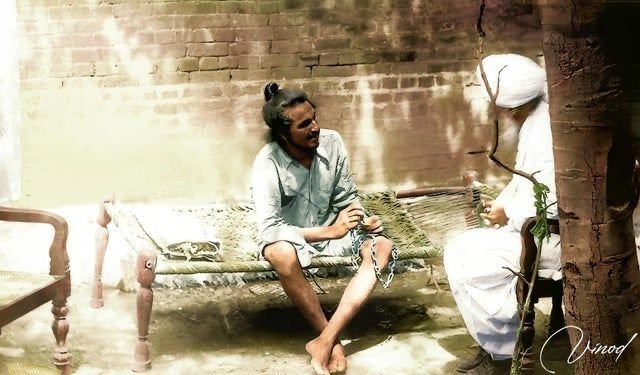
After his arrest, Bhagat Singh turned the prison into a space of resistance. He was not willing to accept the unequal and unjust treatment given to Indian prisoners, as compared to British inmates. Along with his fellow revolutionaries, he began a hunger strike to demand basic rights such as better food, access to reading material, and fair treatment. The hunger strike lasted for several weeks and drew attention from across the country. During his time in prison, he also spent hours reading and writing. He studied political ideas, history, and philosophy, shaping his thoughts on revolution and society. In fact, on the day of his execution, he was reading ‘Reminiscences of Lenin’.
Why I Am an Atheist
“Why I Am an Atheist” is an essay written in 1930 by Bhagat Singh, while he was in the Lahore Central Jail. In the essay, he argues that his atheism is because of his commitment to revolution and socialism, rather than arrogance.
He says, “What more consolation can there be! A God-believing Hindu may expect to be ‘reborn a king; a Muslim or a Christian might dream of the luxuries he hopes to enjoy in paradise as a reward for his sufferings and sacrifices. What hope should I entertain? I know that will be the end when the rope is tightened round my neck and the rafters move from under my feet. To use more precise religious terminology, that will be the moment of utter annihilation. My soul will come to nothing. If I take the courage to take the matter in the light of ‘Reward’, I see that a short life of struggle with no such magnificent end shall itself be my ‘Reward.’ That is all.”
The essay shifts the reader’s perception of Bhagat Singh from a violent revolutionary to an intellectual and rational thinker.
Lahore Conspiracy Case
The Lahore Conspiracy Case became one of the most significant legal battles of the Indian freedom movement. After the assassination of Saunders in 1928 and the Central Legislative Assembly bombing in 1929, the British government launched a detailed investigation to suppress revolutionary activities.
After the assassination of British officer Saunders in 1928 and the Central Legislative Assembly bombing in 1929, the British government launched a detailed investigation to suppress revolutionary activities. Throughout his imprisonment, Bhagat Singh organised hunger strikes, demanding that they be treated as political prisoners.
Bhagat Singh, Sukhdev, and Rajguru were sentenced to death by hanging and were executed on 23 March 1931. This day is now observed as Shaheed Diwas.
It still feels surreal for me to believe that Bhagat Singh was only 23 when he was hanged. Something is unsettling about how young he was. Twenty-three is an age of beginning for most of us. For him, it became an end that is still remembered today. He was young, yet clear in his beliefs, fearless, and thoughtful. He did not fight only against colonial rule. He also questioned inequality and injustice.
When we remember Bhagat Singh today, we must also remember that freedom was shaped by young minds who were willing to stand up to the colonial forces.