OVERLOOKED CHARACTERS OF INDIAN MYTHOLOGY

~Tanushree Wadodkar
When people talk about ‘Indian Mythology,’ they often think of figures like Lord Rama, Devi Sita, Lord Krishna, the Pandavas, etc. But to be honest, there are so many others who have moulded the events of our mythology, and yet they are not talked about. These characters may not always be the centre of the story, but their actions and sacrifices have shaped the events that occurred. Today, we highlight the contributions of such overlooked characters.
Urmila
Urmila was Sita’s younger sister and Lakshmana’s wife. She was the pillar of strength for both her sister and her husband. When Lakshman decided to accompany Rama into exile in the forest, Urmila chose to stay behind and care for her mother-in-law and the royal household. In many versions of the Ramayana, Urmila does not simply stay back, but also takes Lakshmana’s sleep for 14 years so that he could serve his brother day and night. Thanks to her sacrifice, Lakshman was able to defeat Meghnad in the battle against Ravana, as Meghnad could only be killed by someone who had conquered sleep.
From the mythological perspective, she is believed to be the avatar of Nagalakshmi, the consort of Shesnag. This further emphasises her significance as she not only complements, but rather completes Lakshaman, who is the incarnation of Shesnag.
Despite all this, the Ramayana barely mentions her. Still, she stands as an example of sacrifice, duty, love, and support.
Vrushali
Vrushali, Karna’s wife, is another largely overlooked figure in Indian mythology. Although a lot has been said and discussed about Karna, there are very few details about the woman who fiercely stood by his side.
It is said that Vrushali hailed from the same community as him and was chosen as Karna’s bride by his father. In many later retellings of the Mahabharata, she has been described as a humble and devoted wife. While Karna faced injustice and discrimination all his life, she gave him her unconditional love and devotion.
All her life, she watched Karna struggle between his dharma and his loyalty towards Duryodhan. Yet, we never got to hear her side or perspective.
After Karna died in the war, and all her sons were also gone, grief overwhelmed her. It is said that she committed Sati, choosing to reunite with him over living life alone.
Tara
Tara was Vali’s wife in Ramayana, the king of Kishkindha. She is one of the “Panchkanyas” of the Hindu tradition, remembered for her wisdom and intelligence.
When Sugriva challenges Bali to a combat, Tara warns Vali that Sugriva would never do that unless he was backed by someone powerful (Rama). When Rama’s arrow strikes Vali, Tara immediately rushes to his side. Even in her grief, she understands Rama’s reasoning and accepts that her husband had violated dharma.
Even after Sugriva is crowned king, Tara’s position in the royal court does not change. When Sugriva begins to neglect the promise he made to Rama, Tara remindshim of his duty to help find Sita.
Valmiki portrays Tara as a woman of resilience, foresight, and political intelligence, and not just a wife or mother. Even today, Tara’s character stands as a remarkable example of emotional intelligence, diplomacy, and being Vali’s voice of reason.
Trijata
Trijata is almost a footnote in the Ramayana, maybe even less, but her part is still important.
When Ravana abducts Sita and holds her captive in the Ashok Vatika, Trijata is one of the rakshashis assigned to keep an eye on her.
Unlike the others, Trijata treated Sita with kindness and compassion. She stood by her side, offering empathy, in Sita’s darkest days. She doesn’t loudly rebel against her king. She just silently provides Sita with quiet comfort. Once, she dreams about Ravana’s downfall and Rama’s victory, and shares that dream with Sita. That one small bit of hope meant everything to her in those dark days.
No one talks about Trijata. Hardly anyone even remembers her. But it was because of her emotional support that Sita was able to get through her days of captivity. Trijata proved that dharma could be followed even while living in a kingdom ruled by adharma.
Jatayu
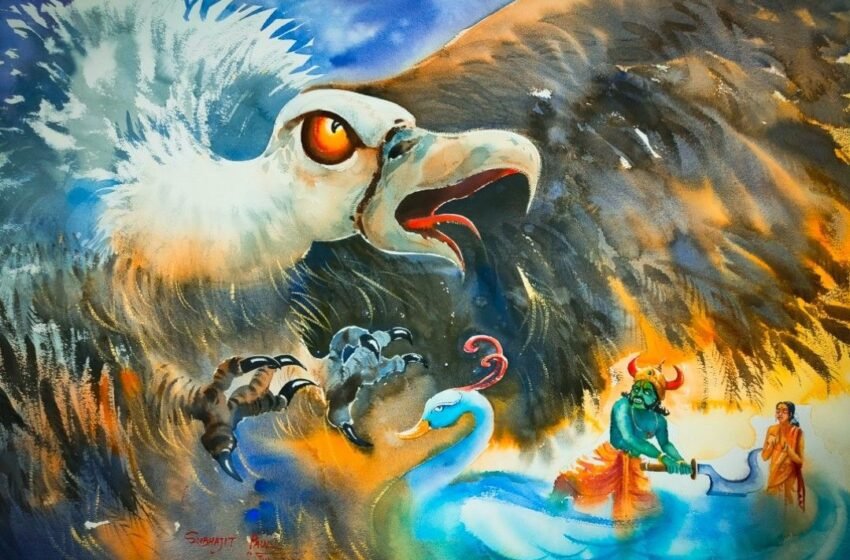
Jatayu was the vulture king and was said to be an old friend of King Dashratha. He was the son of Aruna, the charioteer of the Sun God and nephew of Garuda. Jatayu is first introduced in the Aranya Kand of the Ramayana.
When Sita is abducted by Ravana, Jatayu hears her cries in the Panchavati forest. Despite knowing that he was old and could not defeat Ravana, Jatayu did not hesitate to confront Ravana. He tried to free Sita from him and fought fiercely for hours. Although he sustained grave injuries, Jatayu refused to give up. When Ravana furiously cut off one of his wings, Jatayu fell to the ground. Even on the verge of death, he waited for Rama and Lakshman to come. When they finally arrived, they were shocked and saddened to see the vulture king lying on the ground. Using all the strength he had left, Jatayu informed them that Sita had been kidnapped by the demon king Ravana, who lived in Lanka.
Overcome with gratitude for his selfless sacrifice, Rama granted Jatayu moksha, freeing him from the cycle of rebirth.
Indian mythology is not just about the big names like Lord Rama or Lord Krishna. Sure, they might be central to the story, but there is so much more happening in the story that went unnoticed. Characters like Urmila, Vrushali, Tara, Trijata, Jatayu, and so many more add a sort of magic to the story. They are the quiet forces. Their sacrifice, strength, wisdom, compassion, and bravery bring a different complexity to the story.
When you sit down and really read about them, you may think, “Why aren’t they talked about more?” And that is a very valid question for all the reasons we have talked about.
For me, these stories hit home. They remind us to pay attention to the people in the background. By giving these characters the recognition they deserve, we get a more honest picture of the stories that we have grown up hearing.