POWER, PRIDE, AND FALL – The villains of Indian mythology

~Tanushree Wadodkar
Indian mythology, or rather any story for that matter, makes a clear distinction between heroes and villains. And yes, that is what mythology is all about- good vs bad, dharma vs adharma, nyay vs anyay. So it is only natural that we see certain characters as good and others as bad. I am not here to talk about whether this is right or wrong. This article explores the lives, circumstances, and stories behind those villains.
The great epics, especially the Ramayana and the Mahabharata, present characters remembered as antagonists, yet their stories reveal far more than mere evil. Figures like Ravana, Karna, and Duryodhana are often portrayed as wrongdoers, but they are also depicted as intelligent, strong, loyal, and deeply committed.
Looking closely at these figures reveals that they serve a deeper role. They reflect human weaknesses and the consequences of unchecked emotions and actions.
Karna: a victim of circumstances
One of the most discussed characters from the Mahabharat is Karna. No other character evokes as much debate as Karna. Some view him as a clear villain, while some see him as a man broken by destiny and the choices he made.
Karna was the first son of Kunti, born as a result of a boon given to her. The fear of social stigma and dishonour led Kunti to abandon Karna, changing his entire course of life. He was found and raised by a charioteer, living a life far away from his royal lineage, both literally and metaphorically. Despite his remarkable skills and courage, he was overlooked and disrespected for almost his entire life. The turning point in his life came when Duryodhan recognised his talents and crowned him the king of Anga. This is when Karna finally found the respect and belongingness that he had been looking for all his life. In return for this acceptance, Karna promised Duryodhan his unwavering loyalty, a promise that would ultimately shape his destiny. Karna was also known for his generosity. When Lord Indra came in disguise and asked for his divine earrings and armour, he gave them away without a second thought. Thus, he was also called Danveer. This act of his made him even more vulnerable during the battle.
Despite his virtues, there are reasons why he is regarded as a villain. When Dushyasan was disrobing Draupadi, not only did Karna not stop him, but he actively participated in her humiliation. When he finds out the truth about his birth, he still chooses to stand by Duryodhan. He chooses his promise of loyalty over his blood.
Karna’s death on the battlefield is heartbreaking to the point that it even makes Lord Krishna weep. Karna’s character is a complex portrayal of humans. He was brave, loyal, and generous. But he was also deeply flawed. His story is the one that somewhat blurs the lines between hero and villain.
Ravana: A prisoner of ego
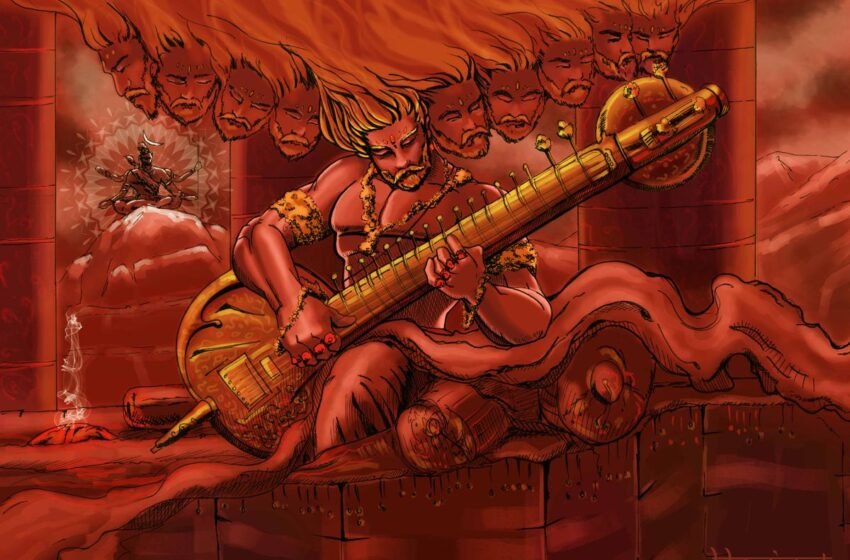
In Ramayan, if anyone is talked about the most after Rama, it is most certainly Ravana- the villain, the antagonist, the bad guy. And yet, like many other characters in mythology, he is complex and layered. He was not merely a villain, but a man of immense knowledge, power, and devotion, whose downfall was shaped by his own pride and ego.
Ravana was well-versed in the Vedas and the Upanishads and was a capable ruler who brought prosperity to Lanka. Under his rule, the kingdom was well-organised and wealthy. He was a devotee of Lord Shiva, and his penance had also earned him a boon from Shiva himself. However, his pride and sense of superiority are what led to his downfall. When he abducted Sita, he let his desire overshadow his wisdom. Despite repeated warnings from Mandodari and Vibhishan, he refused to back down. He was so blinded by his own ego that he destroyed his entire family.
Ravana’s story reminds us that even the most intelligent people can fall when they lose sight of restraint and self-awareness.
Ashwatthama: a warrior consumed by rage
The story of Ashwatthama is quite compelling. Born to Dronacharya, he was blessed by Lord Shiva and had a gem on his forehead that protected him. He grew up training alongside the Pandavas and Kauravas and was an immensely skilled warrior.
In the Kurukshetra War, Ashwatthama fought from the Kauravas’ side as he was loyal to Hastinapur. Ashwatthama’s turning point comes after the death of his father, who was killed through deception in the battle. Overwhelmed by this loss and a sense of injustice, he was consumed by rage. In his anger, he launched an attack at night and killed the sleeping sons of the Pandavas. This act defied all boundaries of dharma and transformed Ashwatthama into a villain.
Ashwatthama’s rage is not born out of ambition or desire for power, but from pain and grief. And it was his inability to control his emotions that led to his downfall. He was cursed by Krishna to live as an immortal in endless pain.
Shakuni: a mastermind driven by revenge
Shakuni is the primary antagonist in the Mahabharata. He isn’t a warrior or fighter. He is the mastermind, the strategist, the force behind the Kauravas.
Shakuni was the son of King Subala of Gandhar and the brother of Gandhari (who was married to Dhritarashtra). Shakuni harboured great hatred towards the Kurus. When his family was imprisoned by Dhritarastra, Shakuni was the only one who survived. His father requested Dhritarashtra to free Shakuni, as he would always protect his sons. From the very beginning, Shakuni poisoned the Kurus, especially Duryodhana, against the Pandavas. He was also the one who orchestrated the dice game, which eventually led to the War at Kurukshetra.
His love and guidance for Duryodhan and his brothers was rather performative, as he only wanted to take revenge on the Kuru family. Shakuni was killed on the eighteenth day of the war and had peacefully accepted his death.
These characters, among many others, are so much more than just villains. While there is little to no justification for their actions, I often wondered if their fate could have been different. What if Karna had felt respected and appreciated? What if Ravana wasn’t so full of pride? What if Ashwatthama hadn’t been blinded by anger and grief? What if Shakuni had never plotted his revenge?
They were the bad guys, but maybe just for a minute, I would like to think that somewhere deep down, they did have some goodness in them.