-Oishee Bose The question of who wrote the Shilpa Shastra is often framed as a problem of authorship. In practice, however, it is far more revealing to treat it as a problem of knowledge itself: how it was produced, transmitted, fixed, and authorised in premodern South Asia. Once approached from this angle, the question quickly […]Read More
Tags : CULTURE
-Oishee Bose The story behind a Japanese-named railway station in the heart of Bengal In the tidal labyrinth of the Hooghly River, not far from Kolkata’s industrial fringe, there is a small cluster of ghats and a modest memorial that carry a name that sounds incongruous in Bengali speech: Komagata Maru. The place-name, attached to […]Read More
-Prachurya Ghosh The emergence of the bhadralok—a Western-educated, upper-caste Hindu elite—in colonial Bengal represented a profound transformation in the region’s social, cultural, and political landscape. Originating primarily from Brahmin, Kayastha, and Baidya castes, this group rose to prominence under British colonial rule through access to English education, professional employment, and administrative authority. Initially associated with […]Read More
-Prachurya Ghosh Upinder Singh observes that the early history of Tantrism—its chronology, fve phases, and original geographical location—is extremely difficult to reconstruct. This difficulty arises partly from the immense diversity of Tantric practices and ideas and partly from the secrecy that has always surrounded Tantric traditions, a point also emphasized by André Padoux. Unlike other […]Read More
-Prachurya Ghosh Chandragupta Maurya founded the Mauryan Dynasty by overthrowing the erstwhile ruling house of Magadha, namely the Nanda Dynasty. The Nanda king, Dhanananda was possibly the ruler of Palibothra or Pataliputra when Alexander fought against Puru (Porus) on the banks of the river Jhelum in the Punjab. Alexander’s retum from India probably took place […]Read More
~Aritra Biswas Catherine II of Russia or Catherine the Great was also the most remarkable ruler in the history of Europe as she ruled the country between 1762 and 1796. Her reign politically, culturally and territorially transformed Russia and made it a formidable power in the continent. Good and bad at the same time, intelligent, […]Read More
-Oishee Bose Maa Manasa appears in the Bengali imagination not as a cosmically secure deity but as a goddess who has to forge her identity through strength, persistent storytelling, and the fearsome ability to chastise those who reject her. To study Manasa historically is thus to examine a point of conflict: between local worship and […]Read More
-Aritra Biswas A Child of Corsica Napoleon Bonaparte was born in 1769 in the rocky hills of the island of Corsica where it collided with the turbulent sea. His family was of small nobility, proud and yet not strong. Napoleon was never the same since the start. He was silent, grave, and much abstracted. Other […]Read More
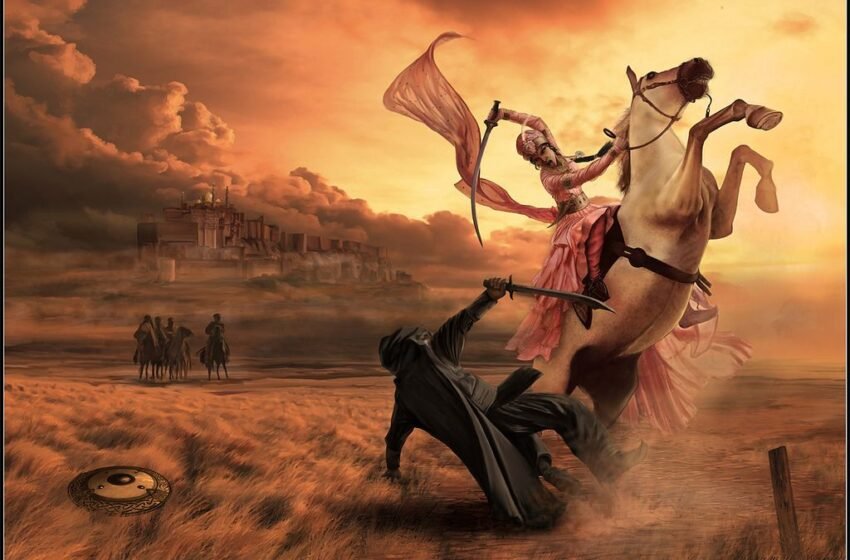
~ Debashri Mandal We know no less of the numerous braveries and legends associated with the kings and emperors who rose and fell in India. But do we know enough about the queens and female rulers in India? And Dandi Mahadevi, the Kakatiya warrior queen of Odisha, is one of the forgotten ones among them. […]Read More
Vigyaan Bhairav Tantra—History, Text, Techniques and The Science of Pure
~ Debashri Mandal We have heard about many ancient Hindu texts, starting from the Vedas and the Upanishads to the Mahabharata and the Maha Puranas, which provide stories, hymns, and principles of their time and beyond. Accordingly, the Vigyaan Bhairav Tantra, also known as the Vijnana Bhairava Tantra, an early medieval text believed to have […]Read More