Types of Shivling: Forms and Symbolism of Lord Shiva

-Aritra Biswas
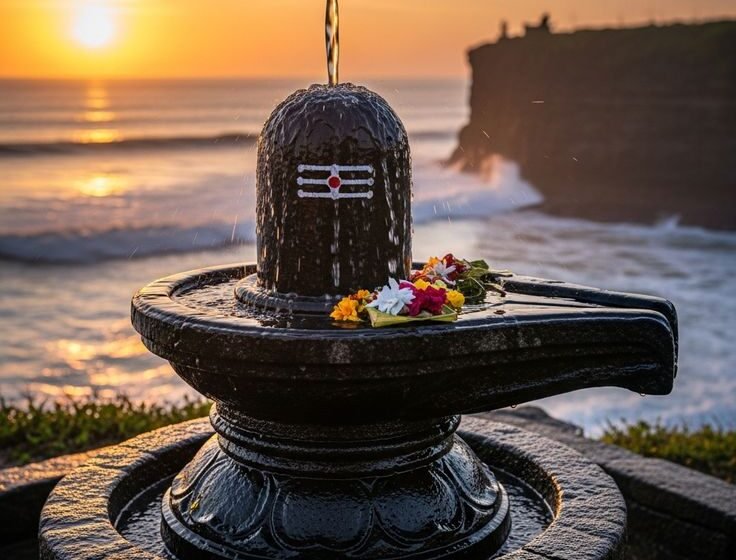
According to Hindu philosophy the Shivling (Shiva Linga) is one of the oldest and most sacred symbols where Lord Shiva, the supreme power of destruction, transformation and regeneration resides. Even further than a mere physical object, the Shivling represents the all-embracing cosmic energy that is the source of creation, and into which it finally disappears. The oval form that grows out of the base represents the coming together of Shiva (consciousness) and Shakti (energy), and thus is a very potent symbol of balance in the universe.
There are various forms of Shivling, which have been revered over the course of centuries as per their origin, purpose of being and scriptural texts. The two forms have a certain meaning but they all lead to the same timeless truth which is the formlessness of the divine.
Swayambhu Shivlings (Self-Manifold Lingas)
Swayambhu Shivlings are said to have grown out of the soil without human interventions. These lingas are believed to be the most sacred since they are believed to be direct manifestations of the cosmic power of Shiva.
These Shivlings are not created but found in the natural environment such as caves, mountains or riverbeds. The followers feel that these images contain a lot of spiritual energy and need little ritualistic purification.
Notable Examples:
1.Amarnath cave where a natural Shivling of ice is formed every year.
2.One of the most sacred temples of Lord Shiva is the Kedarnath Temple.
Bana Lingas (Shivling of the River)
Bana Lingas are the naturally occurring elliptical stones which are smooth and elliptical with a natural position in Narmada River. The unremitting flow of water carves these stones into an ideal linga form which signify the devotion that nature has to Shiva. These lingas are said to be very fortuitous and do not need Prana Pratishta since they are said to be already imbued with divine power. The Bana Lingas are widely used in households because they are simple and therefore, spiritually pure. Bana Lingas have been thought to confer peace, stability and spiritual elevation thus becoming very popular among ascetics and household worshipers.
Lingas of Divine Light (jyotilingas)
India has twelve Jyotirlingas all, which are linked to strong legends and spiritual values. Visiting these shrines is considered to purify sins and help followers to find liberation.
Prominent Jyotirlingas: Somnath Temple, Kashi Vishwanath Temple and Mahakaleshwar Temple.
Lingas of Pratyasha (Man-Made Shivlings)
The artisans make pratishta lingas out of materials like stone, marble or granite and install it by a ritual called Prana Pratishta through which the idol is invoked to a divine presence. Such Shivlings are usually in the temple and households. They are to be worshiped regularly, bathed (abhishekam) and offered so as to keep them sacred. They are man made but equally well respected upon being consecrated.
Metal Shivlings
Metal Shivings are also made of different metals, and each metals has a symbolic meaning:
Gold and Silver reading indicate innocence and wealth.
Copper and Brass are linked to the healing forces.
Panchaloha is a holy blend of 5 metals, which is traditionally employed in temples
Vivian Anjani (Jiva-anyaa)
Sphatika Lingas are crafted out of crystal or quartz, and are a representation of total purity, clarity and higher consciousness. They are clear-cut which signifies the concept of a mind not dominated by an illusion and egoism.
These Shivlings are particularly suggested to the meditators and spiritual aspirants. They are said to enhance positive vibrations and they do not readily absorb negative energies.
Clay and Interim Shivings
This is because temporary Shivlings constructed in clay, mud or sand are commonly made during Mahashivratri, the month of Shravan or special vows of a religious nature. These shapes highlight how material existence is impermanent.
Once worship is done, they are wisely disintegrated in water, which becomes a stronger spiritual lesson that all that is material in the end comes back to nature.
Conclusion
Shivlings may vary in shape, substance and source, but in spiritual nature there is only one. Every Shivling is the Shiva of the infinite, formless reality, outside the boundaries of birth and death. Since Shiva is manifested to himself in form of natural lingas, to basic clay shapes, Shiva will permit his worshippers to relate to divinity to their faith and comprehension.
Finally, the worship of Shivling is not in the object itself, but in devotion, humility and internal change. The Shivling is a constant reminder that even this universe is the expression of the divine.