-Oishee Bose The sport of badminton is not a result of a single invention but the product of countless ordinary decisions made in different places. The game can be read as a social object: shaped by craft, by how people fixed broken gear, by local shops that stocked cheap frames, and by committees that argued […]Read More
Tags : INDIA
-Debashri Mandal What is Pheran? The pheran is a long, loose woolen gown with wide sleeves, a type of cloth traditionally worn by both men and women in Kashmir. It generally reaches the knees or ankles and is layered to trap warmth in the valley’s harsh winter. More than a mere clothing, the pheran has […]Read More
-Oishee Bose What made people spend time braiding, oiling, winding, braiding again, knotting and adorning hair across centuries until whole guilds of specialists existed to do it for them? Hair reveals much about one’s age, lineage and care and unlike clothing, it cannot be changed by a single purchase. In South Asia, hair became a […]Read More
-Prachurya Ghosh There are objects in human history that refuse to stay silent. Long after the hands that touched them have turned to dust, these objects continue to gather stories around themselves whispers, warnings, justifications. Diamonds belong to this category, but black diamonds more than any other. They are not merely admired; they are suspected. […]Read More
-Aritra Biswas The position of Archangels is special and elevated in the religious tradition, as they represent the intervention of God, moral strength, and spiritual guidance. In Judaism, Christianity and Islam, angels are viewed as messengers of God, although archangels are thought to have exceptionally great duties. The most revered and well-known among them are […]Read More
-Oishee Bose For centuries, Timbuktu has lived in the global imagination as a contradiction. On modern maps and in popular speech, it is invoked as a synonym for remoteness, a place at the edge of the world, distant from centres of power and thought. Yet the manuscript record left behind by its scholars tells a […]Read More
-Oishee Bose The popular Bengali lullaby, “Khoka ghumālo, pāṛā jūṛālo, Bargi elo deshe” sounds like an ordinary domestic verse. However, the lines carry a weight: a mother’s low voice folded over the image of a ruined harvest, vanished savings and a threat that arrives with the night. This lullaby is not merely a song to […]Read More
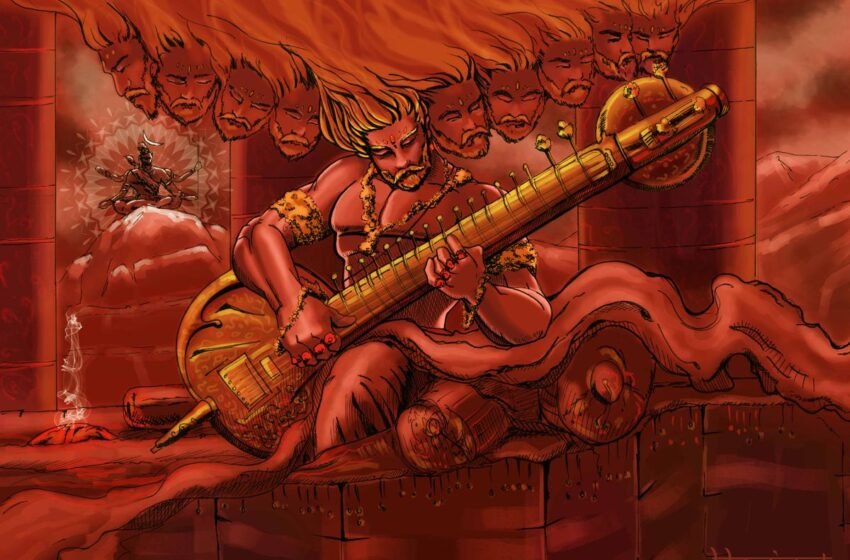
~ Debashri Mandal The name of Shiva isn’t unknown to the world. People from the various corners of the earth have known him for ages and generations, irrespective of their religious values and communal beliefs. Lord Shiva, known as Devo ke Dev: Mahadeva, means the God of the Gods in Hindu scriptures such as the […]Read More
-Aritra Biswas The post of INS V Kaundinya holds a unique position in the Indian Navy not only as it fulfills the role of its work but also as the name itself has a strong historical connotation. The vessel is a symbol of a rare intersection between the Indian traditional nautical culture and its modern […]Read More
-Oishee Bose Sources, memory and the problem of visibility In many conventional accounts of Indian history, Lachit Borphukan’s narrative lies on the margins not because of his lack of merit and accomplishment but due to how Indian historiography developed. Lying apart from the Indo-Gangetic political centre that dominated Mughal records and subsequent colonial historical writing, […]Read More