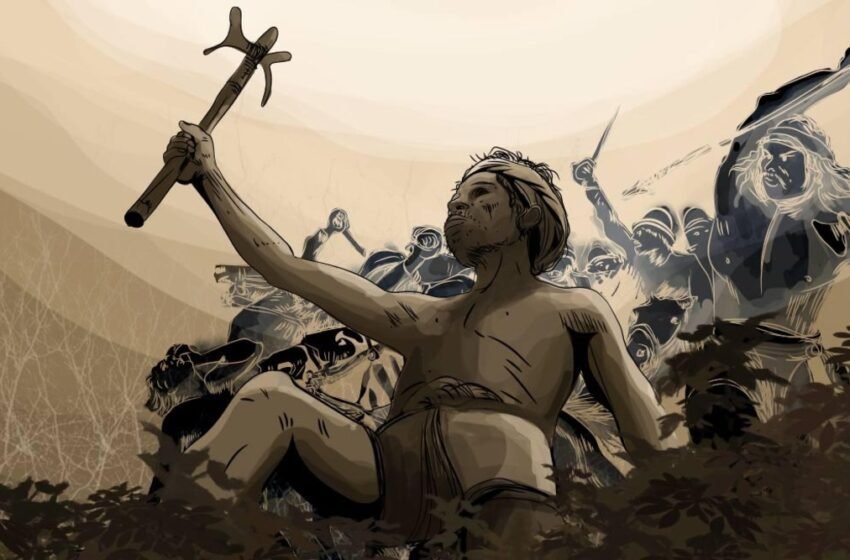
The Long Walk of the Navajo also called the Long Walk to Bosque Redondo was an ethnic cleansing or forced displacement of the Navajo people from their native home, the western New Mexico Territory (modern-day Arizona) to a desolate internment camp (imprisonment camp) in Bosque Redondo. Led by Christopher (Kit) Carson, in January 1864, some […]Read More
Tags : CULTURE
The story of the jackal that jumped into the vat of blue dye is not new to us. Nor is the tale of the crocodile trying to trick a monkey into wilfully surrendering itself as prey. These are the famous Panchatantra tales, an integral part of any Indian’s childhood. While these stories are meticulously crafted […]Read More
Unveiling the Mysteries of the Ark of the Covenant
The Ark of the Covenant, an iconic relic steeped in historical significance and religious mystique, has captured the imaginations of scholars, theologians, and adventurers for centuries. This sacred artefact is mentioned in the Hebrew Bible, specifically in the Book of Exodus, and plays a central role in the religious traditions of Judaism and Christianity. As […]Read More
Whispers Across Centuries: Bilhana’s Inked Echoes and the Timeless Symphony
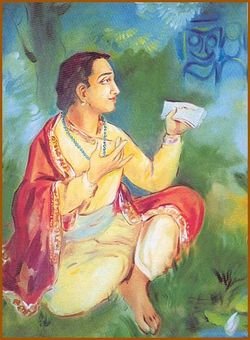
In the intricate tapestry of classical Indian literature, one name stands out as a luminary of the 11th century, casting an enduring shadow across the sands of time—Bilhana. Born in the breathtaking landscapes of Kashmir, this poetic virtuoso transcended the boundaries of his era to become a maestro whose verses still resonate with the essence […]Read More
Decoding Bharavi’s Literary Heritage: Unveiling the Epic Odyssey of an
Bharavi, who thrived in the 6th century AD, was a Sanskrit poet renowned for creating the epic “Kiratarjuniya” (”Arjuna and the Mountain Man”). This classical Sanskrit epic falls under the category of mahakavya, or “great poem.” Marked by its elevated expression and intricate style, Bharavi’s poetry possibly left an imprint on the work of the […]Read More
Shudraka, an enigmatic figure in the realm of classical Sanskrit literature, occupies a distinctive place in the historical and literary landscape of ancient India. Believed to have lived during the early centuries of the Common Era, Shudraka is primarily known for his celebrated work, the “Mrichchhakatika,” which translates to “The Little Clay Cart.” This timeless […]Read More
Pingala, a revered figure in the realm of ancient Indian mathematics and linguistics, stands as a beacon of intellectual curiosity and innovation that has left an enduring mark on the foundations of these disciplines. His contributions, although veiled by the mists of antiquity, have continued to intrigue scholars and enthusiasts alike, drawing attention to the […]Read More
Bhāsa, who lived during the 3rd century AD in India, stands as the earliest known Sanskrit playwright. Bhāsa emerged as a prominent figure in the early history of Indian playwrights who composed their works in Sanskrit, predating the renowned Kālidasa. The name of Bhāsa had already achieved recognition by the 1st century BCE, and his […]Read More
Amarasimha, born circa CE 375, stands as a notable figure in the realms of Sanskrit grammar and poetry in ancient India. Regrettably, scarce historical records provide insights into his personal life. Nevertheless, he is often referred to as one of the luminaries who embellished the court of Vikramaditya, with the contextual evidence, as documented by […]Read More
Indian scholar Bhavabhūti, who lived in the eighth century, is renowned for his Sanskrit plays and poetry. He is a prominent figure in ancient Indian literature, standing out as one of the most revered playwrights and poets in the history of Sanskrit literature. His contributions to drama, poetry, and philosophy have left an indelible mark […]Read More