Oral Rehydration Therapy: The Medical Revolution That Saved Millions

-Oishee Bose
The Intimate Catastrophe: Childhood Diarrhoea Before ORS
They died, sometimes within the period of a single day. A child would begin with loose, watery stools; within hours the eyes would hollow, the skin would no longer snap when pinched, the mouth would grow dry and feverish. Families who knew what was coming described it in the old, blunt language of grief: a child “drained” of life. For much of the twentieth century, diarrhoea was one of the greatest killers of childhood, a medical catastrophe that was at once intimate and mass. In small villages and crowded slums alike, the disease turned routine infections into a race against time, and the one treatment that could reliably reverse the worst cases was, intravenous fluid, given under sterile, clinical conditions, which was a luxury beyond the reach of millions.
War, Scarcity, and a Radical Improvisation
The year 1971 forced an experiment on a scale no laboratory could have planned. The Bangladesh Liberation War erupted and nearly ten million people fled across the borders into Eastern India. They arrived exhausted, hungry, and crammed into temporary camps that rose overnight in rice paddies and scrubland. The exodus was enormous, and by the end of 1971 the Indian government reported figures that left relief agencies reeling. Crowded tents and scarce latrines created ideal conditions for cholera and other diarrhoeal diseases to spread. Fragile bodies of children, malnourished and exhausted, were especially vulnerable. Humanitarian responders watched waves of cases roll through tents and makeshift shelters. The stakes were immediate and existential.
Standard medical practice offered a grim arithmetic: severe cholera required intravenous rehydration. Needles, sterile bottles, trained hands were the tools that saved lives. Tools could not be conjured out of thin air. The refugee camps had very few clinicians, fewer supplies but too many patients.
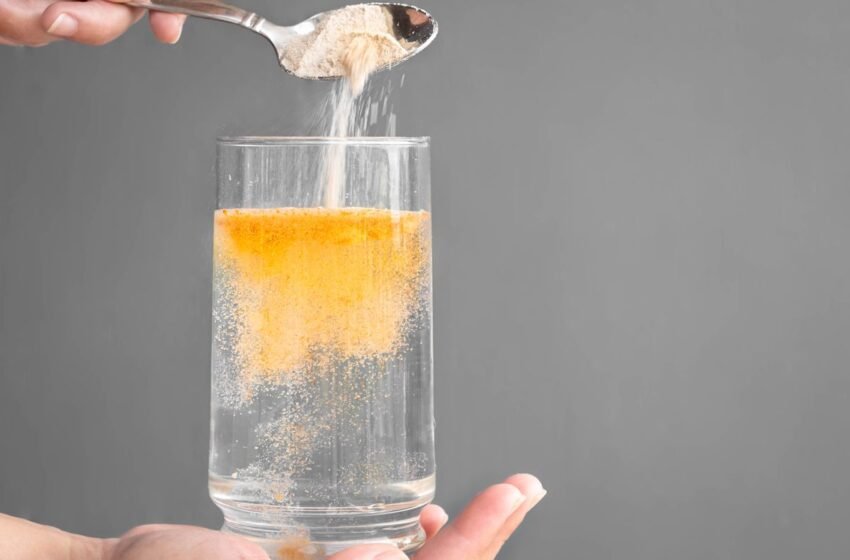
A strikingly simple, decisive choice followed from this grim and urgent context. Dilip Mahalanabis, a paediatrician with experience in cholera work and affiliated with local cholera research institutions, faced this impossible shortage of IV supplies and made a decision that would ripple outward for decades. He and his team began the brave experiment, where they treated patients with an oral glucose electrolyte solution, which was a carefully balanced mix of salt, sugar, and water. Family members were taught how to prepare it, only using warm water, salt and sugar. Small, frequent sips were given to patients even when they were vomiting. Caregivers and relatives of the patient acted as nurses in place of sterile wards and trained staff.
Results were stark and immediate. Fatality rates among those given the oral mixture fell dramatically in areas and times when IV care alone was the only recourse but could not be universally provided. Relief agencies that compared outcomes could not dismiss the difference as theoretical: children who might otherwise have died were stabilised and returned to their families. The refugee camp served as a field laboratory in which an idea that began in physiology labs proved its power outside the hospital. Researchers had shown that sodium and glucose are cotransported across the intestinal wall and that glucose facilitates absorption of sodium and water; the camp showed that the same physiology could be harnessed by a cup and a sachet to save lives under the harshest conditions.
From Laboratory Insight to Global Policy
Credit for this achievement belongs to a chain of inquiry and action rather than to a single inventor. Physiologists in the 1950s and 1960s uncovered the mechanisms that made oral rehydration possible. Clinical teams in the Philippines, India, and elsewhere tested glucose electrolyte solutions in hospital wards in the 1960s and early 1970s. Those controlled studies showed that oral solutions could reduce the need for IV fluids in many cholera patients. Clinical trial results accumulated into a body of evidence and yet remained largely hospital based.
Translating these findings from controlled wards into the chaos of mass displacement required courage and improvisation. The camp demonstration did not invent the physiology; it converted laboratory scale knowledge into community scale practice through instruction and trust. Clinicians in the camps taught mothers and community volunteers how to mix solutions and how to keep administering them. The authority of medicine changed form, shifting from expert-only procedures to community delivered care.
The immediate medical consequence of the refugee demonstration was clear and local: people who would otherwise have died were saved. The longer social consequence spread outward and became structural. As evidence accumulated and international organisations incorporated the approach into policy, oral rehydration shifted from an emergency improvisation to a staple of public health. The World Health Organization and UNICEF adopted oral rehydration as a cornerstone of diarrhoeal disease control and child survival programmes in the era that followed. Governments printed instructions on clinic walls. Radio programmes and schoolteachers taught families how to mix solutions. Community health workers distributed sachets door to door. The intervention proved cheap, portable, teachable, and eminently scalable.
The numerical evidence makes the scale of the transformation visible. At the height of the pre-ORS crisis, diarrhoeal diseases caused several million child deaths annually. Over the following decades deaths among children under five from diarrhoea fell by roughly an order of magnitude. Many factors contributed to that decline, including improvements in sanitation, nutrition, and vaccination, yet conservative estimates attribute tens of millions of lives saved to the widespread use of oral rehydration therapy alone. Some larger syntheses place the number of lives saved in the range of 50 to 70 million when cumulative impact over decades is calculated. These figures depend on methodology and assumptions, yet they illuminate the scale of what a simple mixture achieved.
Recognition, Decolonisation, and the Politics of Credit
Recognition of the camp demonstration lagged in public memory. Mahalanabis’ name remained more familiar only within medical circles than in the broader public sphere for many years. The tendency of popular retellings to prefer simpler origin stories meant that some of the most decisive fieldwork in low resource settings was consigned to footnotes. Later articles and obituaries revisited the record and restored his place in the narrative, pointing out that without the practical demonstration of 1971–72 the widespread operational adoption of oral rehydration might have been delayed. Attribution patterns in global health often privilege institutions in wealthy nations and authors who publish in high impact journals, while fieldwork by clinicians in low resource settings receives less public acclaim. Restoring the fuller narrative corrects a historical omission and underscores how innovation frequently depends on local improvisation and the willingness to entrust communities with life-saving knowledge.
Situating this episode inside a political narrative changes how the story reads. Medicine carries the residue of empire in its institutions, in the routes by which knowledge travels, and in the ways authorship and prestige are assigned. Decolonising scholarship invites historians to ask not only which interventions work, but whose testimonies shaped the record and which practices were rendered invisible. The camps of 1971 offer an image of this tension. A scholar of global health might observe that an idea validated by northern laboratories and then proven in a southern refugee camp shows how discovery and implementation travel unequal paths. Practical success in a tent can be swallowed by silence unless the institutions that shape scientific fame notice and amplify it. That silence matters because it shapes future careers, funding flows, and the examples that trainers pass on to younger generations.
An Unfinished Agenda
A very human scene helps ground the politics. A mother in a field tent learning to mix a sachet with a cracked cup, a nurse explaining the rhythm of small sips, a child swallowing and returning to sleep — that ordinary sequence of gestures redistributed medical authority. The redistribution mattered politically because it narrated a different future for health systems: one centred on community knowledge, local manufacture, and primary care. Those futures fit the postcolonial aspirations of many newly independent states that were seeking to build health services for entire populations rather than elite citadels for a few. The ORS story therefore sits at the intersection of science, humanitarianism, and the politics of national development.
The story did not become an uncomplicated triumph. Adoption remained uneven. Cultural beliefs sometimes discouraged use. Supply chain disruptions and political instability interrupted distribution. Gaps in knowledge and taste barriers meant that some caregivers continued to avoid giving fluids during diarrhoea. Even into the present century hundreds of thousands of children still die from diarrhoea each year in places where a sachet and a cup could often prevent death. The history of oral rehydration therefore reads as both a major success and an unfinished agenda.
The human image at the heart of this history is simple and profound: a small white sachet, a cup, a mother’s steady hand. These are not mere metaphors but instruments of survival. The refugee camps of 1971 show that scientific insight and human courage together can turn knowledge into rescue. Mahalanabis’ choice to trust an unassuming mixture in the face of overwhelming need is a moment historians return to for good reason. It embodies the transition from discovery to practice and the movement of medical authority into the hands of families and communities.