Nelson Mandela: The Long Walk to Freedom

-Aritra Biswas
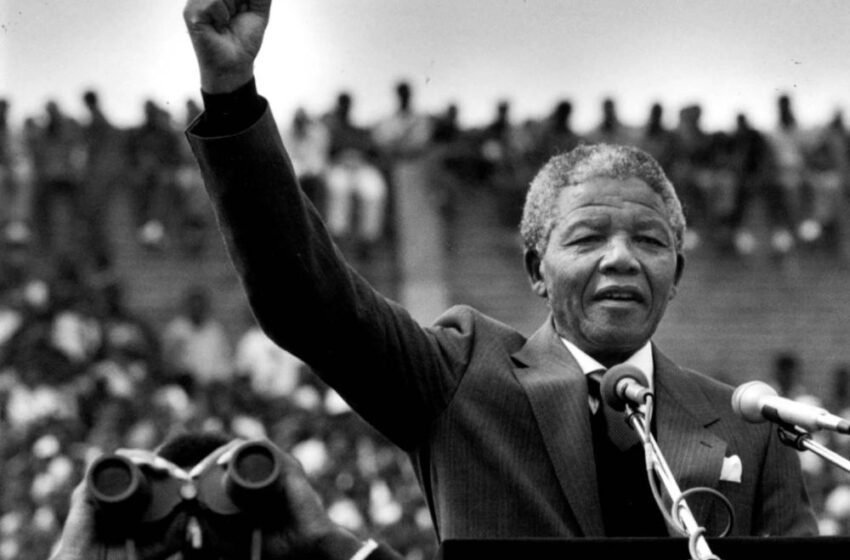
Nelson Mandela is one of the most powerful personalities of the twentieth century. He is a hero to the world and synonymous with tolerance, fairness and reconciliation. A life of unbending dedication to abolish apartheid in South Africa and to create an equal, human-dignity society characterized his life. The story of Mandela as a child growing up in the rural areas, then spending a few decades in prison and thereafter becoming the president of South Africa shows that moral courage and forgiveness are unbelievably strong forces.
Early Life and Education
Nelson Rolihlahla Mandela was born on the 18 th July 1918, in a small village called Mvezo in the Eastern Cape of South Africa. As a member of the Thembu royal family, Mandela was introduced to the traditional values of African leadership early in his life, which put more emphasis on the welfare of the community and collective responsibility. He was taught about pride and justice by his father who was a local chief.
Mandela was schooled in a Western kind and attended missionary schools and later on graduated in the University of Fort Hare, one of the few institutions of higher learning accessible to the Black South Africans during the time. This was where he was introduced to the world of politics and activism among the students. But he participated in demonstrations, and this cost him his expulsion. He did his correspondence law school later, which shows how determined he was to get an education against all odds in the system.
The call to Politics and the African National Congress
Mandela had spent his early life in Johannesburg and in the 1940s, he was able to observe the harsh realities of racial discrimination. In 1944, he became a member of the African National Congress (ANC) and within a short period, he emerged to be a young leader of high profile. Together with other leaders like Oliver Tambo and Walter Sisulu, Mandela assisted in forming ANC Youth League which advocated to fight apartheid more aggressively.
At first, Mandela was an idealist who thought in nonviolent protest based on the ideals of Mahatma Gandhi. He was involved in civil disobedience, boycotts, and strikes in an attempt to confront un-just laws. However, as apartheid policies became more oppressive, Mandela finally felt that armed struggle was inevitable, and this was a major change in his politics.
Arrest, Trial and Imprisonment
The apartheid regime was targeting Mandela through his activism. He was also arrested and sentenced to life imprisonment after the well-known Rivonia Trial in 1962. His speech at the trial was considered a legend, in particular, his statement that he was willing to give his life to the ideal of the free and democratic society.
Mandela had to spend 27 years in prison and most of it in Robben Island in deplorable conditions. He was a moral leader even in prison even though he was physically straining and isolated. He taught other inmates, talked to the prison officials, and perfected his vision of reconciliation. Prison instead of destroying him turned Mandela into a symbol of resistance and hope all over the world.
Freedom and the Cessation of Apartheid
Apartheid became unsustainable at the end of the 1980s due to internal opposition and external pressure. Nelson Mandela came out of prison in 1990, a moment which was observed by millions of people all over the world. His release was a new start in not only his life but in the history of South Africa.
Mandela demanded peace and unity instead of taking revenge. He collaborated with President F.W. de Klerk in overturning the apartheid legislations and brokering a democratic change. It was a time of violence and tension but through the leadership of Mandela, he was able to bring the country out of the road to civil war and to dialogue and compromise.
Nation-Building and Presidency
South Africa, in the year 1994, conducted the first multiracial democratic elections and Nelson Mandela was elected the first black president of South Africa. His presidency was centered on the issues of reconciliation, national healing and institution-building. Among the most prominent measures he took was the Truth and Reconciliation Commission that enabled victims and the doers of the crimes during the period of apartheid to be heard in the open.
Mandela thought that an honest approach of facing the past was the only way to establish a common future. Although the issues of poverty and inequality were still there, his leadership provided the new South Africa with a moral basis. His symbolic actions like sponsoring the national rugby team that had been linked with the white supremacy also helped to unite a nation that was deeply divided.
Global Influence and Legacy
Having served a term in the presidency, Mandela retired, which strengthened the democratic ideals and demonstrated the example of unselfish leadership. He was an international elder statesman with a message of peace, human rights, and social justice. In 1993, he won a Nobel Peace Prize, which he shared with F.W. de Klerk, because of their attempts to end apartheid without violence.
The legacy of Mandela goes way beyond South Africa. He showed how forgiveness was a great political instrument and that morality would overcome hate. His life has remained inspirational in bringing freedom and equality movements around the world.
Conclusion
The story of Nelson Mandela is the story of extraordinary endurance, humility and vision. His life story is an example of an individual who rose to power despite the adversity that befell him due to his actions and persevered to become a revolutionary, a prisoner and a president. Mandela showed the world that being a leader does not mean being domineering, but serving, taking care of others and willing to sacrifice revenge to reconcile. His life serves as a permanent positive reminder that even the saddest moments in history may lead to hope and rebirth.