British Influence on Indian Holidays: How Colonial Rule Shaped Modern Celebrations

-Prachurya Ghosh
Introduction: Time as a Colonial Inheritance
When people think about British influence on India, they usually imagine railways, English education, legal systems, or political institutions. Very few think about holidays. Festivals feel ancient, emotional, and rooted in religion or tradition. Diwali, Eid, Durga Puja, Pongal, Baisakhi—these seem untouched by colonial rule. Yet one of the deepest and most invisible impacts of the British Empire lies not in what Indians celebrate, but in how they understand time itself. The modern idea of holidays in India—public holidays, weekends, national days, school vacations, office calendars—is largely a colonial creation.
India Before British Rule: Festivals Without a Central Calendar
Before the British, India did not operate on a single, unified calendar. Different regions followed different systems. Hindus used various lunar and solar calendars. Muslims followed the Hijri calendar. Local communities organised their lives around agricultural cycles, temple rituals, royal events, and seasonal changes. Time was social and cultural, not administrative. There was no central authority that declared which days the entire population should treat as holidays. People celebrated festivals, not official days off. Even large empires like the Mughals did not regulate time for the masses in the modern sense. Their court ceremonies mattered mainly to elites, not to village life.
The British Concept of Public Holidays
The British introduced a completely new idea: the state-controlled public holiday. This concept came from industrial Europe, where time had become disciplined by factories, offices, railways, and bureaucratic routines. Workers needed uniform rest days. Schools needed fixed academic calendars. Government offices needed predictable schedules. The empire required synchronised time to function efficiently. As British administration expanded in India, it brought with it an entire philosophy of time management. Days were classified as working days or holidays. Calendars were printed and distributed. Offices opened and closed according to fixed schedules. Time was no longer fluid; it became regulated, measurable, and controlled by institutions.
Sunday and the Creation of the Weekly Holiday
The most powerful example of this transformation is Sunday. Before colonial rule, India had no universal weekly day of rest. Different communities followed different rhythms. Some markets closed on particular days, some temples had special observances, some regions rested according to local customs. But there was no single day that structured the entire society. The British imposed Sunday as a universal holiday based on Christian tradition and European labour systems. Government offices closed on Sundays. Schools followed it. Factories adopted it. Railways scheduled around it. Over time, Sunday became so deeply internalised that most Indians today see it as natural, even inevitable. Very few realise that this most basic feature of modern Indian life is entirely colonial.
Christmas and Cultural Transformation
Christmas followed a similar path, though in a more visible cultural form. Initially, Christmas was confined to British officials, missionaries, and Anglo-Indian communities. It had little meaning for the wider Indian population. But the British state made Christmas an official public holiday. Schools closed, offices shut, churches held ceremonies, and urban elites gradually absorbed its social presence. Over time, Christmas detached from its religious roots and became a cultural event. Today, many non-Christian Indians celebrate Christmas not as a spiritual festival but as a social occasion, associated with gifts, parties, decorations, and shopping. Christmas in India is no longer about theology; it is a product of colonial institutionalisation combined with global consumer culture.
The Gregorian Calendar and the New Year
Traditional Indian calendars have always recognised multiple new years. Different regions celebrate new beginnings according to solar or lunar cycles. Ugadi in the south, Gudi Padwa in Maharashtra, Poila Boishakh in Bengal, Vishu in Kerala, Baisakhi in Punjab—each reflects local agricultural and cultural rhythms. The idea that January 1st is the primary or universal new year is entirely Western. The British introduced the Gregorian calendar for administrative convenience. Financial records, legal documents, school years, and government operations all followed it. Over time, Indians internalised this calendar psychologically. Today, midnight countdowns, fireworks, parties, and global celebrations on January 1st dominate urban imagination, even though the date has no organic connection to Indian seasons or traditions.
The Birth of National Holidays in India
Perhaps the most ironic legacy of British influence is the structure of India’s national holidays. Independence Day, Republic Day, and Gandhi Jayanti feel deeply Indian, yet the very concept of a national holiday is Western. Pre-modern India did not celebrate political anniversaries in this way. The idea that a nation collectively pauses to commemorate a historical event is a product of European nationalism. The Indian freedom movement adopted this model and used it against colonial rule. Flag hoisting, parades, speeches, school functions, and official ceremonies follow exactly the same political ritual format developed in European states. India celebrates freedom from Britain using British political time architecture.
Education and the Colonial School Calendar
Education played a crucial role in embedding colonial time consciousness. The British school system imposed fixed academic years, summer vacations, winter breaks, examination seasons, and term structures. Traditional Indian education had been flexible, centred around gurus and local institutions. Learning followed individual pace rather than institutional calendars. The long summer vacation in India exists largely because British officials could not tolerate Indian heat and shut down schools during peak summer. Modern Indian childhood is shaped by these colonial rhythms. Students measure life in terms of semesters, holidays, and academic years—concepts unknown to pre-colonial society.
Bureaucratisation of Religious Festivals
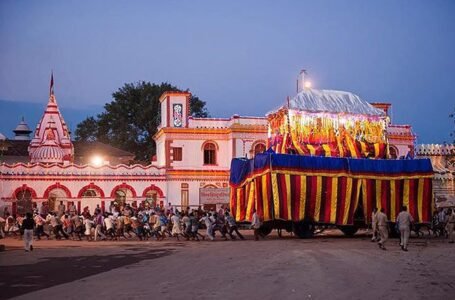
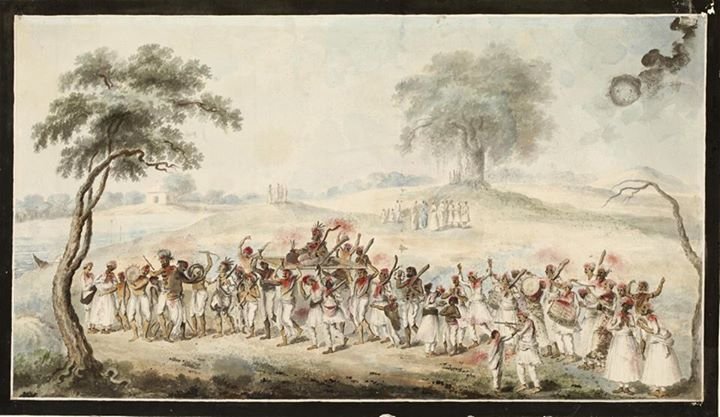
Even religious festivals were transformed under British rule. The British rarely banned Indian celebrations, but they bureaucratised them. Processions required permission. Gatherings were regulated. Police monitored crowds. Festivals became administratively classified events rather than organic community expressions. In Bengal, Durga Puja expanded into large public spectacles partly because wealthy elites used it to display cultural identity under colonial scrutiny. In Maharashtra, Ganesh Chaturthi was deliberately transformed by Tilak into a mass political festival, using British public assembly structures to mobilise nationalist sentiment. Indigenous traditions survived, but they acquired modern political form.
Railways and the Synchronisation of Time
Railways intensified this transformation. Trains required standardised time zones, fixed schedules, and coordinated calendars. Local time systems disappeared. A national sense of time emerged. Festivals became synchronised across regions. Pilgrimages turned into tourism seasons. Modern travel-based holiday culture is directly linked to colonial infrastructure. People now plan festivals, vacations, and journeys according to railway timetables and official calendars.
Leisure, Work, and the Modern Holiday Mentality
Perhaps the deepest change lies in how Indians psychologically experience time. Pre-colonial life did not divide existence into strict categories of work and leisure. Time was integrated with daily life, seasons, and rituals. The British industrial model introduced a sharp distinction between working days and holidays, between productive time and rest. Concepts like paid leave, casual leave, long weekends, vacation planning, and holiday trips are not ancient cultural habits. They are modern capitalist-colonial time structures.
Bank Holidays and Financial Time
Even financial life follows imperial rhythms. Bank holidays, fiscal years, quarterly systems, and financial calendars all originate in British administrative logic. The very idea of a “bank holiday” is inherited directly from British law. Economic activity in India still moves according to Western time divisions.
Post-Independence Continuity of Colonial Structures
After independence, India did not dismantle this system. It replaced symbols but retained structure. Queen’s birthday disappeared, but Gandhi Jayanti appeared. Empire Day vanished, but Independence Day emerged. British calendars remained, only rebranded with national icons. The reason is simple: modern states require standardised time to function. Bureaucracy, education, finance, and governance depend on predictable schedules. The colonial time machine was too useful to discard.
Psychological Impact of Colonial Time
As a result, the British Empire survives not in statues or flags, but in something far more intimate: the way Indians structure their days, weeks, months, and years. When an Indian checks a holiday list, plans a long weekend, celebrates January 1st, rests on Sunday, or measures life in school terms and office leaves, they are living inside the invisible architecture of empire.
Conclusion: The Empire in the Indian Calendar
Political independence ended in 1947, but in the organisation of time itself, colonial influence remains quietly intact. The British did not erase Indian festivals; they reprogrammed how Indians experience time. They turned culture into calendars, rituals into schedules, and life into administrative units. The empire no longer governs territory, but it still governs the calendar.