Rediscovering the Buddha’s Heirlooms: The Piprahwa Relics Return Home

~Debashri Mandal
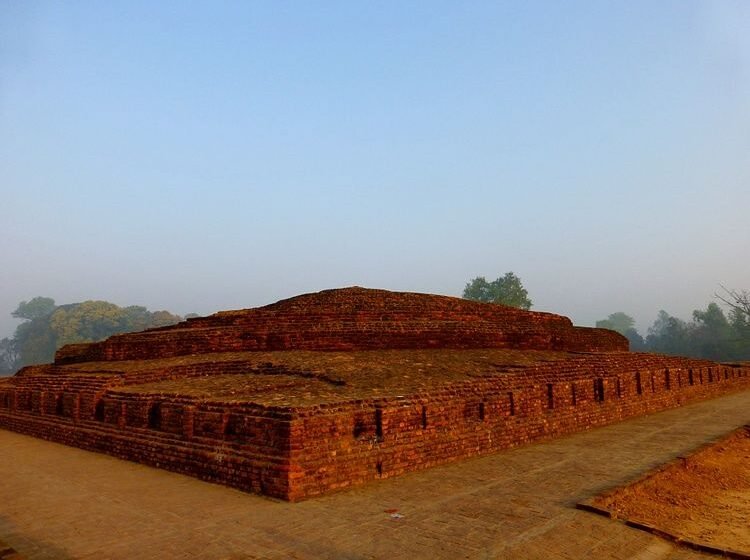
In late 1898, British engineer William Claxton Peppé was overseeing estate work in Piprahwa (present-day Siddharthnagar district, Uttar Pradesh, near the India-Nepal border) when his team accidentally uncovered a buried stupa. Excavating the mound revealed a soapstone reliquary urn inscribed in ancient Brahmi script—a message interpreted as confirming that the buried bones and ashes were the remains of Gautama Buddha, entrusted to the Sakya clan after his cremation. Inside the coffer were fragments of charred bone, crystal caskets, and a dazzling array of gemstones and gold ornaments. This sensational find—one of the most extraordinary archaeological discoveries of the time—sent waves of excitement through Buddhist scholars and colonists alike. The relics were dated to roughly the 3rd–2nd century BCE, likely enshrined soon after Buddha’s passing during the Mauryan period.
The Piprahwa stupa site shortly after William Peppé’s 1898 excavation (photographed by Peppé’s team).
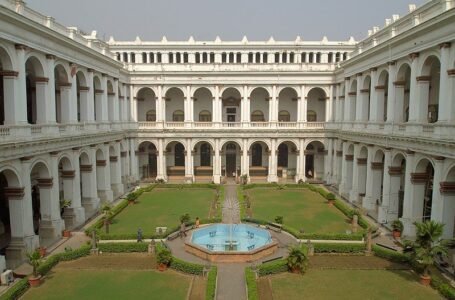
After Peppé’s discovery, colonial law (the 1878 Indian Treasure Trove Act) mandated that the find be reported to authorities. The British administration seized the relics from the state treasurer. In due course, the collection was divided: the bone fragments and ashes were sent as a royal gift to King Chulalongkorn (Rama V) of Siam (Thailand), reflecting the Buddha’s own legacy in Southeast Asia. The bulk of the gems and jewelry—about 1,800 stones and ornaments – went to the Indian Museum in Kolkata, then the prime repository for archaeological finds. Peppé was permitted to retain roughly a fifth of the treasure (around 300 pieces) as his personal share. These personal relics, along with a detailed report and plans of the stupa, became family heirlooms passed down through generations of the Peppé family.
The Cultural and Religious Significance. In Buddhist tradition, relics of the Buddha (śarīra) are living symbols of his presence and teachings. Devotees revere such physical remains as embodiments of the Dhamma (truth) itself. Scholars note that the Piprahwa relics – in particular the gem-studded offerings found with the bones – were long treated not as mere artifacts but as sacred remnants “imbued with the presence of the Buddha”. As historian Chris Peppé (the great-grandson of the excavator) remarks, the stones were discovered alongside the Buddha’s ashes precisely because they were meant “to be together in perpetuity” by those who interred them. For many Buddhists worldwide, then, these jewels are essentially corporeal remains of the Enlightened One, deserving of the highest respect.
The Government of India and Buddhist leaders have reiterated this belief. Official statements emphasize that the Piprahwa gems are “timeless symbols of peace, compassion, and the shared heritage of humanity”. The Ministry of Culture notes that these relics “have long held immense spiritual value for the global Buddhist community and represent one of the most important archaeological discoveries in India’s history”. As Savita Kumari, an Indian heritage scholar, told reporters: “Buddha is actually present in these relics… the living presence of Buddha himself. So, it is very important emotionally and spiritually for people of the country to have it with us”. In practical terms, relics like those from Piprahwa serve as focal points for pilgrimage and meditation in Buddhism. They are often enshrined in stupas or temples to inspire faith. The planned new placement of the Piprahwa relics at sacred Buddhist sites (such as Sarnath or Lumbini) is intended to strengthen India’s own Buddhist revival and ties with Buddhist-majority neighbors.
A Dispersed Legacy: The Relics Abroad. After 1898, parts of the Piprahwa treasure ended up far from their homeland. The bone relics remain in Thailand, reputedly enshrined in a royal pagoda. The gems at the Indian Museum in Kolkata have been on display for decades. But the jewels kept by the Peppé family traveled with them to Britain. In the 20th century, these relic-gems appeared in exhibitions around the world – from the Rubin Museum (New York) to Singapore’s Asian Civilisations Museum and Korea’s National Museum. They attracted art collectors and academics, but also occasional controversy. In April 2025, the Peppé heirs consigned the remaining 349 gemstones to Sotheby’s Hong Kong for auction, drawing immediate condemnation from Buddhist groups and scholars. Critics saw the sale as “perpetuating colonial violence” by again separating relics from their spiritual context.
William Claxton Peppé (c. 1890s), the British engineer whose 1898 excavation at Piprahwa unearthed the relics. His descendants preserved a portion of the gems until their recent repatriation.
Diplomatic Campaign and Repatriation. News of the Sotheby’s listing in early 2024 sparked an international outcry. India’s Ministry of Culture moved swiftly: on May 7, 2025 it formally halting the auction by serving legal notice to Sotheby’s in Hong Kong, urging immediate withdrawal of the relics from sale. In parallel, Indian diplomats in Hong Kong and London liaised with local authorities and legal experts. The government also mobilized Buddhist networks – for instance, the International Buddhist Confederation reached out to spiritual leaders across Asia to apply moral pressure for the gems’ return.
Behind the scenes, a public-private partnership was key to closing the deal. Mumbai conglomerate Godrej Industries stepped forward to purchase the collection from the Peppé family on India’s behalf. Godrej’s executive Pirojsha Godrej noted that protecting “timeless symbols of peace, compassion and the shared heritage of humanity” was a corporate responsibility. With government support, Godrej ensured the jewels would be kept safe and eventually turned over to Indian custody. In effect, the collaboration between the Ministry of Culture and Godrej was hailed as “an exemplary case of public-private partnership” in recovering cultural property.
On 30 July 2025, after 127 years since discovery, India secured the return of the Piprahwa relic gems. A formal homecoming ceremony in New Delhi marked the occasion. The gems arrived in an unmarked container and were received by Union Culture Minister Gajendra Singh Shekhawat, who called the event “one of the most significant instances of repatriation of our lost heritage”. Buddhist monks from Theravāda and Mahāyāna traditions joined officials for prayers: they played traditional instruments, chanted sutras, and showered the relics with flowers in a solemn tribute. The relics were then escorted to the National Museum in Delhi for an inaugural exhibition.
Exhibitions and Ceremonies. In January 2026, Prime Minister Narendra Modi officially inaugurated the grand international exhibition “The Light and the Lotus: Relics of the Awakened One” at Delhi’s Raipithora Cultural Complex. The showcase brought together for the first time the repatriated Piprahwa gems with other Buddha relics and Buddhist art from India’s own collections. Over 80 objects spanned millennia – from the Ashokan era of the 3rd century BCE to later Buddhist manuscripts and ritual items. A model stupa in the center displayed the Piprahwa finds as they were originally arranged: bone fragments from the National Museum alongside gem-and-steatite reliquaries and crystal caskets from Kolkata.
At the opening, Modi hailed the moment as “after a wait of 127 years, India’s heritage has returned, and the nation’s treasured legacy has come back home.” He emphasized that seeing the sacred relics of Lord Buddha in India would inspire millions of Buddhists to undertake pilgrimage and seek blessings. Minister Shekhawat noted that this ceremony celebrated India’s ongoing role as a global custodian of Buddha’s legacy and underscored how “cultural diplomacy is strengthening international ties.” Cultural performances accompanied the exhibition: Arunachal Pradesh’s Tai Khamti community presented a “Kinnara Kinnari” folk dance, symbolizing the celestial lovers from Buddhist lore, while dancers from Kerala and Odisha performed classical pieces inspired by Buddhist themes. Parallel events—such as panel discussions on Buddhist philosophy—helped contextualize the relics for Indian and foreign visitors alike.
Later in 2026, the collection is slated to go on public display (on loan to the National Museum for several years). Plans are also underway to permanently enshrine the Piprahwa relics at a major Buddhist site, possibly Sarnath, Kushinagar, or the Lumbini–Kapilavastu corridor, so pilgrims can pay homage. The government and Buddhists see the return as more than a museum event: it reconnects the relics to their spiritual geography.
Impact on Cultural Diplomacy and Heritage. The repatriation of the Piprahwa relics marks a milestone in India’s cultural diplomacy. Analysts note that India handled the episode with “dharma-driven” soft power—using faith and heritage rather than force to reclaim the relics. Culture Minister Shekhawat explicitly framed the recovery as a “matter of great pride” enabled by “the vision and initiative of PM Modi.” The cooperation between Indian agencies and a private company (Godrej) has been touted as a template for future heritage recoveries. Globally, the story resonated with countries also seeking the return of cultural property, reinforcing norms that sacred antiquities should belong to the communities that revere them.
For Indo-British relations, the episode has been largely positive. Rather than straining ties, Britain’s role was largely passive (the government did not attempt to block the return). In fact, commentary in the UK (e.g., The Guardian) acknowledged India’s case and even noted the moral questions raised about colonial-era acquisitions. Sotheby’s itself praised the outcome as the result of collaboration with the Indian government. In India, the success of the repatriation reinforces the narrative of post-colonial reclamation: PM Modi framed it as reclaiming a piece of India’s civilizational soul.
The return also advances India’s heritage conservation goals. By reuniting dismembered relics, India strengthens the integrity of its archaeological record. It sends a message that even after a century, sacred objects can be restored through diplomacy. As India’s own official statement put it, “This successful repatriation sets a benchmark in cultural diplomacy and collaboration, showcasing how strategic partnerships…can protect and preserve global heritage.” Buddhist scholars argue that reuniting these relics will enrich the study of early Buddhism in the subcontinent. Practically, it may spur further excavations and museum projects (Piprahwa itself saw renewed digs in the 1970s).
Looking forward, the Piprahwa repatriation is likely to inspire other nations and institutions to address similar cases—whether Kohinoor diamonds, museum-held idols, or manuscripts taken during colonial times. For India, it bolsters the idea that culture and faith can guide diplomacy. As Abhijit Halder of the International Buddhist Confederation remarked, reclaiming the Piprahwa relics was “not just archaeology or heritage; it is the return of a living faith’s most sacred memory.” In that sense, the relics’ homecoming has rekindled a shared Buddhist legacy across Asia—a legacy India is determined to nurture as both its historical heritage and its bridge to the wider Buddhist world.