The Pheran: A Kashmiri Tradition Woven in Wool

-Debashri Mandal
What is Pheran?
The pheran is a long, loose woolen gown with wide sleeves, a type of cloth traditionally worn by both men and women in Kashmir. It generally reaches the knees or ankles and is layered to trap warmth in the valley’s harsh winter. More than a mere clothing, the pheran has become an emblem of Kashmiri heritage so much so that December 21 the start of the 40-day Chillai Kalan winter is now celebrated locally as “Pheran Day” in various corners of Kashmir. In Kashmir, a person bundled in a woolen pheran is an iconic image of their home and cultural heritage.
Origins and Early History
The word pheran likely comes from the Persian perahan (a cloak or tunic), reflecting Central Asian influences on Kashmiri dress. Forms of long gown have been recorded in the valley for centuries: even before Islam, Kashmiri people wore loose tunics (Hiuen-Tsang described locals in leather gowns). By the late 16th century, Mughal rule cemented the pheran’s place in Kashmir. According to some accounts Emperor Akbar introduced the long robe after he conquered Kashmir in 1586, but historians note that Persian Sufi scholars and travelers were already wearing similar robes in the region. In any case, the Pheran quickly blended Persian-Central Asian styles with local needs. It was quite practical for layering and warmth, and allowed Kashmiris to sit, work, even sleep in a single garment during the bitter cold. Over successive empires (Mughals, Afghans, Sikhs, Dogras), the pheran remained a constant attire sometimes even enforced by rulers eventually evolving into the classic Kashmiri woolen gown known today.
Evolution Over Time
Originally, the pheran was an ankle-length robe with no side slits. This full-gown style was worn by both Kashmiri Hindus as well as Muslims into the late 1800s. Around the turn of the 20th century, various styles began to diverge: many Muslim Kashmiris adopted shorter, knee-length pherans for easier movement, while Pandit (Kashmiri Hindu) women generally kept the long, flowing version. In early times the pheran was usually worn without any trousers; but by the late 19th and early 20th century, loose suthans (shalwars) became common underneath. In winter a small clay kangri (firepot) is carried under the pheran for extra warmth, and often a thin poots tunic is worn beneath to protect the outer layer from the kangri’s heat.
In recent decades the pheran itself has adapted to changing fashion. For a time its use declined in favor of Punjabi-style shalwar kameez, but a revival has brought it into modern wardrobes. Today’s pherans are often narrower and cut shorter than traditional robes, some of them even have side slits for mobility or a Western‐style “raglan” sleeve. Younger Kashmiri people commonly pair a fitted knee-length pheran with jeans or leggings for everyday wear. Despite these changes, the core design is a roomy, warm cloak‐like tunic – remains, showing how the garment has evolved with the times.
Design, Materials, and Variations
The classic pheran is a loose woolen gown with a straight cut and wide sleeves. In winter it’s traditionally made of thick wool (called loch), which insulates brilliantly; in summer lighter cotton or linen versions (called potsh) are used for cool comfort. Richer families might use fine pashmina or jamawar-blend fabrics, and velvet (makhmal) is sometimes chosen for ceremonial pherans because it drapes elegantly and holds heavy embroidery. A lighter inner poots layer is often worn beneath to protect the outer coat from the charcoal heat of a kangri and to add insulation. By the early 1900s it became normal to wear loose baggy suthan (shawl-like pantaloons) under the pheran for modesty and warmth; even today many Kashmiris wear the pheran as a top over traditional shalwars or churidar leggings.
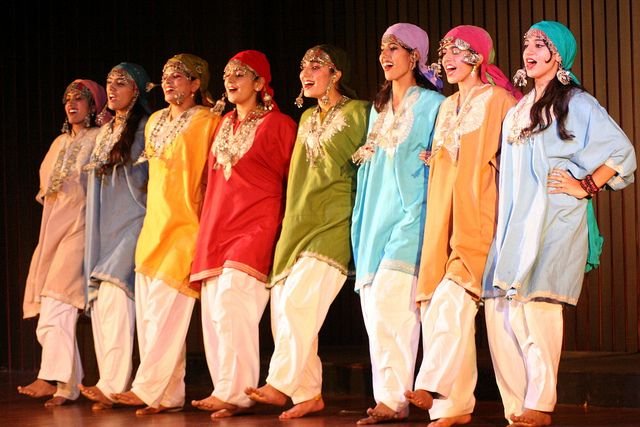
Men’s and women’s pherans have distinctive styles. Men’s pherans are usually simple and utilitarian: plain wool or tweed in dark or earth tones, often knee-length or just below. They may be belted at the waist for walking about, and men traditionally pair them with headgear like a woolen karakul cap or skullcap. (For formal occasions a groom might even don a turban atop his pheran.) Women’s pherans are generally more ornate and colorful. Traditional women’s pherans are longer (calf or ankle-length) and cut to flare out, allowing movement and sometimes featuring side openings. The most striking difference is the embroidery: Kashmiri women’s pherans are lavishly decorated with floral and vine motifs using techniques like aari and sozni embroidery. Metallic tilla thread (gold or silver) is worked along the neck, cuffs, and hem to catch the light. Brides’ pherans in particular are richly embellished – for example, Kashmiri Pandit bridal pherans are often silk or raffal wool with heavy gold-and-silver tilla work, and are worn with a long embroidered sash at the waist. In some communities, women also wear distinctive headpieces: Kashmiri Muslim brides pair the pheran with a padded embroidered kasaba cap and veil, while Pandit brides wear a tall taranga crown along with their pheran.
Cultural Significance and Identity
In Kashmir, the pheran has historically been ubiquitous across classes and communities. It was everyday workwear for farmers in the cold orchards and a common sight in Srinagar bazaars. Its popularity lay in sheer practicality: warm wool, generous cut, and layers meant a person could sit, work, or even sleep enveloped in warmth. Older Kashmiris still recall how a mother would rock a baby to sleep nestled in the folds of her pheran. Because everyone wore it – from common laborers to merchants to nobility – the pheran became a social equalizer; only the material and embroidery distinguished rich from poor.
Over time the pheran came to symbolize the very identity of Kashmir. It is often said that the pheran is “not just clothing – it’s identity wrapped in wool”. Kashmiris of all faiths share the garment as part of their common heritage; even during social upheaval, continuing to wear the pheran has been seen as a quiet statement of pride. As poet Zareef Ahmad Zareef noted about the 2018 ban, “Pheran is one of the last vestiges of our culture…not only is it intrinsic to us culturally, it is also necessary due to weather”. Former Chief Minister Omar Abdullah likewise protested the ban, tweeting that pherans are practical protection against cold and “part of our identity”.
Each winter’s Chillai Kalan begins and ends in pheran-clad color. Kashmiris now celebrate 21 December as Pheran Day, when people proudly don their warmest, finest pherans to mark the arrival of winter. In recent years Srinagar’s Lal Chowk has even hosted pheran festivals, and celebrities post greetings on World Pheran Day. The garment also looms large in the Kashmir image: travelers’ photographs and paintings often use the pheran as a visual shorthand for “winter in the Valley”. In the diaspora, many Kashmiri families keep a pheran or its memory as a piece of home: as one writer put it, the sight of a pheran “evokes Kashmir’s image” and reminds expatriates of their roots.
Folklore and Artistic References
Traditional Kashmiri folk songs and poetry even celebrate the pheran’s beauty. For example, in marriage songs a bride’s embroidered coat is praised:
“O bride, your pheran is adorned with Egyptian embroidery…
The border of your pheran is decorated with pearls.”
These verses (from wedding ballads) highlight how the pheran was festively embellished for special occasions. In visual art and media the pheran also serves as a cultural icon. Modern Kashmiri artists and writers have used the image of the red woolen gown to express identity and protest. (For instance, Kashmiri-British writer Sumaya Teli’s 2019 poster of a Kashmiri woman in a flowing red pheran became a viral symbol of Kashmir’s resistance movement.) Even outside the region, fashion show photographs often feature models in pherans to suggest a Kashmiri setting. This deep embedding in literature, art and folklore underlines that the pheran is more than just practical clothing – it’s woven into the very story of Kashmir.
In recent years young Kashmiris and designers have reimagined the pheran for modern fashion. While retaining its distinctive draped shape, contemporary pherans may use lighter fabrics (even blends or jerseys) for year-round wear. Designers experiment with bright or muted palettes, and sometimes shorten the pheran to a coat length. Trendy cuts – such as raglan sleeves or side openings – have been introduced to appeal to urban tastes. It is now common to see young people pairing a fitted pheran with jeans or leggings (blurring it with Western coats). Kashmiri fashion labels – from Srinagar boutiques to diaspora brands like Hamzaara in New York – have featured pherans on runways and online, blending traditional tilla embroidery with modern silhouettes. Bollywood and international celebrities wearing wool coats inspired by the pheran have also helped spark interest. In short, what was once purely winter gear is now a style statement: even in Delhi’s university campuses one often spots students wearing Kashmiri-style pherans for the “aesthetic” of winter folklore.
Controversy and Symbolism
Because the pheran is so tied to Kashmiri identity, it sometimes becomes a focal point of politics and debate. In 2018, a J&K education officer issued an order that officials should not wear pherans on duty. This sparked a public uproar – former CM Omar Abdullah and others protested, calling it a regressive ban on a practical cultural garment. The order was quickly rescinded. As commentators noted, clothing in Kashmir can carry meaning: the pheran has been embraced by many as a quiet emblem of Kashmiri heritage and resistance. Social media hashtags like #DontBanOurPheran trended whenever its use was threatened.
At the same time, the pheran’s popularity has attracted issues of cultural appropriation. Critics point out that outsiders sometimes adopt the pheran purely as a “fashion” or “Kashmiri vibe” without understanding its history. By early 2025, articles appeared warning against treating the pheran as a mere trendy coat – lamenting that hashtags and Instagram posts don’t convey the garment’s deeper resonance. In short, the pheran has taken on symbolic weight: to many Kashmiris it stands for warmth and communal pride, while for others it can sadly be just another exotic fashion item.
The Future of the Pheran
On this date pheran carries centuries of history on its wide sleeves and a bridge between Kashmiri tradition and the modern world. As long as Kashmir’s winters persist, people will value the warmth and comfort of this coat named. At the same time, the pheran seems poised to grow as a cultural and fashion icon. Young Kashmiris see it with fresh eyes, mixing it into daily wardrobes and designer collections. Tourists who visit the Valley often buy pherans or its embroidery as souvenirs. In the end, the pheran’s future is tied to both utility and identity. Its adaptability – from ankle-length robe to hip-length jacket – suggests it will survive generation to generation. Whether kept out of loyalty on Pheran Day or styled on a city street, the pheran remains a beloved symbol of Kashmir’s heritage and resilience.