The Korean War: A History of a Torn Land

~Aritra Biswas
Prior to the start of the war, Korea was a united land that was covered with green valleys, ancient palaces, and people of the same culture. However, this all ended with the conclusion of the World War II. Nevertheless, Korea despite being liberated under Japanese rule was divided into two parts. On the north, the Soviets were in favor of Kim Il-sung who envisaged the construction of a new communist society. Americans assisted in the south in the formation of the government of Syngman Rhee with the expectation of creating a democratic country.
Initially both parties hoped that the split was a temporary one but with time things became suspicious. Soldiers were patrolling the 38th parallel, and looked across broken hills and rivers at one another. Each of them thought that they were the legitimate owners of the whole territory.
The Sudden Storm: June 1950
One morning, on June 25, 1950, the citizens of South Korea only woke up to the noise of explosions and the sound of guns firing. The soldiers of North Korea literally burst over the border and thundered over the land; strong in numbers and equipped with weapons of Soviet caliber. Villages were falling one after another. The capital of South Korea, Seoul was taken in a few days.
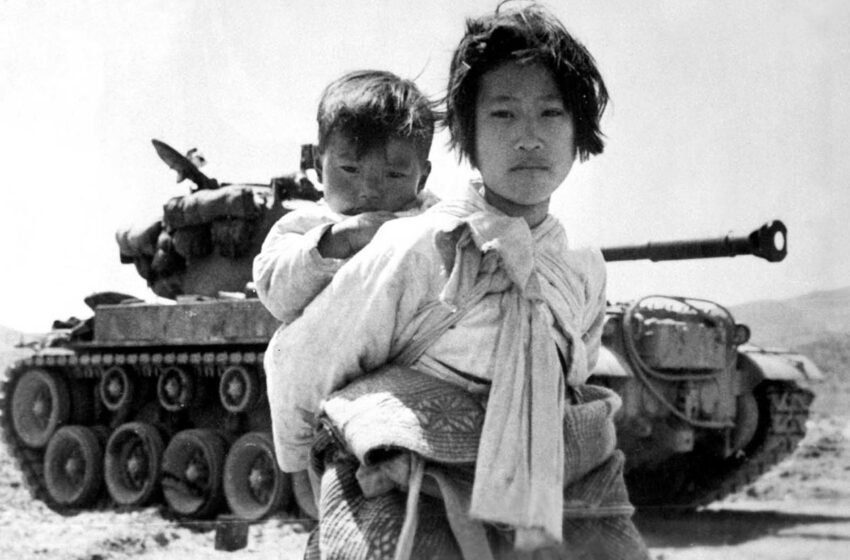
Romantic couples took off with their belongings strapped on their shoulders and abandoned their homes. Schools, shops and markets were silent as people ran away behind the approaching army. The South Korean army was shocked and unprepared and retreated to the southern part and got surrounded around Pusan, in the final corner of their country.
On this side the ocean raised alarm. The United Nations called upon the soldiers in most countries. They were led by America, which supplied them, sent ships, young men who had never been in Asia before but were well prepared to defend a place they knew very little about
A Turning Tide at Inchon
Hope came in September. The idea that a man of high risk like General Douglas MacArthur proposed was the attack by sea at the port of Inchon. The shore was hazardous, the waters high, and no one knew whether to succeed. South Korea could only disappear without it.
Early in the morning UN troops came at sea. What followed was the battle which transformed all that. Inchon was recovered and Seoul liberated again. Those who had lost faith flocked to greet the soldiers with weeps, flags and warm food.
The armies advanced to the north in pursuit of their enemy up to the icy Yalu River the border between Korea and China. The war now appeared near at hand.
The Dragon Awakens
Yet when peace was on the point, like a second thunder-cloud, another storm came. China joined the war and silently crossed the mountains, marching in freezing winds, accompanied by thousands of troops. Their assault sent back the UN and South Korean troops once again. The already burnt land started to burn again.
The fighting was done in snow-covered fields and muddy hills. Rockets were zipping through the air. However, the front line at length relaxed again in much the same position where it had started: the 38th parallel.
Life in the Middle of War
To common Koreans life was a struggle. Families were separated, children were deprived of parents and many tried to make ends meet without any food, warmth and shelter. There are those who had to rebuild their villages only to be destroyed. Some of them, others, walked miles hoping to make it to a safer place.
Meanwhile peace negotiations began in 1951. Leaders were table to table, though guns were firing nearby. The talks ran months and months, chiefly about the mode of exchange of prisoners and the point of making the new border. Soldiers were on the waiting, each day, defending hills that did not seem significant, but were highly treasured by nations.
The Final Agreement
Three years later on July 27, 1953 an armistice was signed after the three years of agony. The celebration was no more than the relief. There was no actual winner of the war and no peace treaty was signed. Rather, a thin line was traced the Demilitarized Zone, an eloquent silence cut across the country.
The background of this border saw the birth of two Koreas.
A Tale of Two Futures
In the north, they erected high towers, sang praises of patriotism, and sealed the country against foreigners. Where the south was, cities gradually rebuilt in ruins, the roads were broadened, and new schools were founded. Farmers had imbarked, children returned to classes.
Years turned into decades. South Korea became a successful modern-day country, and North Korea chose the way of isolation and the military power. Nevertheless, families were still separated. There was no sending letters, no making phone calls and brothers and sisters who were on different ends of the planet became old and never saw each other again.
The Story That Never Had a Conclusion
The Korean War was not only the war of armies it was the history of the country divided into two, of people strolling down the streets leaving their houses behind, and of broken and rebuilt dreams. Soldiers are today still posted on the DMZ, observing each other as they did in 1950. And even as guns are silent now the war is not over. There is no peace treaty, only the recollections of grandparents to grandchildren.
It is a tale carved in between Korea and its mountains, its cities, its songs–and in the hearts of individuals who are only awaiting for the time when the land which was one could be united once more.