Habshi Rule of Bengal: The Forgotten African Kings of India

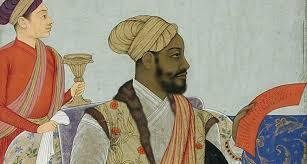
–Saptadeepa Mahapatra
The story of the Indian Subcontinent is often told through the lens of great Mughal emperors, valiant Rajput warriors, or the complex legacy of British colonialism. Yet, woven into the very fabric of Bengal and the Deccan is a thread that traces back thousands of miles across the Indian Ocean to the Horn of Africa. It is a story of extraordinary upward mobility, where men and women brought to India in chains did not merely survive. They rose to become generals, administrators, and even Sultans. This is the history of the Habshis, the Afro-Indians whose presence shaped the political and social landscape of India for centuries.
The relationship between Africa and India is not a modern phenomenon. It is very ancient, predating the rise of many great empires. As early as 1495 BCE, historical records suggest trade existed between the two regions, specifically during the Egyptian queen Hatshepsut’s expedition to the land of Punt, modern-day Somalia. By the first to third century CE, the Periplus of the Erythraean Sea, a Greco-Roman trade guide, documented a darker side of this exchange: the first recorded mentions of the slave trade from Africa to India. Indian kings of the era reportedly demanded “slave musicians” and “beautiful girls for concubinage,” alongside luxury imports like Italian wine and silverware. The rise of the Habshis, can traced back and associated with the Western conception of plantation slavery. In India, particularly from the 16th to the 17th centuries, enslaved people were brought from East Africa, primarily Ethiopia, in relatively small numbers, often around 500 at a time. These individuals were not destined for the fields, but for the royal courts and military barracks. In the Indian system, the relationship between a ruler and the enslaved functioned more like patron-client ties. These “military slaves” were valued for their loyalty, as they had no local kinship ties and thus were less likely to participate in the ceaseless intrigues and conspiracies of the local nobility. Because they were outsiders, they became a trusted support base for rulers, frequently being elevated to the ranks of generals, king-makers, and administrators. As they won their freedom, many became chieftains and kings in their own right.
As these Africans traveled east, they underwent a profound transformation. Most adopted Islam, taking on new names that inadvertently erased the clues to their specific ethnic origins. In India, they came to be known as “Habshis,” a term derived from Habush (Abyssinia), referring to modern-day Ethiopia. Later, the British would introduce the term Sidi, which some scholars believe stems from the Arabic Syd (master), while others suggest roots in Saydi (captive).
The most legendary early example of a Habshi reaching the heights of power is Jamal-ud-Din Yaqut (d. 1240). Little is known of his birth, but his rise was meteoric during the reign of Raziya Sultan, the first and only woman to rule the Delhi Sultanate. Yaqut served as the keeper of the royal stables and eventually became Raziya’s closest adviser and confidant. Historical accounts by the explorer Ibn Batuta suggest that Raziya’s favor toward Yaqut was significant, though modern historians debate whether their bond was a romance or a strategic political alliance. Regardless of the truth, the sight of a Black African holding such proximity to the throne incensed the Turkic overlords. Yaqut was eventually killed during a rebellion, a tragic end that has been romanticized and notably whitewashed—in Bollywood films and TV series, which often ignore his African race entirely.
While Yaqut was a singular figure in Delhi, a full-fledged Afro-Indian dynasty eventually took root in the semi-independent state of Bengal. In the 15th century, Sultan Rukh-ud-din Barbak Shah (r. 1459–1474) sought to maintain the peace between his Muslim and Hindu subjects by empowering his army with an unprecedented number of Abyssinian soldiers. Starting with 8,000 men brought directly by sea from Ethiopia, the number of Habshi soldiers in the Bengal army swelled to 20,000 by the time of Barbak’s death. These men were not just soldiers; they were a formidable political force. When Barbak’s successor, Yusuf, tried to limit their influence, the tensions between the royal family and the Habshi guard reached a breaking point.
The Habshi Rule of Bengal from 1487 to 1494 officially began with an act of blood. In 1486, the Abyssinian eunuch palace guard, Sultan Shahzada, murdered the reigning Sultan Jalal-ud-din Fatah Shah, seizing the throne for himself. This act founded a short-lived but significant era where Bengal was ruled by African monarchs, like Sultan Shahzada (Ghiyas ud-din Barbak Shah) His reign lasted only six months before he was deposed and killed by a rival Habshi commander. Saif ud-din Firuz Shah (Malik Andil), who was widely considered the greatest of the Habshi rulers, Indil Khan (as he was originally known) was a loyal commander who initially killed Shahzada to avenge his former master. He was persuaded to take the throne by the dowager queen and the nobility. History remembers him as a kind man and a just king who brought stability to Bengal. His most enduring legacy is the Firuz Minar, a magnificent tower that still stands in the historic city of Gaur. Sultan Qutubuddin Mahmud Shah was an young child who succeeded Firuz Shah, he was murdered within a year by another Habshi aspirant, Sultan Shams ud-din Muzaffar Shah (Sidi Badr Diwana). The final Habshi ruler was the antithesis of Firuz Shah. Described as unwise and cruel, he increased taxes and reduced the pay of his army. His tyranny led to a massive rebellion led by his own Prime Minister, Hussain Sharif. After a fierce siege in 1493, Muzaffar Shah was killed, and the Habshi dynasty collapsed, replaced by the Hussain Shahi dynasty.
The fall of the Habshi dynasty in Bengal led to a period of persecution. The new monarch, Sultan Alauddin Husain Shah, expelled the remaining Africans from his kingdom. These displaced Habshis moved southward, settling in the Deccan and Gujarat regions. Far from fading into obscurity, they continued to dominate the politics of the 15th and 16th centuries in sultanates like Bijapur and Ahmadnagar. One of the most famous figures from this later period was Malik Ambar, a Habshi commander who became the de facto ruler of the Deccan, famously defeating the mighty Mughal armies. In Gujarat, a small African-ruled princely state called Sachin was established in 1791 and remained independent until it was signed over to India in 1948.
Today, the descendants of these African pioneers are known as the Sidis. Numbering roughly 250,000, they live primarily in Karnataka, Gujarat, and Andhra Pradesh. While they are genetically linked to the Bantu speakers of sub-Saharan Africa, they are culturally Indianized, having adopted local customs, languages, and religious traditions. Despite their royal and military history, the modern Sidi community faces significant challenges. Classified as members of Scheduled Tribes, they often live in poverty and social exclusion. The government’s reserved quota system for education and jobs, intended to help such groups, remains largely inaccessible to many in the community.
The history of the Habshis is a testament to the complexity of the Indian identity. It challenges the notion that the Subcontinent’s past is purely local, revealing instead a global crossroads where an enslaved Ethiopian could rise to become a beloved King in Bengal. The diverse facial features and hair types found in modern-day Bengal are a living map of these ancient migrations and intermarriages.