Nagara Temples of North India: Architecture, Faith and the Living Landscape of Devotion

-Prachurya Ghosh
If you travel across the plains, hills and river valleys of India you will see some really amazing monuments. These are the Nagara temples. They are not just buildings for worship. Also show how people felt about their faith used their imagination and were very skilled at art. These temples have tall towers that go up high into the sky. They remind people who worship there that there is a connection between the world we live in and the divine.
The Nagara style of building temples started in India and then spread to other areas like Rajasthan, Madhya Pradesh, Uttar Pradesh, Odisha and parts of Gujarat. The towers of these temples are special because they curve and look like they are growing out of the ground. Each temple is a mix of the traditions of the area what people. The ideas of the artists who built them.
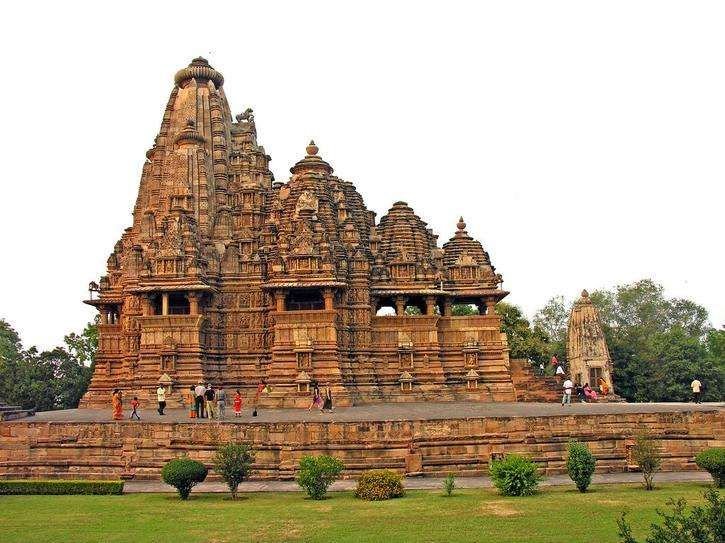
You can see some of the examples of this style in temples like the Khajuraho Group of Monuments the Sun Temple and the Kandariya Mahadeva Temple. These temples are not just places for worship. Also tell us about the social, cultural and political history of India a long time ago.
To really understand Nagara temples you have to look at more than how they are designed. You have to think about how faith, art and society all came to create one of the most amazing temple traditions in the world.
The Origins of Nagara Temple Architecture
The Nagara style started a time ago in the early centuries of the first millennium CE. Then temples in India were changing from simple shrines made of wood or brick to more permanent structures made of stone. These early experiments laid the groundwork for the kinds of buildings that would later be over northern India.
One of the temples that shows the early principles of the Nagara style is the Dashavatara Temple. It was built during the Gupta Empire in the century. This period was very important for art and architecture because it was when many of the basic ideas about building temples were figured out.
The temple at Deogarh already had some features that would become typical of the Nagara style. It had a room for the deity, a raised platform and the start of a tower above the shrine. Even though the tower is not completely preserved you can see the imagination of the architects who designed it. This would later lead to the curved towers of medieval temples.
As time passed different kingdoms in the region. Expanded on this style of building. Each dynasty added elements, but they all kept the basic structure of the Nagara temple.
The Basic Structure of a Nagara Temple
Even though there are differences from one region to another most Nagara temples have a similar plan. At the heart of the temple is the garbhagriha, which’s the room where the main deity is kept. This room is usually small and dark which emphasizes the presence of the deity more than any decorations.
Above the garbhagriha is the shikhara, which’s the tall curved tower that is the most recognizable part of Nagara temples. The shikhara gets narrower as it goes up towards the sky. At the top there is a stone element called the amalaka, which is often topped with a decorative finial.
In front of the garbhagriha is the mandapa, which’s the hall where people gather to worship and perform rituals. Larger temples might have mandapas connected in a row creating a path that leads to the garbhagriha.
The whole temple is often built on a raised platform called a jagati. This elevates the temple. Gives people space to walk around it which is part of their devotional practice. The idea is that the temple represents the center of the universe.
Symbolism and Sacred Geometry
Nagara temples are not just buildings they are structures that were designed very carefully. According to Indian architecture texts temples represent the universe. Every part of the temple from the layout of the ground plan to the proportions of the tower follows principles that are meant to bring the world and the divine world into harmony.
The garbhagriha represents the heart of the temple, where the divine presence is concentrated. The shikhara symbolizes a mountain often compared to Mount Meru, which is the center of the universe in Hindu cosmology.
This is why the outside of Nagara temples is often covered in carvings. These carvings show gods, goddesses, celestial beings, dancers, musicians, animals and scenes from life. Together they represent the richness of creation surrounding the center of the temple.
Regional Variations within the Nagara Style
Although the Nagara style has a recognizable structure it developed differently in various regions as it spread across northern India.
In India especially in Madhya Pradesh the temples built by the Chandela Dynasty are known for their artistic sophistication. The temples of the Khajuraho Group of Monuments are famous for their decoration and complex architectural plans.
The Kandariya Mahadeva Temple stands out as a masterpiece. Its tall shikhara is surrounded by spires that make it look like a mountain range rising towards the sky.
In India particularly in Odisha the Nagara style developed into a distinct regional form known as the Kalinga style. Temples like the Lingaraja Temple and the Sun Temple are examples of this variation.
The Sun Temple at Konark built in the century is very special because it was designed to look like a giant chariot carrying the sun god across the sky. The temple complex includes stone wheels and horses that are carved with a lot of detail.
Temple Sculpture and Artistic Expression
One of the striking things about Nagara temples is the richness of their sculptures. The walls of the temples are like stone tapestries filled with figures that seem alive.
These carvings serve purposes. Some represent deities from Hindu mythology helping people visualize the stories and powers associated with them. Others show dancers, musicians, warriors and lovers reflecting the diversity of life.
At the temples of Khajuraho the sculptures are particularly famous for their sometimes intimate imagery. When people look at these carvings they should remember the context in which they were created. They were part of a symbolic program that represented fertility, cosmic energy and the unity of spiritual and physical existence.
The craftsmen who made these sculptures were very skilled. They used tools but they created figures with a lot of detail and elegance.
Temples as Centers of Community Life
A long time ago temples were not just places for individual prayer. They were centers of social and economic life.
Temples often received gifts of land from kings and wealthy patrons. This supported the priests, musicians, dancers and artisans who worked in the temple. Festivals and rituals attracted pilgrims and visitors from around making the towns around the temples lively cultural centers.
In cases temples also served as schools and charities. They kept texts safe hosted scholars and gave food to pilgrims and the poor.
When kings built temples it showed their power and influence. By sponsoring these buildings they could show their devotion to the gods and also reinforce their authority over the kingdom.
Survival
The history of Nagara temples was not without its challenges. From the medieval period onwards changes in politics and conflicts affected the building of temples in many regions.
Some temples were. Abandoned during times of war and political change. Others survived because local communities took care of them and protected them.
Despite these challenges many Nagara temples are still well preserved. Places like the Khajuraho Group of Monuments are now recognized as heritage sites and attract visitors from all over the world.
These temples remind us of a tradition of creativity in architecture and spiritual devotion.
The Nagara temples of North India are one of the sophisticated traditions of sacred architecture in the world. They express a vision of the universe where the divine and human are closely connected.
From temples like the Dashavatara Temple to later masterpieces like the Sun Temple the Nagara style evolved over centuries while keeping its essential spiritual symbolism.
Today these temples inspire people not just because of their beauty but also because of the imagination and creativity that went into building them. They remind us that buildings can be more, than structures; they can be powerful expressions of faith, creativity and the human desire to connect with something greater.