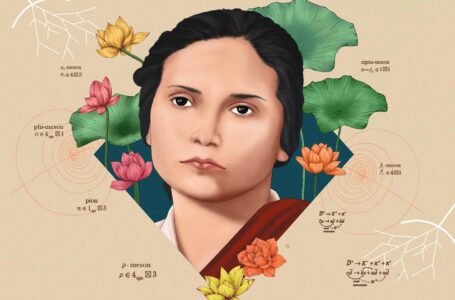
Noor Inayat Khan: A Life Between Faith and War

-Oishee Bose
How could a young woman, often described in polite society as a princess, become a spy who outlived many of her peers while many people thought such a destiny to be improbable for her? The question opens a surprising chapter of the Second World War as it centres a gentle, artistically inclined individual at the core of one of the most perilous trades of the war. Coming from a Sufi family with musical and spiritual roots, Noor Inayat Khan brought that legacy into a job that demanded technical ability, exceptional bravery, and the ability to keep calm in terrible circumstances. From salons and songs to coded radio communications, her narrative is one of the most intriguing characters of resistance during war because of the contrasts in her life.
Family, roots, and early influences
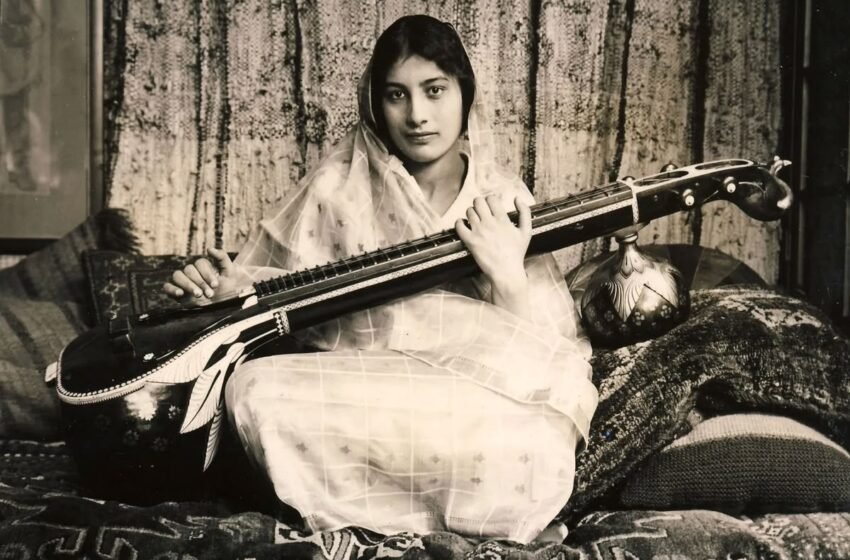
Noor Inayat Khan’s family background provided a cosmopolitan foundation that shaped identity across borders and languages. Her father, Hazrat Inayat Khan, was a noted Indian Sufi musician and spiritual teacher whose work introduced Sufi ideas to Western audiences. He was a descendent of the family of Tipu Sultan. Her mother was American, and the family lived across Russia, England, and France as political tides shifted in Europe. Academic and popular accounts agree on the basic outline of this upbringing: early years in Moscow, a childhood in London, and adolescence in Paris. The household combined devotional music, poetry, and a cosmopolitan outlook that did not fit any exact national category.
A gentle temperament and artistic talents defined much of her youth. She practiced the harp and piano, studied child psychology at the Sorbonne, and trained briefly at the Paris Conservatory for music. Creative work included publishing children’s stories, such as a collection of fables inspired by Eastern tradition. These activities revealed a person who valued beauty and calm temperament, and contemporary observers described her as sensitive and idealistic rather than combative. That same sensitivity produced a kind of inner strength later, a refusal to let outward gentleness determine what she would do in the face of evil.
Family responsibilities shaped character as well. The death of her father in 1927 made her take the responsibility of taking care of her younger siblings. Relational obligations and moral training in the Sufi tradition gave her a sense of service that later translated into wartime resolve. The decision to leave occupied France for Britain after the German advance was not merely an act of self-preservation, because she quickly found ways to contribute to the struggle against Nazism. Many records document this migration and the choices that followed.
From pacifist inclinations to wartime resolve
Early influences made the move into clandestine work appear unlikely to some observers, and yet a clear moral logic connects spiritual teachings to resistance against tyranny. She embraced a personal ethic that valued truth and nonviolence, and that ethic did not preclude active opposition to injustice. Enrollment in Britain’s wartime services followed her escape from France, and she joined the Women’s Auxiliary Air Force where she learned skills that would prove decisive. The wireless operator training attracted her because it combined technical competence with a role in helping others. That training prepared her for a position that required precision, discipline, and the steely nerve to transmit under the constant possibility of detection.
Trainers at SOE assessed both aptitude and character before sending agents into occupied Europe. Her aptitude for wireless telegraphy set her apart: several accounts note that she was both fast and accurate as a radio operator. The Special Operations Executive recruited her, and the agency placed a high premium on agents who could handle the stress of clandestine communications and the moral dilemmas of undercover life. Her selection as a wireless operator was a watershed, because she became one of the first women to be sent to the continent with such a technical and high-risk role. The SOE’s records and later biographies document this transition in convincing detail.
Deployment to occupied France: role, risks, and the Paris circuit
Operational context explains the intense peril of her assignment. Wireless operators faced a particular vulnerability because radio signals could be triangulated by German direction-finding teams. The routine use of transmitters had to balance urgency and caution. She arrived in France under the codename “Madeleine” and joined networks in Paris as the only active wireless link between local resistance groups and SOE headquarters in London for several months. Sources emphasize how isolated she became as arrests rolled through cells around her and colleagues either fled or were captured. Her transmissions provided crucial intelligence and coordination, and she continued broadcasting despite the risk of detection.
Technical skill alone did not secure survival; trust and network security mattered as well. The SOE’s Paris networks encountered significant infiltration and betrayal in 1943, and the fate of the Prosper network (also called the Physician network) in particular illustrates the institutional challenges the agency confronted. Patterns of arrest and counter-intelligence activity allowed German security services to break successive links in the resistance chain. Contemporary analyses of these operations highlight deficiencies in communications security as a structural problem, not simply the result of individual error. The collapse of networks increased pressures on remaining agents and made the act of broadcasting an almost suicidal endeavour. Historians continue to debate precisely how and why these networks fell apart, and accounts balance institutional analysis with attention to human courage.
Capture, interrogation, and imprisonment
Capture occurred in autumn of 1943. Official records and post-war reconstructions indicate that she was arrested by the Gestapo and subjected to interrogation, during which she refused to betray contacts or reveal detailed operational information. Multiple testimonies and agency documents portray her as resolute; prison records emphasize that she offered no help to her captors despite sustained pressure. Prison conditions became steadily harsher as she moved from local jails to prisons deeper inside Germany, and solitary confinement with shackles was part of her experience at Pforzheim and other sites. Contemporary archival sources describe attempts at escape as well as the psychological and physical toll of captivity.
Transfer to Dachau and death followed in September 1944. Official documentation from the Commonwealth War Graves Commission and the SOE’s files identify 13 September 1944 as the date she died, when she was shot at Dachau after being brought there for execution. Post-war inquiries attempted to trace the chain of custody and the precise circumstances, and the surviving documentation offers a grim and bureaucratic confirmation rather than a dramatic single-source narrative. Her final attribution of the word “Liberté” in some retellings has achieved symbolic resonance, and historians note the difference between emblematic memory and the fragmentary nature of the documentary record. The combination of archival evidence and witness recollection gives a sober, evidence-based account of her end.
Honours, remembrance, and contested memory
Recognition for her courage unfolded slowly. The British government awarded her the George Cross posthumously in 1949 for the conspicuous gallantry she displayed. The French state honoured her with the Croix de Guerre. Public memorials, a bust, theatrical portrayals, and a 2020 blue plaque at her London home created renewed attention in the twenty-first century. Analyses in newspaper reports and museum materials emphasize a broader reassessment of the wartime contributions of women and ethnic minorities in Britain’s collective memory. The blue plaque in particular became a symbolic moment because it recognized an Indian-heritage woman in the capital’s commemorative landscape. That acknowledgment sits beside ongoing debates over which historical figures societies choose to celebrate and how national narratives change over time.
Interpretive debates matter for historical method. Public storytelling often highlights heroism, and dramatic accounts focus on moral clarity, whereas archival researchers insist on nuance and evidentiary caution. A useful way to read commemoration is to see it as a conversation between archive and imagination, and the case of her life shows how moral admiration and critical history can coexist. Scholarship on gender and empire also reads her story differently, because scholars emphasize how race, religion, and colonial hierarchies shaped recruitment and later reception. That line of inquiry asks whether her identity influenced the roles available to her and whether her memory has been framed to serve particular narratives about diversity and national belonging. Sources across mainstream and scholarly outlets have illuminated these tensions.
Analytical reflections: courage, institutions, and historical judgment
Her courage stands as a personal reality deduced from multiple converging sources: training records, witness testimony, post-war commendations, and the official award of the George Cross. Courage formed one dimension of a life that also raises questions about institutional responsibility. The SOE’s operational choices and security protocols influence how academics assess the broader pattern of losses among agents in occupied France. Historical assessment thus involves two complementary judgments: one that honours individual bravery and another that interrogates structural weaknesses in clandestine warfare. Combining those judgments provides a fuller understanding of what happened and why it mattered beyond the exceptional bravery of a few individuals.
A second analytical thread asks how public memory transforms complexity into emblem. The image of a princess-like figure sacrificing herself to uphold liberty performs a moral work in societies seeking exemplars; the image also risks simplifying the complicated interplay of identity, politics, and contingency that characterized the wartime experience. Careful historical writing resists simple moralizing while preserving admiration for uncommon resolve. That balanced posture provides a model for teaching and for public history by acknowledging both heroism and the institutional context that made such heroism necessary.
Conclusion
A young woman raised on music and Sufi teachings became a linchpin in the fraught and technical world of wartime radio communications. Her life goes from the quiet world of salon music and children’s stories to small garrets in Paris and the unending cold of prison cells. Memory has both glorified and oversimplified a narrative that is still stubbornly complex, but courage lived side by side with disturbing institutional failure. Historical sources confirm dates, honours, and key events; scholarly investigation locates these facts in a network of gender, empire, and military need. The last scene sets two questions that both citizens and historians should continue: What obligations do organizations have to safeguard those they send into danger? And how should societies recall those whose lives complicate easy stories of bravery? Every query challenges more inquiry and introspection on responsibility, representation, and the cost of resistance.