Developing changes in Santhali Literature: Oral Heritage to Digital Resistance

-Saptadeepa Mahapatra
Art, literature, language, music- all act as the building blocks of a culture, slowly structuring the community. The rich cultural history of any community gains momentum when it is conveyed to the rest of the world.
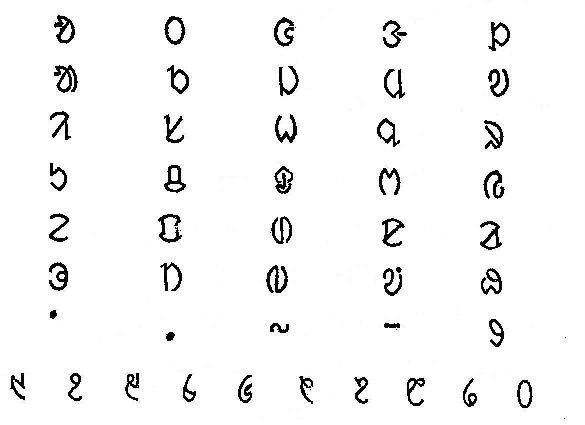
Adivasi, the ancient inhabitants and the indigenous people of India constitute about 8.6% of India’s population. While talking about the adivasis, the first community that springs to our mind is the Santhal community. Santhals are the largest adivasi community in the Indian subcontinent, with a population of more than 10 million, mostly residing in the Indian states of Jharkhand, West Bengal, Odisha, Assam and Bihar. The Santhals have a rich cultural heritage taking form of a vibrant tapestry, interknitted with traditions, music, art, cultural belief, and practices. Santhals have their own unique language, which is integral to their identity. Written in Ol Chiki, the Santhali language reflects its phonetic and grammatical structure. Rooted in vibrant oral traditions, the creation of Ol Chiki in the early 20th century was a landmark moment in the community’s cultural history, giving the Santhali language a distinct written form, strengthening tribal identity and cultural self-expression.
The history of Santhali literature can be traced back to the early times, when the Santhalis used to convey their stories through folklores. Written documentation of literature, however had its roots in the 1867 era. In 1895, Christian missionaries, notably Norwegian linguist Lars Olsen Skrefsrud, played a significant early role in transcribing Santhali and producing the first Santali Bible translation. Efforts were mostly taken by outsiders and the missionaries, who used Latin, Bengali or Devanagari scripts to convey Santhali sounds. But all the tribal expressions were not fully transcribed using the mainstream scripts.
In 1925, Pandit Raghunath Murmu, a Santhali writer, educator and linguist, invented the Ol Chiki script, in Mayurbhanj State, which is present day Odisha. Born in 1905, in Dandbose village, Pandit Murmu is considered to bring the renaissance of Santhali culture. Ol Chiki is a fully phonetic alphabetical set with 30 distinct characters or letters designed exclusively to address the Santhali sounds, marking the first truly indigenous writing system for the tribe. Due of lack of education, the santhals felt isolated from the mainstream. The main objective behind this invention was to find an alphabet which could encompass all Mundari speaking people. The invention of Ol Chiki and its usage in educational and official aspects gained the Santhalis, not only a linguistic innovation but also a cultural evolvement. It enabled the community to document its poetry, stories, folklore, literature, novels and much more with fidelity to linguistic structure. It is believed that according to Murmu, Ol means portraying things in our mind without making any sound and Chiki means pictorial representation. When Murmu was devising the script, he chose things from the nature keeping in mind four things tattoo marks, branding of cattle, stone marks of the forest and various ound patterns. All these resulted in the creation of Ol Chiki or Ol Chemet meaning learning of writing.
In 1936, the first book in Ol Chiki was published namely High Serena, authored by Pandit Raghunath Murmu. The other influential works by Pandit Murmu include Bidu-Chandan, which is a lyrical drama based on the community. Other prominent works of Murmu include, Kherwar Veer, Dalege Dhon, Hital(Regilious advices), which though remained unpublished. He even wrote and published many songs including, Bakhen. His short poems and plays include, Parshiapaha and Parsgi apad for the youth, and many more. Throughout his extraordinary career span, Murmu authored more than 150 plays, poems, stories, and even educational materials, acting as the torch bearer, paving ways for literature written in Santhali language, by the Santhali community and for the community.
The blossoming era of Santhali literature began in the mid 20th century, with preachers like Sadhu Ramchand Murmu, often regarded as Mahakabi which means great poet. His poetries were reflections of the community and its rich cultural perspectives. His poems covered various aspects of Santhal life, including political calls for an independent Jharkhand, messages about social issues affecting the Santhal community such as alcoholism, poverty, and education and elaborate poetic descriptions of nature, rituals and everyday rural life. Murmu connected poetry and the oral traditions in a way that effectively ushered in the modern era of Santhali literature. Some of his famous works include, Sansar Phend, a classical drama, Lita Godet, Isror and many more. Another significant figure in the Santhali literatue dynasty was Thakur Prasad Murmu, who not only wrote poems, prose and dramas, but also contributed in certain magazines and periodicals, transforming Santhali into a space for social commentary and creative expression. Considered as one of the most important modern voices in Santhali literature, Thakur Prasad Murmu’s works put limelight on social reformation and socio-political changes in the community. His notable works include, Santal Hul that emphasizes on historical memories of tribal resistance and identity. He worked in a periodical named Hor Sambad.
Getting the script ready and publish works using it was not an easy task. There were several personalities who helped Pandit Raghunath Murmu, regarding his innovation. Some of them included, Sauna Murmu, Muniaram Baskey (a trainee return from England), Suchindranath Das, superintendent of Bengal Education, Sunaram Soren, Samara Charan Tudu, Masang Tudu, Sundar Mohan Hembram, Ram Chandra Tudu, Lakhan Marndi and Kaliram Soren. Maharaja Pratap Chandra Bhanjadeo of Mayurbhanj was very impressed with Murmu’s work and encouraged him to popularize the script in and around Odisha, Bihar, Bengal and Assam. In 1946, Murmu with the help of Muiaram Baskey established a printing press and the first book that was published from that press was Nel Jong Lagid Oll, which means writing to see.
The Oll Samiti of Mayurbhanj gave the proposal for the formation of Adivasi Cultural Association in a meeting at Nakibagan of Bamanghaty Subdivision on 14th March, 1954. The meeting was held under the Presidentship of Lakhan Marndi and Vice-Presidentship of Ghasiram Sandil. The association was renamed as the Adivasi Socio-Education and Cultural Association (ASECA) in 1962. The dawn of the 21st century brought about sweeping changes with the tinge of traditional touch in Santhali literature. Writers and authors like Parimal Hansda and Mansingh Majhi, emerged as the new torch bearers for the new generation. Their poetry collections, short stories and literary works, blended modernity into the memoirs of Santhali rituals. Hansda’s acclaimed Dhunwa Otang Ag Kana received a Sahitya Academy Yuva Puraskar for poetry, reflecting both artistic excellence and institutional recognition of Santhali literature as an essential part of India’s literary mosaic.
Publishing trends in the 21st century reveal a combination of community-focused publishers, literary journals, and academic presses promoting Santhali literature. Traditionally, local printing houses produced Ol Chiki materials in limited quantities. In contrast, there is now a more prominent network of publishers, which includes university presses and tribal language organizations, making Santhali works accessible to a broader audience. Educational publishers are now integrating Santhali textbooks into school curricula in regions with large Santal communities. This link between literary production and formal education fosters a new generation of readers and writers.