Streets of Steam and Leather: The Story of Kolkata’s Chinatown

-Oishee Bose
If you turn up at Tiretta Bazar early, you feel like you’ve stumbled into somebody’s memory. Steam climbs from aluminium steamers, a vendor nudges a bamboo basket across a wooden stall, a little kid tugs an elder toward a stall that smells of pork buns and moong dal, and the city’s different tongues and noises curl around those small things. That handful of senses carries an old, complicated story. It reaches back to Buddhist scholars and Silk Road traders and runs forward through sugar mills, docks and tannery lanes. Chinatown didn’t pop into being overnight. It crept in, one household and one shop at a time, until Chinese migrants and their ways of life were woven into the everyday fibre of Bengal.
Old routes, new arrivals: long histories and the first settlers
India and China have been in touch for centuries, by trade, by faith, and by curiosity. Silk and spices moved long distances, monks undertook long journeys, and old texts note people and goods moving between the Himalayas and the sea. A more modern flow that would grow into Kolkata’s Chinese community began in the late eighteenth century, when traders landed at the eastern ports. Calcutta, which was the capital of British India back then, sat as the easiest metropolitan centre which connected China by land. The first recorded Chinese arrival was that of Yang Tai Chow; he landed at Budge Budge in 1778, worked in a sugar mill and hoped to move into the tea trade. Many early arrivals worked on the Khidderpore docks. A police report from 1788 already mentions a sizeable Chinese population around Bow Bazaar Street.
Throughout the nineteenth century, more migrants moved to Bengal and made Calcutta their home. Achipur became one of the early Chinese settlements and a larger living centre gathered around Tiretta, or Teritibazar, which people later called Chinatown. The place gathered temples, shops and kitchens, and it became a real hub for Chinese culture, religion, trade and food in the heart of the city.
An 1820 treatise suggests that most of the earliest migrants were Hakkas, though it doesn’t list their jobs. A police census in 1837 recorded 362 Chinese residents in Calcutta. The Temple of Guan Yu near Dharmatolla served as a central meeting place and the Temple of Tian How was built in 1848. In 1849, C. Alabaster noted the presence of Cantonese carpenters in Bow Bazaar; the area kept its association with carpentry as late as 2006, although very few Chinese families remained by then. Over time Chinatown split into two centres — Old Chinatown at Tiretta Bazar and New Chinatown at Tangra, and the community included Hakkas, Cantonese, people from Hubei and Shanghainese groups.
Migration patterns: reasons for leaving and places to land
People left China for all sorts of reasons: political unrest, war, hunger. Colonial trade networks drew labour and skill toward the ports. Carpentry, dockwork and small trading were early occupations, and Hakka migrants later found a clear niche in leather processing. Handling hides carried social stigma in many Indian communities, and tanning demanded techniques and a tolerance for risk that these migrants brought with them. Over generations children learned Bengali at school and in the street; homes became bilingual with Bengali and Hakka dialects rubbing up against each other. Journalistic accounts show a population that felt very local and at the same time distinct, many residents later said they felt more at home in Kolkata than in the places their grandparents had left.
Everyday institutions: temples, clubs and the rhythm of life
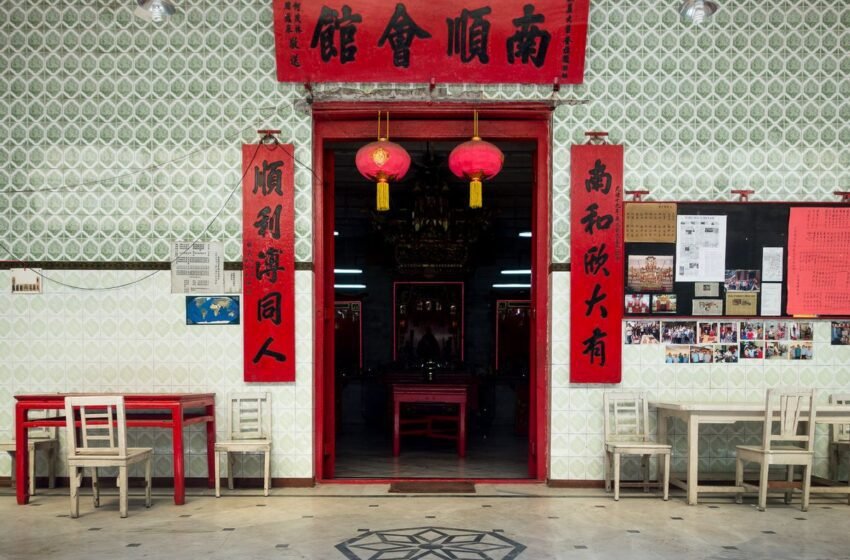
Chinatown created its own public life. Lion and dragon dance troupes such as Phoenix, Lucky Star and Night Fitness Club lit up festival days. Across the twentieth century Tiretta Bazar and Tangra supported a tight web of small civic institutions. The Ling Liang Church stands there; a Kali Bari about sixty years old shares the same lanes. Associations such as the Tannery Owners Association, South Tangra Youth Club, the Tei Moi Chinese School, the Restaurant Owners Association and Buddha Light International knitted people together. Temples to Guan Yu and Tian How gave ritual and social focal points; community groups organized lion dances, festivals and classes in Chinese language and customs. A local paper, Tu E Pe, once came out of Chinatown and reportedly ran to 195 pages. Small dental clinics and laundry shops served the neighbourhoods. Family restaurants served dumplings, noodle bowls and breakfast items to a widening circle of Bengali customers. Festivals drew neighbours in and temple courtyards became places to find work, to gossip and to help one another. It was small, repeated kindnesses that made the area hold.
Cultural hybridity: language, religion and recipes
Culture mixed itself together here out of necessity and invention. Hakka cooks took Chinese techniques and paired them with Bengali ingredients: green chilli, coriander and local spices. That mix turned into food that spoke to both communities. People call it Indian Chinese or Hakka-style food: chilli chicken, manchurian, Hakka noodles — dishes that moved out of Tangra and Tiretta into roadside stalls and banquet halls across the country. Many Indian Chinese grew up speaking Bengali as their everyday language, and households often kept Chinese folk rituals alongside local religious practice; a Kali Bari inside Chinatown is one small sign of that blending. These changes didn’t wipe out Chinese identity. They folded it into something new, a hybrid grammar that belonged to two places at once. Contemporary reports keep saying the Hakka culinary legacy travels well, even as the people who make it worry about survival.
Tanneries and trade: industry as identity
Tangra’s tanneries tell the story of a community that made place by work. Hakka entrepreneurs and craftsmen reclaimed marshy land and built small leather workshops. Over decades these clusters produced finished and semi-finished leather for national shoe factories and for export across borders. The work required technical knowledge involving hides, chemicals, finishing processes and it gave livelihoods to thousands, many of whom were not ethnic Chinese. Tangra’s lanes became rows of shops and warehouses that smelled of tannery chemicals and frying oil from nearby eateries. Hakka tanners raised infrastructure through thrift and skill; journalists and policy analysts report how these small enterprises plugged Kolkata into international markets. Industry and culture fed each other: leatherwork paid wages, restaurants fed workers, and both the goods and the food burnished Tangra’s reputation.
Culinary outreach: how Tangra fed a nation
Food carried Chinatown farther than any map. Home cooks and small family restaurants sold dishes adjusted for Indian spice preferences and local tastes, and those recipes spread by migration, commuting and word of mouth. Hakka-style cooking travelled across India and into the Indian diaspora overseas. That success brought two ironies. The first is economic: as Chinese food became mainstream and commercial brands grew, westernised or franchised restaurants started competing with and sometimes pushing out family kitchens. The second is social: the cuisine now feeds millions who rarely know the families that invented it, while the neighbourhoods that created the food have been shrinking. Heritage organisations and journalists warn that unless everyday artisans get social and economic support, a living tradition risks being turned into a packaged commodity.
Decline and displacement: geopolitics and urban change
Pressure built in the late twentieth century and hardened afterwards. The 1962 war with China created suspicion toward Indian Chinese communities and led to internment, surveillance and loss of trust. Political shocks like that sped up the outflow of families who feared discrimination or who looked for better security abroad. Urban policy and environmental regulation added further strain. Court orders and government moves pushed polluting tanneries out of central city areas and eventually to regulated outskirts such as Bantala, fracturing the economic system that had sustained Tangra. Land disputes, property claims and a market hunger for central real estate, squeezed long-residing households further. Contemporary counts put only a few thousand ethnic Chinese in Kolkata now, mostly in ageing households and running a shrinking number of family businesses. Chinatown, once home to roughly 20,000–25,000 residents in the mid-twentieth century, now holds about 3,000–3,500 people of Chinese origin. Scholars and reporters note that the cultural traces remain, but the civic density needed to sustain rituals and institutions has thinned.
The wider Indian Chinese presence: more than one city
Kolkata remains the most historically important Chinese settlement in India, though smaller pockets of Chinese heritage appear in Mumbai and elsewhere and new expatriate Chinese communities crop up in tech corridors and business centres. The Indian Chinese story therefore stretches over different times and formations: older, rooted Hakka households in Kolkata that carry multi-generational memory and newer transnational presences tied to trade, investment and education. Policy analysts argue that any national response should recognise these differences so that solutions can be tailored rather than one-size-fits-all. That distinction matters for cultural preservation; heritage work for an ageing, rooted community needs one set of tools while networking initiatives for corporate migrants need another.
Memory, belonging and the ethics of heritage
Chinatown forces hard questions about who benefits from preserving and selling cultural memory. Community activists push for heritage tourism plans that put local people and small entrepreneurs at the centre, while others imagine spectacle or “urban renewal” that risks pushing out the very people a place commemorates. Practical steps include legal aid for property disputes, grants to help artisanal tanneries meet environmental standards, small business subsidies to keep family restaurants afloat and documentation projects for culinary and craft traditions. Those steps need political will and cooperation across sectors. Even small wins would change the life calculus for many households facing invisibility or forced migration. Reporters and policy writers stress the need for safeguards against gentrification and commercial extraction.
Towards a final reflection: presence and plurality
Chinatown shows how a small migrant community can leave a big mark on a city. The Chinese presence in Calcutta changed how people worked, how they lived and how they mixed with one another in ways that outlasted its numbers. This story shows urban plurality made through daily interaction, adaptation and shared spaces. The steady decline of the community points to how political shocks, urban transformation and economic change fall unevenly on minorities. Two questions keep coming back: how should urban histories write communities whose cultural footprint outlives their numbers? How can cities sustain living minority histories without turning them into museum pieces?
These questions place Kolkata’s Chinatown within a larger conversation about memory, belonging, and cultural plurality in South Asian urban history.