Cold War History: From Iron Curtain to the Fall of the Soviet Union

-Aritra Biswas
One of the most important and complicated moments in the modern history was the Cold War. Spanning about 1947 to 1991, it was not a conventional war where armies battled in battlefields but a long term power struggle between the two opposing blocs in the world. On the one hand was the United States and allies, which was a symbol of capitalism and democracy. On the other was the Soviet Union which advocated communism and centralized political system. There was no physical hostility between the two super powers, but the global community got to experience tension, fear and uncertainty all the time.
Origins of the Cold War
The cold war can be dated to the post World War II era. Despite the fact that the United States and the Soviet Union were allies who fought a common enemy in the Nazi Germany, their friendship was founded on necessity and not trust. Soon deep ideological differences re-awakened. America had the ideology of free markets and democratic systems, whereas the Soviet Union had the ideology of state controlled economies and one party rule. The war had left Europe in ruins and the two forces were interested in influencing the post war world order. The U.S. came up with the Marshall plan to restore Western Europe, and the Soviet Union did not accept it and instead brought Eastern Europe under tighter control. Such contrary courses started the polarization of the world.
Ideological War: Capitalism vs Communism
The Cold war had a conflict of ideology. Capitalism stressed on the freedom of the individual, individualized property, and pluralism of politics. In the form of communism that was practiced by the Soviet Union, it emphasized economic equality, the ownership of the state resources and communal objectives.
Each of them thought that its system was better and was afraid of the proliferation of the opposing ideology. The result of this fear was containment policy by the United States and expansion of influence by the Soviet Union. Competition was not only political but also cultural, economic and technological.
Military Alliances and Arms Race
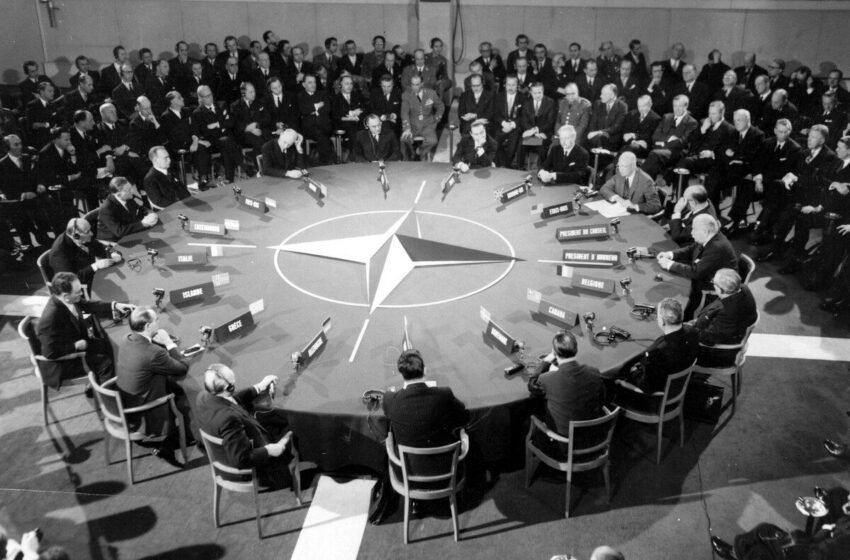
Even though actual war was to be avoided, both parties were training continuously in case of war. Alliances between militaries were built to gain power. The United States spearheaded formation of the North Atlantic Treaty Organization and the Soviet Union retaliated by forming Warsaw Pact.
This was followed by a fierce arms race particularly in nuclear weapons. The two parties came up with gigantic armaments that could blow the world off myriad times. It gave birth to the idea of Mutually assured destruction (MAD) in which no one would strike first, and that would result in complete destruction.
Proxy Wars and Global Impact
The super powers did not fight but waged proxy wars all over the world. Korea, Vietnam, Afghanistan and some parts of Africa and Latin America turned into an arena of cold war rivalry. Local conflicts were also escalated by the two parties where each took to arms and finances as well as military consultants to their side. These conflicts brought tremendous misery in the third world countries and they resulted into a permanent political instability and economic deprivation. To most nations, the Cold War was not cold, but it was gruesome bloodshed.
The Nuclear Shadow and Popular Fear
A fear of nuclear war was one of the most characteristic of the cold war. The near-disaster that struck the world included the Cuban missile crisis of 1962. To the common people and more so those in Europe and North America, anxiety defined how they lived their everyday lives. Schools practiced nuclear exercises, the governments constructed bunkhouses and the popular culture was imbued with apprehension of the doomsday.
This fear notwithstanding, there was another factor, which was diplomacy. The arms control treaties and communication networks were gradually designed to avoid unintentional war.
The Space Cold War and Culture
The rivalry was not only in weapons but also in science, sports and culture. Space Race was a representation of technological excellence, which started with the Soviet launch of Sputnik and ended with the U.S. landing in the Moon. Influence by culture was also significant. National values were to be promoted through films, music, literature and propaganda and the opponent discredited. Even sporting events on the international level turned out to be the arenas of ideology confrontation and made athletes the national pride symbols.
The Fall of the Soviet Union
In the 1980s, the Soviet Union experienced serious economic issues, political stagnation and increasing dissatisfaction of the population. Glasnost (transparency) and perestroika (restructuring) were some reforms that were expected to revive the system but rather revealed the flaws of the system. In 1989, the collapse of communist control in Eastern Europe was represented by the fall of the Berlin wall. The official break-up of the Soviet Union took place two years later and the Cold War came to an end with the United States left as the superpower in the world.
Thoughts on the Cold War: The Final Phase
The Cold War changed the attitude of international relations, political borders and affected generations. Its history can still be traced in the world partnerships, local wars, and nuclear stress. Although it did not result in a devastating world war, it left several scars in most regions of the world. The Cold War is critical to the interpretation of the contemporary world order, as humanity will not forget the harmfulness of the ideological extremes and the value of the dialogue instead of the destruction.