The Disappearance of the Maya: Collapse Myths vs. Evidence

~ Debashri Mandal
We have heard a lot about the lost cities and civilizations around the world. It has always brought us towards the mysterious disappearance of their prosperity to their mere existence. So, in this article, we will explore one of this kind – The Maya Civilization.
Some of the few ancient civilizations have captured the modern imagination as much as the Maya. Large stony pyramids rising out of dense jungle, intricately carved monuments recording royal histories, and a sophisticated calendar that once inspired fears of apocalypse have always contributed to an enduring mystery, then what happened to that Maya?
For centuries, the apparent abandonment of their great cities fueled myths of sudden collapse, divine punishment, and even total extinction. However, the truth, emerging slowly through archaeology, environmental science, and careful reinterpretation of texts, is far more complex and far more human.
The story of the Maya’s “disappearance” is not a single dramatic ending but a long, uneven transformation. To understand it, we’ll explore the myths and cultural explanations that shaped early interpretations before turning to the growing body of evidence that reveals how and why Maya society changed once and for all.
Part I: Ancient myths, legends, and explanations for the collapse of the Maya
When the Spanish explorers reached the American continent in the 16th century, they saw that Maya communities were still living around the Yucatan Peninsula and the highlands of Guatemala. However, they also found a lot of ruined cities, such as Tikal, Palenque, and Copan, covered by forest and seeming to have been abandoned for centuries. To European eyes, this created a powerful delusion that a great civilization had once existed, which could have vanished without explanation.
Chroniclers from early times could not properly reconcile the ruins with the Maya people they met there. Influenced by Christian worldviews, they might have interpreted the ruins as evidence of moral decline or as divine punishment. The idea that a civilization could fall just because it had somehow disappointed God to that extent fitted naturally into European historical thinking and reinforced colonial attitudes that portrayed Indigenous societies as degenerate remnants of a lost greatness.
Indigenous Memory and Sacred Time
In Maya culture, collapse was described not as disappearance but as a transformation or transition of the cycles of creation and destruction. Maya cosmology understood time as cyclical rather than linear. According to sacred texts such as the Popol Vuh, worlds are created, destroyed, and renewed through the actions of gods and humans alike. Failure, imbalance, and renewal are woven into the fabric of existence.
From the European perspective, the abandonment of cities did not necessarily signal an ending. While people continued to live, work, and worship elsewhere, political centers could come and go. Kings might lose divine favor, cities might be ritually “ended,” and new centers could emerge. These ideas later fed into myths that the Maya civilization collapsed suddenly after angering the gods or might have exhausted sacred energies tied to their famous calendar.
Romantic Ruins and the myth of “Lost Civilization.”
In the 19th century, explorers and writers such as John Lloyd Stephens and Frederick Catherwood brought the Maya ruins to the attention of the Western public. Their descriptions and detailed illustrations portrayed temples covered in jungles as remnants of a mysterious, vanished people. Popular imagination embraced the idea of a “lost civilization,” most of the time disconnected from the living Maya, whom Europeans wrongly assumed could not have built such monumental structures.
This period produced some of the most interesting myths: that the Maya mysteriously disappeared overnight, that they were wiped out by plague, or that their calendar predicted their own destruction. In more speculative circles, theories ranged from the invasion by unknown enemies to the environmental catastrophes of apocalyptic scale.
While these explanations sound dramatic, they shared a common flaw: they treated the Mayan collapse as a singular, sudden event rather than a prolonged process shaped by human choices and environmental pressures.
Part II: Archaeology, Environment, and the Evidence of Change
What Actually Collapsed?
Modern scholars have reframed the question. The Maya did not disappear. Rather, what collapsed was the major political and social system: the Classic Mayan landscape model that dominated southern lowland regions between roughly 250 and 900 CE.
In this period, the powerful rulers of this area were connected by trade, warfare, marriage alliances, and shared religious traditions. They built fantastic architectural monuments, erected carved stone monuments known as stelae, and maintained complex administrations and bureaucracies. After around 800 CE, many of these cities experienced population decline, halted monument construction, and were gradually abandoned. But the people, however, remained.
The Role of Climate and Drought
One of the vital discoveries in recent years comes from paleoclimate research. Scientists, who have studied lake sediments, cave formations, and tree rings, have found strong evidence of repeated, severe droughts in the Maya lowlands between the 9th and 10th centuries.
These droughts were not short, but rather long enough to destroy the cities over several years. Some lasted decades, dramatically reducing rainfall in a region that depended heavily on seasonal rainfall for agriculture and crops. The Maya cultivated maize, beans, and squash using productive systems, but they were vulnerable to prolonged water shortages.
As bouts of droughts increased further, crops failed, leading to food shortages, malnutrition, and social unrest. Significantly, the authority of Maya kings was tied to their perceived ability to communicate with gods and ensure cosmic balance, including rainfall. Environmental failure, therefore, undermined their political legitimacy as well as their survival.
Environmental Degradation
Not just drought explains everything. Further archaeological evidence shows that by the Late Classic period, the population density of the Maya increased substantially, particularly around major cities. To support these populations, forests were cleared for agriculture, lime plaster production, and construction.
Furthermore, deforestation worsened the impact of drought by reducing soil moisture and increasing erosion. Some researchers argue that human-driven environmental degradation amplified natural climate fluctuations, creating a feedback loop that made recovery increasingly difficult.
Along these, the Maya collapse resembles modern environmental crises: not a single cause, but the interaction between natural stress and unsustainable resource use.
Warfare, Politics, and Social Fragmentation
Inscriptions carved on stelae reveal another crucial factor: escalating warfare. Late Classic texts record that there were increasing conflicts, captures of rival kings, and the destruction of cities. Rather than a peaceful civilization undone by nature alone, the Mayan world was deeply political and often violent.
As resources became scarce, competition intensified. Trade networks broke down, alliances fractured, and cities turned against one another. Smaller centers fell first, followed by even major powers. Without stable political structures, large urban populations could no longer be supported.
Archaeologists have found evidence of hastily constructed defenses, abandoned palaces, and unfinished monuments, all signs of rapid social stress rather than orderly decline.
Migration and Transformation, Not Extinction
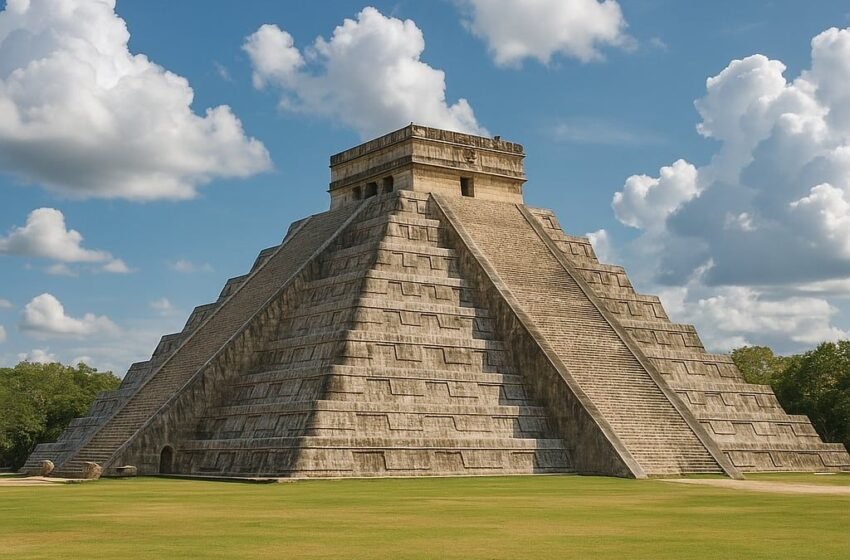
One of the most important corrections to the collapse myth is recognising migration. While many southern lowland cities were abandoned, northern regions such as the Yucatan Peninsula continued to flourish. Cities like Chichen Itza and later Mayan centers rose to prominence after the decline of Classic centres.
This shift reflects adaptation rather than disappearance. Political organisation changed, trade routes shifted, and religious practices evolved. The Postclassic Maya world was different, but it was very much alive.
Today, millions of Maya people live across Mexico and Central America, speaking Maya languages and maintaining cultural traditions that stretch back thousands of years. The idea that the Maya vanished is not only inaccurate but also erases this living continuity.
Rethinking Collapse
The disappearance of the Maya can be best understood not as a mystery but as a cautionary tale. It reminds us of how complex societies depend on fragile balances between environment, politics, and belief systems. The Maya civilization did not fall because of ignorance or primitiveness; they were skilled engineers, astronomers, and administrators. Their vulnerability lay in the very systems that made their civilization powerful.
By replacing myths of sudden collapse with evidence of gradual transformation, we have gained a clearer picture of the past and a sharper lens to view our present. Like the Maya, modern societies face climate stress, environmental degradation, and political instability. The ruins in the jungle are not silent warnings from a lost world but echoes of choices made by people not so different from us.
The Maya civilization did not disappear in one day. But they endured, adapted, and survived a lot that has not been recorded or known to us. What vanished may be an illusion we created, sometimes shaped by ruins, romance, and misunderstandings. But the real story, uncovered stone by stone, is far richer—and far more relevant—than any myth.