Razia Sultan: The Woman Who Defied the Throne of Men

-Prachurya Ghosh
The World That Never Imagined Her
Razia Sultan was born around 1205 CE into a political system that had no conceptual space for her future. The Delhi Sultanate was still in its infancy, barely three decades old, and already marked by instability, violence, and elite rivalry. Unlike ancient Indian monarchies rooted in myth and lineage, the Sultanate was a military state built by conquest. Its rulers were former slaves of Turkic origin who had risen through brutal discipline and battlefield skill. Power was not sacred; it was negotiated daily through loyalty, fear, and control of armed men.
This made the Sultanate unusually open in one sense—talent could rise regardless of birth—but brutally closed in another: authority was deeply masculine. Kingship was associated with public presence, warfare, and command, all considered incompatible with womanhood. Women of the court existed behind screens, within harems, absent from politics except through informal influence.
Razia entered this world not as a rebel, but as a contradiction.
A Daughter Educated for Power
Shams-ud-din Iltutmish, Razia’s father, was one of the most capable rulers of medieval India. A former slave himself, he had stabilized the Sultanate, defeated rivals, and built administrative institutions that gave Delhi real imperial shape. But he faced a problem common to medieval kings: his sons were not suited for rule. They were described as indulgent, politically immature, and uninterested in governance.
Razia was different. She was observant, articulate, and intellectually curious. Iltutmish allowed her to study Persian administration, Islamic law, court etiquette, and military affairs. She listened to political debates, understood diplomatic negotiations, and developed a sense of statecraft. When Iltutmish left Delhi on campaign, he appointed Razia as regent. She ruled effectively, and chroniclers record that her governance impressed the court.
In an unprecedented act, Iltutmish declared Razia his successor. This was not symbolic feminism; it was pragmatic. He believed competence mattered more than gender. But medieval politics did not function on competence alone.
The Rejection of a Woman’s Claim
When Iltutmish died in 1236, the Turkish nobles ignored his wishes. They elevated Rukn-ud-din Firoz, Razia’s half-brother, to the throne. Rukn-ud-din proved incompetent almost immediately. He abandoned governance for pleasure, allowing his mother to control the state while corruption and rebellion spread.
Razia responded not with secrecy, but with spectacle. She appeared publicly, addressed the people from a mosque, and accused the ruling elites of destroying her father’s legacy. This act alone was revolutionary. Medieval Muslim princesses did not speak to crowds. They did not mobilize public opinion. Razia bypassed the elite and appealed directly to legitimacy.
The people supported her. Within months, Rukn-ud-din was overthrown and executed. Razia became Sultan of Delhi.
Ruling as Sultan, Not Sultana
Razia consciously rejected the title of Sultana and ruled as Sultan. This was a strategic decision. She understood that power in her society was linguistically and culturally masculine. Instead of trying to redefine authority as feminine, she entered its existing form.
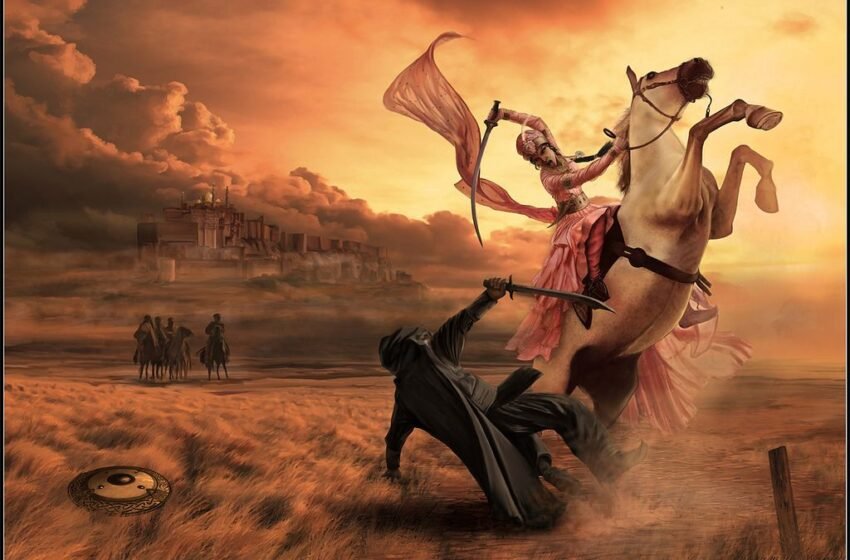
She abandoned purdah, appeared in open court, wore male clothing, rode horses, and led armies. She sat on the throne not as a symbolic figure but as an executive ruler. This visibility itself was a challenge to the political culture of the time.
Her administration focused on centralization and merit. She promoted non-Turks to high offices, attempting to reduce the monopoly of the Turkish elite. This policy aimed at building a broader, more inclusive ruling class, but it directly threatened the interests of the nobility who had controlled the state since its founding.
The Yaqut Controversy and Noble Resistance
The most controversial appointment of Razia’s reign was Malik Jamal-ud-din Yaqut, an Abyssinian slave whom she promoted to Superintendent of the Royal Stables. While not a ministerial post, it granted proximity to the ruler, which symbolically mattered more than its technical authority.
The Turkish nobles reacted with fury. They accused Yaqut of inappropriate closeness with Razia and spread rumors of a romantic relationship. Most historians see these claims as politically motivated slander, designed to undermine her legitimacy by turning political reform into moral scandal.
In a conservative society, a woman ruler was already controversial. A woman accused of sexual autonomy was intolerable.
Rebellions spread across the Sultanate. Governors refused obedience. The nobility framed their opposition not as treason, but as defense of moral and political order.
Military Campaigns and Political Isolation
Razia personally led military expeditions to suppress revolts. Chroniclers describe her riding into battle in armor, commanding troops, and issuing orders. This image was unprecedented in Indo-Islamic history.
She won several early victories, but her deeper problem remained unresolved. She had no powerful noble faction to support her. Her reforms created enemies among elites faster than loyalty among new appointees. The state machinery still depended on the Turkish aristocracy she was trying to weaken.
In 1240, the rebellion of Altunia, governor of Bhatinda, proved fatal. Razia marched to confront him, but her own troops betrayed her. Yaqut was killed, and Razia was captured.
Marriage, Defeat, and Death
Altunia did not execute Razia. Instead, he married her. Whether this was political strategy or genuine attachment is unknown. Together they attempted to reclaim the throne, but the nobles had already installed Bahram Shah as Sultan.
Razia and Altunia were defeated near Kaithal and killed while fleeing, possibly by villagers. Razia was about thirty-five years old.
Her reign had lasted barely three and a half years.
Why Razia Sultan Failed
Razia did not fail because she was incompetent. She failed because she challenged too many structures simultaneously. She questioned aristocratic privilege, ethnic monopoly, gender hierarchy, and religious conservatism at once. No medieval ruler—male or female—could survive such comprehensive opposition without a massive loyal coalition.
Her tragedy was political isolation, not personal weakness.
How History Remembered Her
Medieval chroniclers treated Razia with discomfort. They admired her intelligence but criticized her behavior. Over time, her story was reduced to romance, scandal, or moral failure. She was transformed from a political actor into a narrative warning about female ambition.
Modern historians see her differently: as a capable ruler who exposed the structural limits of medieval power. She demonstrated that legitimacy is not natural or divine; it is constructed through institutions, alliances, and cultural norms.
The Meaning of Razia Sultan
Razia Sultan matters because she revealed the fragility of patriarchal authority. Her existence forced society to confront the fact that leadership was not biologically fixed, but socially enforced. That was her real crime.
She did not simply rule.
She disrupted the idea of who was allowed to rule.
In a political landscape filled with forgotten male kings, Razia remains remembered not for conquest or empire, but for something far rarer in history: the courage to occupy a space that was never designed to include her.