The History of Communication

-Aritra Biswas
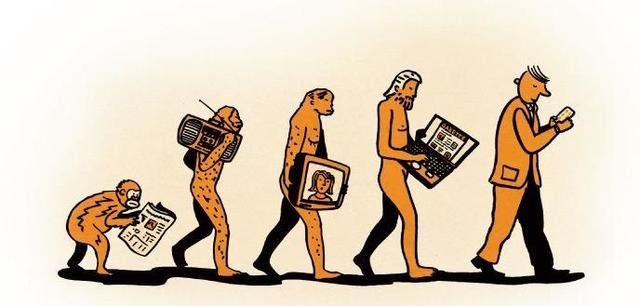
Human civilization is based on the process of communication. Since ancient times of human life, people have found a way to communicate their thoughts, feelings, information, and cautions to other people. With the development of the society, the forms of communication also developed, being more complex, quicker, and extended. Communication development indicates the intellectual development and technological expansion of humankind. This is a path between simple gestures and symbols, and immediate world-wide digital networks, which define culture, politics, education and relationships in the world.
Early Communication in Man Signs, sounds and symbols
The communication was first non-verbal. Early man used gestures, facial expressions and sounds to communicate his simple needs like danger, hunger or collaboration. Cave paintings and rock art was a great advance as it enabled the early human beings to document events, beliefs and experiences through pictorial representation. Such pictures were not decorative but contained narrative, education and mutual knowledge in society.
Voice sounds evolved to words as human beings created groups and tribes. The use of language facilitated the use of more accurate communication that brought about cooperation and social organization. The traditions were necessary in the form of oral traditions that could transfer the knowledge, myths and cultural values through one generation to another.
The Invention of Writing: A Turning Point
Among the most radical developments in the history of communication was the invention of writing. The early writing systems, pictographs and symbols enabled information to be stored beyond memory. Laws, trade transactions, religious texts and events were recorded through writing.
Written communication was expanded by the materials such as clay tablets, papyrus, parchment and paper, which came later. Writing changed civilizations through the administration, education, and civilization growth. It was no longer required that knowledge be passed on orally, but could now be archived, reproduced, and distributed through time and space.
Ancient and Medieval Worlds communication
The ancient civilizations developed communication via orderly arrangements. Written messages were delivered by messengers and couriers to the kingdoms and empires. Ideas, culture and technology were spread through roads and trade routes. Social order and government were largely dependent on such elements of governance as public announcements, inscriptions and symbols.
In the middle ages, religion and ruling class dominated communication. Books were rare and expensive since manuscripts were copied by hand. Though there were these constraints, letter communication, proclamation and oral preaching communication continued to play a crucial role in sustaining social cohesion and dissemination of beliefs.
The Revolution of the Mass Communication and the Printing Revolution
Mass communication started with the invention of the printing press. The availability of information to a broader audience was due to the access to printed books, pamphlets, and newspapers. The level of literacy was elevated, and the ideas could be spread quickly in various areas.
It was the time of the emergence of public opinion and the intellectual movements. No longer was it the prerogative of elites to communicate information but ordinary citizens could now access news, education and political ideas. Print media was instrumental in their influence in societies, the debate and social change.
The Electronic Age of Communication
Electronic communication that came in the 19th and 20th centuries had a significant effect of cutting the time taken to pass information by a huge margin. The telegraph made it possible to transmit messages over the long distances at nearly an instant. The telephone has brought a personal touch to long distance communication making it voice based.
Radio and television also changed the way people communicate as they reached masses at a time. Propaganda News, entertainment and educational programming reached homes and influenced the popular culture and consciousness. These technologies provided a common experience across the world and enhanced the power of mass media.
Digital Revolution: Mobile and Internet Communication
Communication was redefined in a new manner like never before by the digital revolution. People across the world were interconnected through the internet and this created an instant flow of information. Email substituted the traditional letters and the websites and online platforms changed the way of knowledge access and distribution.
Smartphones and mobile phones brought with them a sense of portability and convenience in the sense that one can communicate anywhere at any time. The social media sites have brought about interactive and user-generated communication which has negated the line between sender and receiver. Information was made more visual, faster and participatory than ever before.
The Present Communication: Rapidity, Extent and Problems
The current communication environment is characterized by fastness and internationalization. Video conferencing, chat services and online collaboration systems unite people and companies in real time. Communication has crossed geographical, cultural and linguistic boundaries.
Nevertheless, contemporary communication also does not give easy times. Excessive information flow, false information and lack of face-to-face communication bring up the question of quality and authenticity. Although there are these problems, electronic communication can still be effective in education, activism, business and social networking.
How Communication Affects Society
Communication has been able to develop significantly which has impacted human society. It has facilitated the rise of civilisation, dissemination of knowledge, science and technology. The identities, relationships and collective action are influenced by communication.
Since the time when the ancient retellings of stories passed, to the contemporary digital networking, every step in the evolution of communication can be seen as the need of man to tie and to work together. With the ever-growing technology, communication will persist as it reforms the ways of how humans perceive the world, and how they perceive one another.
Conclusion
The history of the development of communication is the history of human development. It started with the simplicity of gestures and symbols but has now expanded to become a complicated, international network of instant connectivity. The progress in every field has pushed the limits of knowledge and communication. Although the techniques are different, the intention is not to change: to exchange ideas, develop relationships and establish a sense of understanding. Communication will keep evolving as humanity progresses and therefore it will be at the center of human civilization.