The Black Indian Diaspora – Siddi Community

-Oishee Bose
Beginnings that resist neat origins
The history of the Siddis does not begin at a single point, nor does it move in a straight line. It arrives in fragments, through remembered journeys across the sea, through ritual lineages tied to shrines, through occupations repeated across generations, and through silences in official archives. For many Siddi families in Gujarat, Karnataka, or Sindh, the story of origin is told without dates or documents. Ancestors are remembered not as individuals fixed in time, but as people who came by ship, who served in households or armies, who escaped into forests, or who learned to survive along coasts and ports.
This mode of remembering is itself historically significant. It reflects the conditions under which African-descended populations entered South Asia: largely through enslavement, military recruitment, or coerced labour, positions that rarely generated durable records. What survives instead is a history embedded in cultural practice and collective memory, rather than in the administrative logic of states.
Indian Ocean crossings and early African presence
Africans were present in South Asia long before European colonial rule, moving across the Indian Ocean through Arab, Persian, and later Portuguese maritime networks. Medieval references to Habshis suggest African soldiers and attendants in Indian courts, while sixteenth-century Portuguese records document the systematic transport of enslaved Africans from Mozambique and the Horn of Africa to ports such as Goa, Diu, and Cambay. These Africans were valued primarily for physical labour and military service, perceptions that shaped their social positioning from the outset.
The career of Malik Ambar, often cited in historical literature, illustrates the possibilities that existed within these structures but also their limits. His rise from enslavement to political authority in the Deccan was extraordinary precisely because it was rare. For most Africans brought to the subcontinent, upward mobility remained elusive. When political regimes shifted and patronage systems collapsed, African-descended populations were left exposed, without land, institutional protection, or social leverage.
Retreat, settlement, and the making of margins
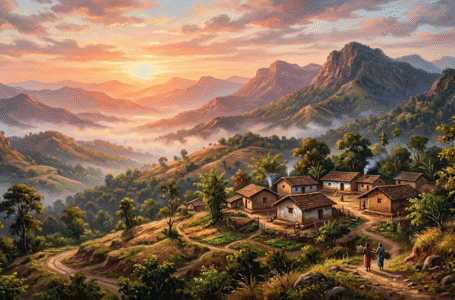
One recurring narrative across Siddi communities is that of retreat. In Gujarat, tribal elders speak of ancestors who moved toward the forests near Gir to escape domination. In Karnataka’s Uttara Kannada region, Siddis established small hamlets in hilly, wooded terrain. These settlements were not accidental; they were strategies of survival. Distance from centres of power offered a degree of autonomy, but it also produced long-term isolation.
In Pakistan, Sheedi histories reflect a different geography. Along the Sindh coast and in Karachi’s Lyari area, Afro-descendant populations became dock workers, fishermen, and informal labourers. Urban proximity did not guarantee security. Lyari’s persistent neglect mirrors the precarious position of its Sheedi residents, whose labour sustained the city but whose presence remained politically marginal.
Across these regions, geography shaped destiny. Forest edges and port margins provided refuge, but also fixed communities into positions that later administrations would classify as peripheral.
Genealogies without paper, history without files
Siddi genealogies are rarely written. Family histories are preserved through remembered roles like that of drummers, shrine custodians, guards, agricultural workers. These occupational memories function as markers of descent. A family may remember itself as having “always played the drum” or “always served at the shrine,” not as a cultural trait alone, but as a historical inheritance.
Such genealogies pose challenges in modern bureaucratic contexts. State systems demand documents, fixed surnames, and traceable lineages. Siddis often lack these forms of proof, not because their histories are short but because their histories were never meant to be documented. This mismatch between lived history and administrative expectation continues to shape access to welfare, education, and political recognition.
Cultural practice as historical record
Music and ritual are among the most enduring repositories of Siddi history. Drumming traditions, commonly described as dhamaal, are physically demanding, repetitive, and communal. Observers often remark on their African resonances, yet these performances are also deeply embedded in South Asian devotional contexts. Over centuries, African rhythms have merged with Sufi practices, local religious idioms, and regional aesthetics.
In Pakistan, the Manghopir shrine provides a striking example of this layered history. Maintained largely by Sheedi custodians, the shrine’s association with sacred crocodiles predates colonial rule. Pilgrims come seeking healing and blessing, rarely questioning why Afro-descendant families have long held custodianship. For the Sheedis, the shrine is not simply a religious site; it is a historical anchor, a place where ancestry, devotion, and labour intersect.
These cultural practices are not static survivals of an African past. They are adaptive forms, shaped by centuries of exchange. In the absence of archives, they function as living records.
Living together, remaining apart
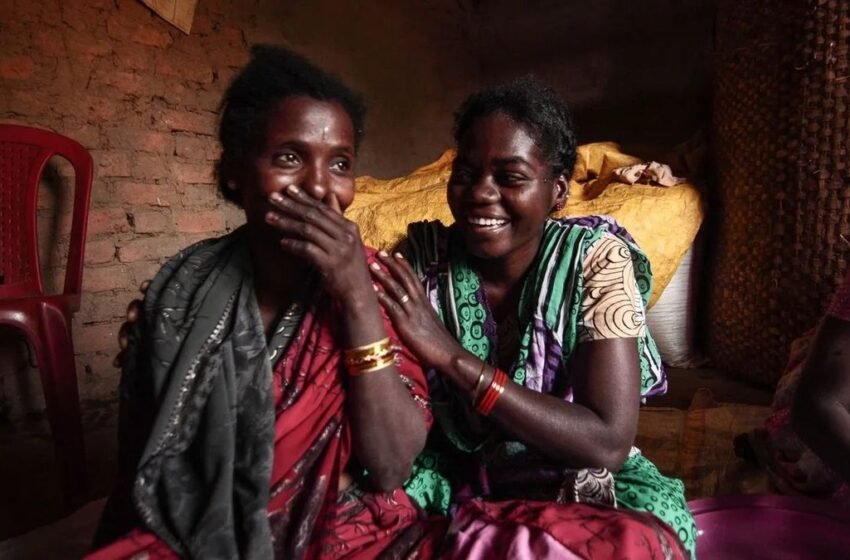
Siddis speak the languages of the regions they inhabit—Gujarati, Kannada, Urdu, Sindhi, Marathi. They follow local customs, celebrate regional festivals, and, in many cases, share religious traditions with their neighbours. Intermarriage has occurred, particularly among Muslim Siddis. On the surface, this suggests integration.
Yet everyday experience complicates this picture. Skin colour remains a visible marker of difference. Numerous accounts describe Siddi children facing ridicule in schools, adults encountering discrimination in housing and employment, and families internalising expectations of exclusion. These experiences are rarely dramatic; they are routine. Their cumulative effect, however, is profound, shaping educational outcomes and economic trajectories.
Assimilation, in this context, has not dissolved hierarchy. It has merely coexisted with it.
Comparing diasporic trajectories
The contrast between the Siddis and other diasporic communities in South Asia is instructive. Groups such as the Parsis or Muslim trading communities entered the subcontinent through commerce, literacy, and transregional networks. Over time, they converted economic capital into institutions like schools, trusts, political organisations which mediated their integration and upward mobility.
André Wink’s work on Indian Ocean trading diasporas highlights how durable commercial networks and institutional continuity enabled certain diasporas to thrive. The Siddis, by contrast, were incorporated into economies as labour rather than as traders or intermediaries. Their roles did not generate surplus capital or transregional ties that could be reinvested across generations.
Abner Cohen’s insights into ethnic boundary-making further clarify this divergence. While merchant diasporas used symbolic identity to reinforce institutional cohesion and political leverage, Siddi symbolic life, even though rich in ritual, music, and memory, remained disconnected from formal power structures. Cultural visibility did not translate into social authority.
Why marginality persists
The persistence of Siddi marginality cannot be attributed to cultural difference or demographic size alone. It is the outcome of historical positioning. Enslavement and coerced labour shaped initial incorporation; racialised perceptions fixed difference onto the body; marginal geographies limited access to resources; and administrative invisibility reproduced exclusion.
In India, partial recognition through Scheduled Tribe status has produced some improvement but benefits remain uneven. In Pakistan, the absence of formal recognition continues to constrain claims-making. Across both contexts, progress is slow, fragile, and unevenly distributed.
Contemporary voices and cautious futures
In recent decades, Siddis have begun to articulate their histories more publicly. Journalistic accounts document young people demanding education, dignity, and representation. Cultural performance is increasingly framed not as spectacle, but as heritage and history. Some Siddis have entered local politics, though their influence remains limited.
These developments suggest possibility rather than transformation. Without sustained institutional support, cultural recognition risks remaining symbolic.
The Siddis of India and Pakistan are not marginal because they are outsiders. They are marginal because history placed them at the edges and never fully reabsorbed them. Their experience complicates celebratory narratives of South Asian pluralism and challenges assumptions about diaspora as a pathway to prosperity.
Viewing their history requires patience with fragments and attention to everyday life. It demands that culture, memory, and labour be treated as historical evidence. In this sense, the Siddis do not merely add another diaspora to South Asian history; they compel a reconsideration of how histories of belonging are written at all.