Napoleon Bonaparte: The Story of Ambition, Glory and Fall

-Aritra Biswas
A Child of Corsica
Napoleon Bonaparte was born in 1769 in the rocky hills of the island of Corsica where it collided with the turbulent sea. His family was of small nobility, proud and yet not strong. Napoleon was never the same since the start. He was silent, grave, and much abstracted. Other children were laughing and playing but Napoleon read history and dreamed of such heroes as Alexander the Great and Julius Caesar. He felt that he was destined to do something great even as a boy.
In France life was difficult at school. And, his Corsican accent was a stranger, and his peers made fun of him. But his purpose was only the more determined by the loneliness. He was taught discipline, self-control and patience. He most importantly learned the functionality of power and ways to acquire it.
Forged by Revolution
When the French Revolution broke out in 1789, violence, fear and hope ripped France asunder. Kings were overthrown, old institutions were demolished and anarchy reigned in the streets. It was a nightmare to many and a door to Napoleon.
Napoleon was an artillery officer who revealed his abilities very fast. He knew timing, positioning, and movement even more than most of older commanders. In 1793, he assisted in the re-capture of the port of Toulon by enemy troops and this was a national notice. He became a general at a tender age of 24. The Revolution had brought about a new type of leader one that did not ascend through birth but through talent.
The Italian Campaign: Birth of a Legend
The Italian Campaign was the actual start of Napoleon. Having taken over an army that was ill equipped, he changed it with confidence and inspiration. He delivered glory, honor and victory to his soldiers as he promised.
Napoleon was in a position to encounter more formidable enemy forces, which caused him to be on the run and attack at unpredictable times. He triumphed over Austria in battle after battle, and he never employed brute force but his speed and strategy. His troops were enamoured with him, addressing him by the name of the Little Corporal, which was the name of affection. His name went round Europe like a bush fire. And he was not merely a general he was a legend in the making.
Power Seized, Not Given
The country was languishing as political leaders argued. In 1799 Napoleon came back to Egypt and made decisive actions. He took over the feeble government through a bloodless coup and became the first consul of France.
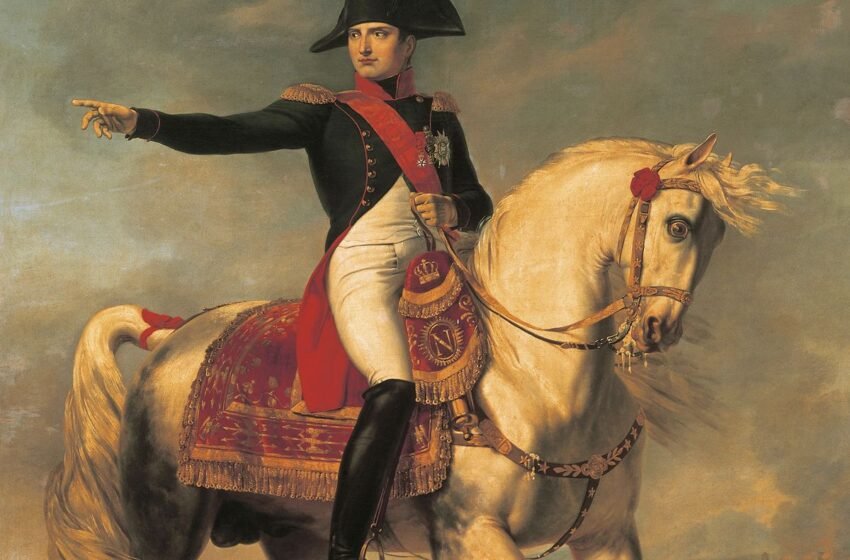
After coming to power, Napoleon governed by the sword. He established order, revitalized education, and established a stable economy and established the Napoleonic Code a legal system that ensured equality before the law and guaranteed individual rights. In 1804, he declared himself Emperor of the French and this was to make it clear that he was not ruling through tradition but through his success. France had a leader who was full of revolutionary decisions and absolute authority.
Master of Europe
The growth of the empire of Napoleon was fast. He led his armies to beat Austria, Prussia and Russia in consecutive brilliant campaigns. Kings shuddered to see French flags. Napoleon restructured Europe and established the revolutionary ideas in the areas he conquered by abolishing feudalism.
During the period of his peak of power, Napoleon dominated the majority of continental Europe. He put relatives on other kingdoms and reestablished frontiers. To others he was a liberator introducing modern laws. He was seen as a conqueror by others who were in need of having power. Nevertheless, his brilliance could not be denied by anybody.
Britain was the only nation out of his reach, as defended by her navy. Napoleon could not invade, therefore, he attempted to destroy Britain economically but this strategy would gradually weaken his empire.
The Fatal March into Russia
This was the biggest mistake Napoleon committed in 1812 in his ambition and pride to invade Russia. He took command of one of the largest armies that Europe ever witnessed and led the army east expecting an easy victory.
He fled Elba and came back to France in 1815. Instead of arresting him, soldiers deployed to do so joined him. Napoleon reigned again in 100 dramatic days. But Europe was not going to give him a second opportunity.
In the Battle of Waterloo, Napoleon was confronted by a combination of the British and Prussian forces. The battle was hot yet destiny worked against him. This army was defeated and his reign was terminated. This time he was sent sailing away to an isolated place, St. Helena, an island in the Atlantic Ocean.
The Lasting legacy and Final Years
Napoleon spent the last years of his life in seclusion in St. Helena. He looked back at his successes and disappointments and typed his memoirs to define the way history would know him. He died in 1821, long after he had left France, which was his former empire.
But Napoleon was not killed with his influence. His codification of law influenced the law today. His military tactics are still emulated. His story became an example of how skill and ambition can take a man to the top and how the pride can destroy an empire even of the best.
Napoleon Bonaparte is one of the most dramatic personalities of the history: a soldier, a ruler, a reformer, and a legend whose life seems to be a great tragedy which was written on the stage of Europe.